THE DIVERSITY OF HANOI PORRIDGE – ANOTHER WORTH-TRYING TRADITIONAL VIETNAMESE FOOD
When people talk about Vietnamese cuisine, iconic dishes like Pho, Bun Cha or Banh Mi often spring up first. Yet, besides these famous dishes, there lies a quieter but equally meaningful culinary tradition: porridge, or “Cháo” in Vietnamese. In Hanoi, porridge is not merely a dish, but it is a daily ritual, a comfort food, and a reflection of the city’s temperament.
Across the city, Hanoi porridge appears in countless forms, from early-morning street stalls to late-night eateries. It is eaten by children and elders, by everyone. What makes porridge in Hanoi especially distinctive is not its complexity, but its restraint. Each bowl reflects a culinary philosophy that values balance, subtlety, and familiarity.
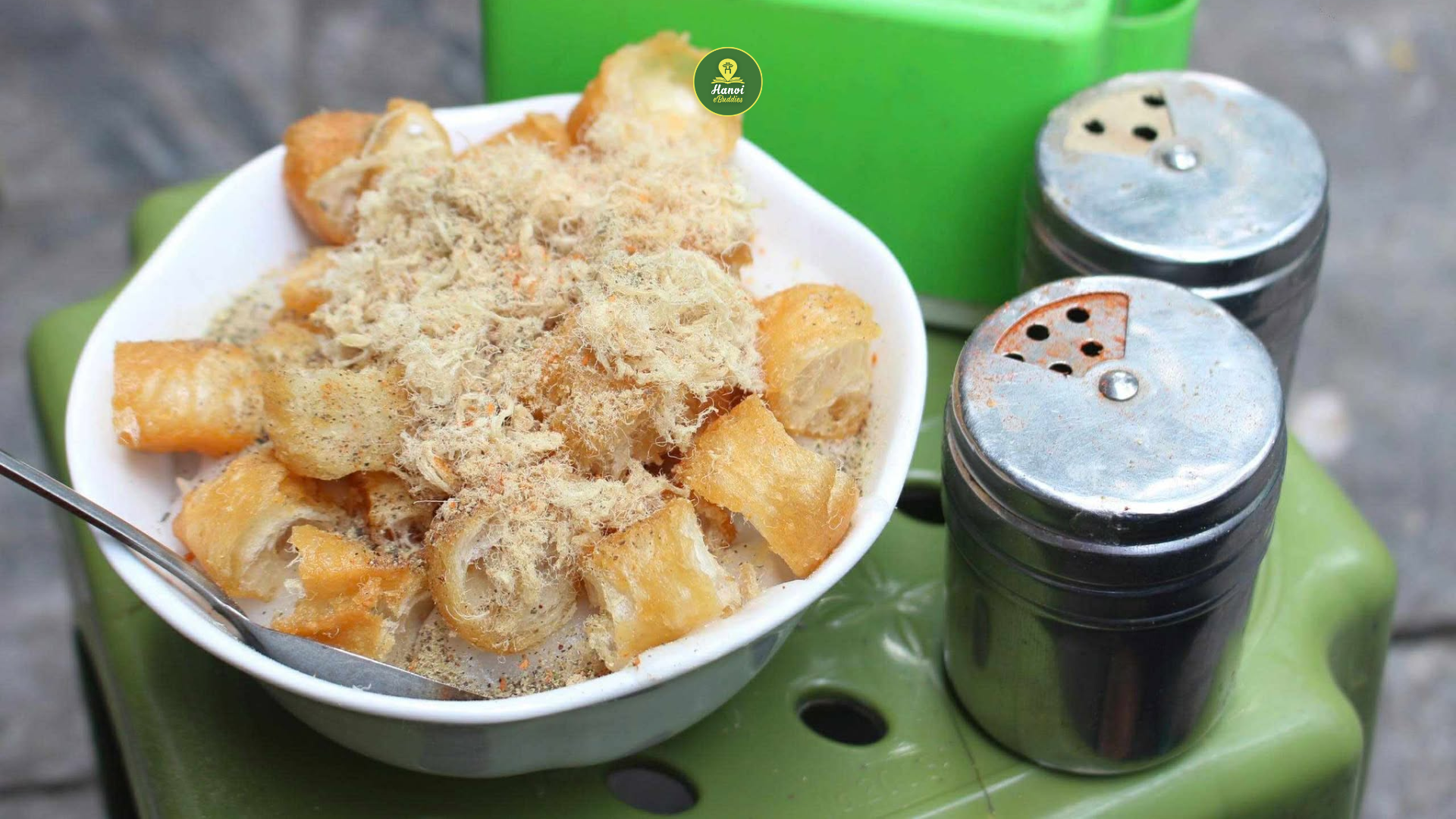
Hanoi Porridge – a daily ritual and also a comfort food
THE ORIGIN OF HANOI PORRIDGE
In Hanoi, porridge gradually evolved beyond necessity. As the city developed cultural and political values, everyday foods began to reflect refinement rather than survival alone. Hanoi porridge adopted the characteristics of Northern Vietnamese cuisine: light seasoning, careful preparation, and respect for natural flavors.
Historically, porridge reminds of care and recovery. It was the food for the sick, the elderly, and young children. Over time, it also linked to urban rhythms. Vendors selling porridge at dawn to cater to workers starting work early, while late-night stalls served those returning home after long hours. This continuity transformed porridge into a constant presence in Hanoi life, quietly accompanying generations as the city changed.
THE VARIETY OF HANOI PORRIDGE
Although porridge may appear simple at first glance, Hanoi offers a remarkable range of porridge. Each type reflects a different aspect of local culture, geography, and taste. Among many versions, four stand out as the most iconic expressions of Hanoi porridge.
Cháo Sườn (Hanoi Pork Rib Porridge)
Hanoi Pork Rib Porridge is made by slow-cooking finely ground rice in pork rib broth. It is famous for its smooth, velvety texture. The ribs are simmered for hours to create a naturally sweet and savory base, minimizing seasoning.
This porridge is often with crispy fried dough sticks. It is common for breakfast or late at night, offering warmth and comfort at any hour. For many locals, this dish is inseparable from childhood memories and daily routines.

Cháo Sườn – Pork Rib Porridge (Image source: VnExpress)
Cháo Trai (Freshwater Clam Porridge)
Freshwater Clam Porridge represents a quieter and more seasonal side of Hanoi porridge. Freshwater clams from northern rivers are the main ingredient. This dish reflects Hanoi’s historical connection to its surrounding waterways.
The clams provide a light sweetness and create a clean and delicate flavor. Herbs such as spring onions and coriander will significantly enhance the flavor. Freshwater Clam Porridge are more popular during cooler months. Unlike seafood-based porridges from coastal regions, this version emphasizes freshwater ingredients, making it distinctly Northern and uniquely Hanoian.

Cháo trai – Freshwater Clam Porridge (Image source: VnExpress)
Cháo Lòng (Pork Offal Porridge)
In contrast to lighter dishes, Pork Offal Porridge offers a bold and hearty experience. Pork offal, including liver, heart, and intestines, is indispensable ingredients. This porridge showcases the tradition of using every part of the animal.
Pork Offal Porridge is common at street stalls. It is especially popular late at night or early in the morning. The broth is rich and aromatic, with pepper and herbs that add warmth and depth. Though it is not always approachable for newcomers, it is deeply familiar to locals. It reflects the practical, unpretentious side of Hanoi food culture.
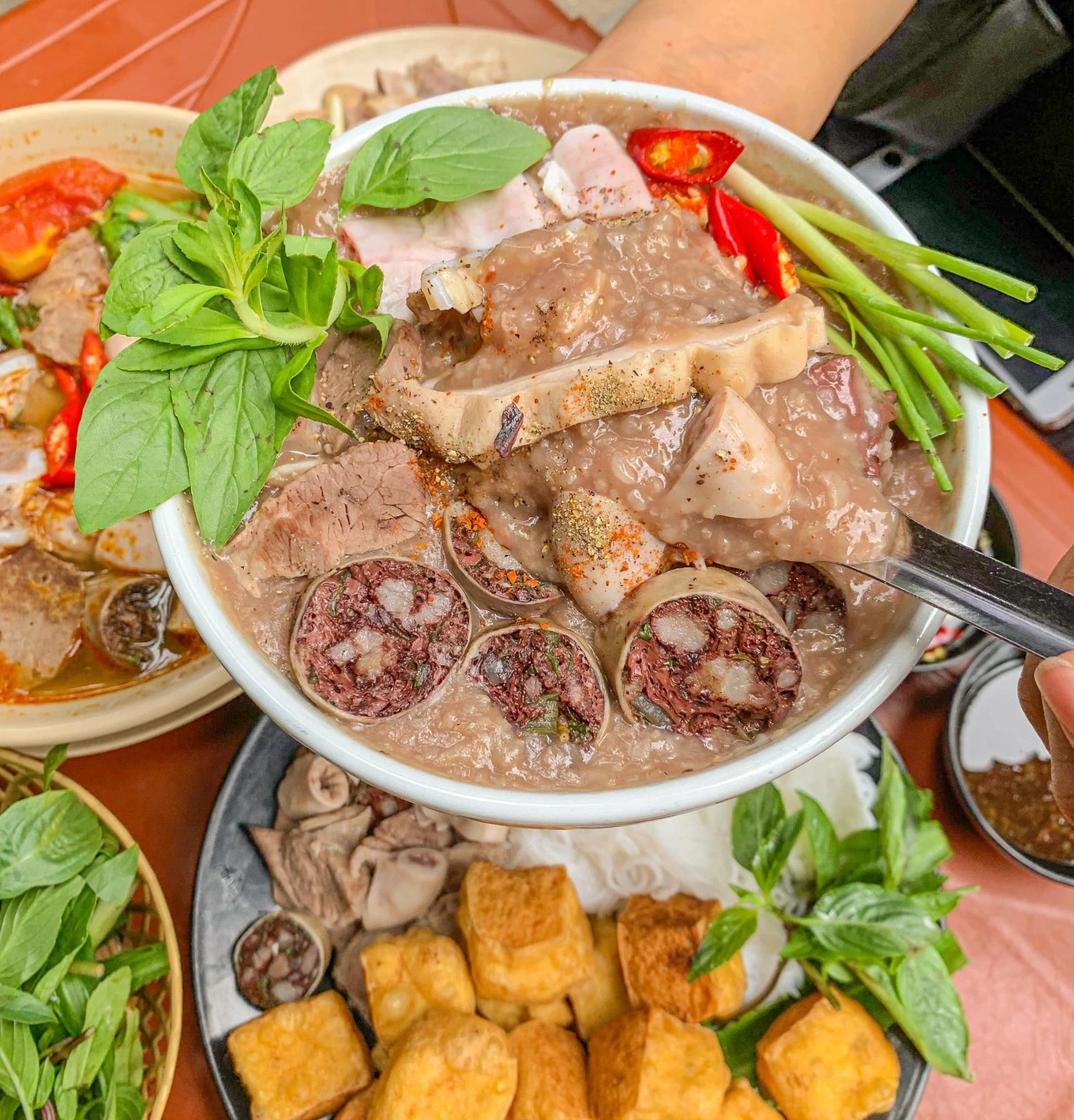
Cháo Lòng – Pork Offal Porridge (Image source: Ngoisao.net)
Cháo Cá (Northern-style Fish Porridge)
Northern-Style Fish Porridge highlights the refined balance characteristic of Northern Vietnamese cuisine. It uses freshwater fish such as carp or grass carp. There are careful preparations to ensure clarity of flavor and absence of any fishy notes.
The rice base remains light, allowing the fish to stand out. A signature feature of Northern-Style Fish Porridge is the use of dill, a very common herb in Northern cooking. Together with spring onions and restrained seasoning, the dish achieves a clean, aromatic profile that exemplifies the elegance.

Cháo Cá – Northern-style Fish Porridge (Image source: VnExpress)
SMALL FACTS ABOUT HANOI PORRIDGE
Despite its modest appearance, porridge in Hanoi comes with many interesting cultural details:
-
It is not always thin; some varieties, especially Cháo Sườn (Hanoi Pork Rib Porridge), are thick and almost creamy.
-
Rice for porridge is often ground or partially broken to achieve a smoother texture.
-
It is eaten throughout the day in Hanoi, not limited to breakfast.
-
Fried dough sticks are an essential element in enjoying many types of porridge.
WHAT MAKES HANOI PORRIDGE TRULY SPECIAL?
What makes Hanoi porridge different is not the number of ingredients, but the philosophy behind it. Hanoi cuisine values restraint. Rather than overwhelming the palate, porridge is designed to comfort and restore.
Seasoning is used sparingly, allowing the natural sweetness of rice, meat, or fish to come forward. The cook carefully controls the texture, whether smooth, light, or hearty. Most importantly, porridge remains accessible. It is the food for everyone, crossing boundaries of age, income, and social status.
Beyond taste, porridge carries emotional weight. In a rapidly modernizing city, it remains a reminder of care, warmth, and familiarity, and quietly preserves tradition.
WHERE TO TASTE HANOI PORRIDGE?
To experience authentic Hanoi porridge, street stalls and small local eateries are often the best places to start. In the Old Quarter, vendors selling Cháo Sườn (Hanoi Pork Rib Porridge) and Cháo Lòng (Pork Offal Porridge) open early in the morning or late at night, attracting loyal local customers.
You can have a try at Cháo Sườn by visiting:
- Cháo Sườn Sụn Huyền Anh Stall (at No. 14 Dong Xuan Street, Hoan Kiem District).
- Cháo Sườn Bà Lợi Còng (at No. 39, Hang Dieu Street, Hoan Kiem District).
- Cháo Sườn cô Là (at No. 241 Ly Quoc Su Street, Hoan Kiem District).

Cháo Sườn Cô Là (No. 241 Ly Quoc Su Street)
Residential neighborhoods beyond the tourist center often host long-standing porridge shops operating for many generations. Traditional restaurants serve Cháo Cá (Northern-Style Fish Porridge) in calmer settings – for example Vua Chả Cá Stall (at No. 09, Ly Thuong Kiet Street, Hoan Kiem District); while seasonal dishes like Cháo Trai (Freshwater Clam Porridge) appear when ingredients are at their best.
ARE YOU READY FOR THE EXPERIENCE?
For visitors, the key is observation. Follow the locals and arrive early. The most memorable bowls of porridge are often in the most unassuming places.
The diversity of Hanoi porridge reflects the city itself. From the comforting smoothness of Cháo Sườn (Hanoi Pork Rib Porridge) to the seasonal subtlety of Cháo Trai (Freshwater Clam Porridge), from the bold character of Cháo Lòng (Pork Offal Porridge) to the balance of Cháo Cá (Northern-Style Fish Porridge), each variation tells a story. Together, they demonstrate how porridge in Hanoi is far more than a basic dish. It is a cultural expression shaped by history, geography, and habit of the city.

Hanoi e.Buddies enjoying porridge at night
The next time you explore the city, pause for a bowl of porridge and observe the rhythm around you. With Hanoi e.Buddies, you can enjoy this experience to the fullest, so don’t hesitate to join our Free walking tour, Old Quarter tour, or City tour. Information is available at our our Tripadvisor, Facebook, Instagram.