Bánh Xèo – Food Addiction of Vietnam
Bánh xèo is a traditional Vietnamese dish. It is familiar and holds significant spiritual value in Vietnamese’s lives. This food impresses many tourists, becoming a must-try dish when visiting Vietnam. Notably, the Vietnamese change the flavor of Bánh Xèo to suit the tastes and customs of different regions while still retaining its unique flavor. If you are eager to explore the wonderful gastronomy in Vietnam, you can not forget to try Vietnamese Crepe.
Bánh xèo – Vietnamese Crepe
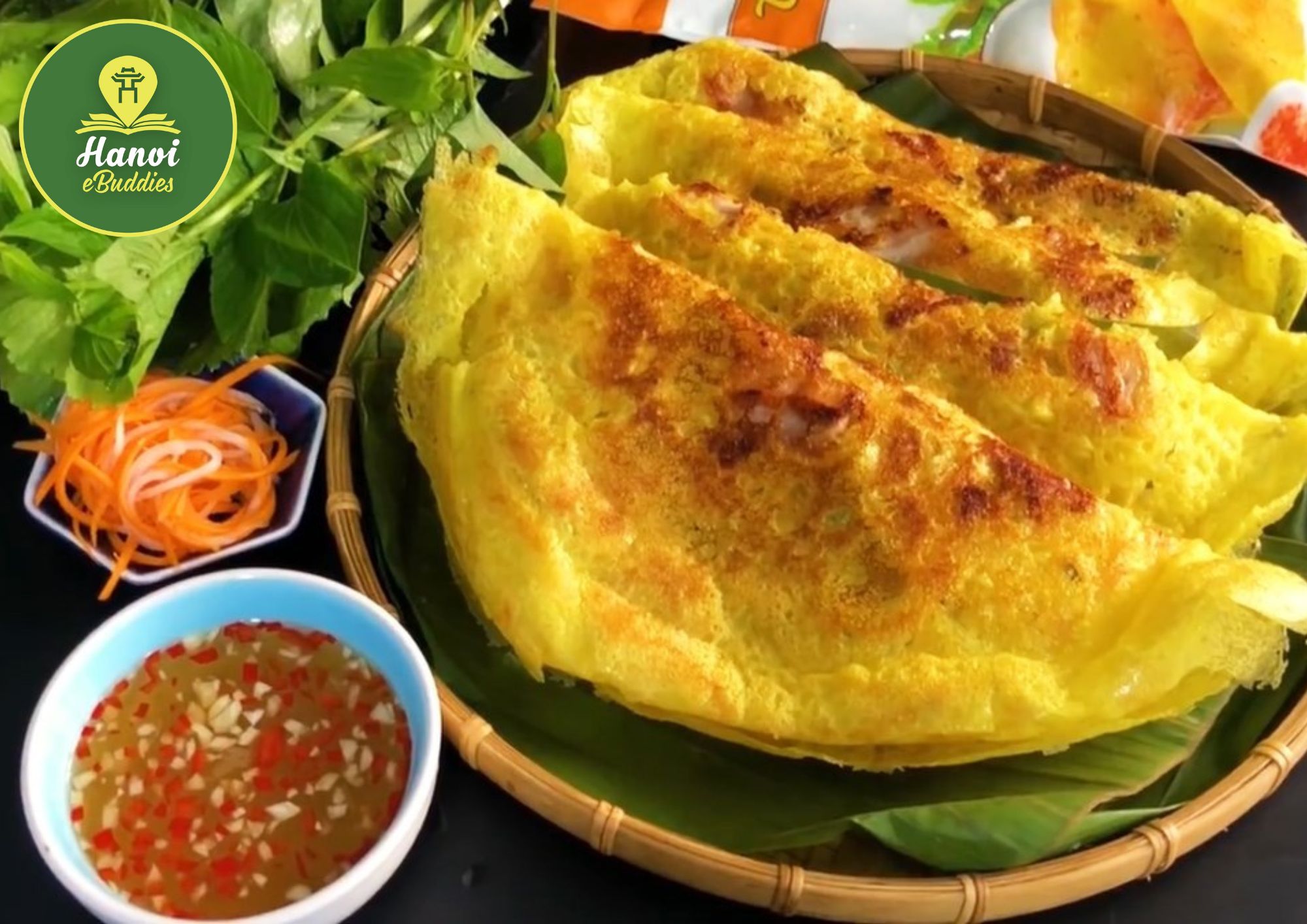
Bánh Xèo- food addiction of Vietnam (Source: Collected)
I. What is Vietnamese Crepe?
1. The Origin of the Name
The name Bánh Xèo has an interesting origin. When the batter is poured into a hot pan with oil, it makes a sizzling sound—”xèo” in Vietnamese. Then, people named it as Bánh Xèo.
2. Ingredients of Vietnamese Crepe
Vietnamese crepe consists of a crispy outer layer made from rice flour batter, typically filled with shrimp, pork, and bean sprouts. The batter is fried until golden and can be shaped into either a round or a half-moon form. Different regions in Vietnam have distinct methods of preparing and enjoying Bánh Xèo. Generally, there are two main types: crispy and chewy Vietnamese Crepe.
In Hue, this dish is known as “bánh khoái” and is often served with grilled pork and a dipping sauce made from soy sauce, liver, and peanuts. While the batter may include eggs, and the Bánh Xèo is eaten with sweet and sour fish sauce if it is in Southern Vietnam. In Northern Vietnam, additional ingredients like thinly sliced jicama or taro are added to the filling.
The variety of herbs that accompany Vietnamese Crepe is extensive, including lettuce, mustard greens, Vietnamese balm, perilla leaves, mint, basil, and more. Specific regions also add unique herbs. In Central Vietnam, other ingredients like bitter figs and starfruit are often added to the herb mix.
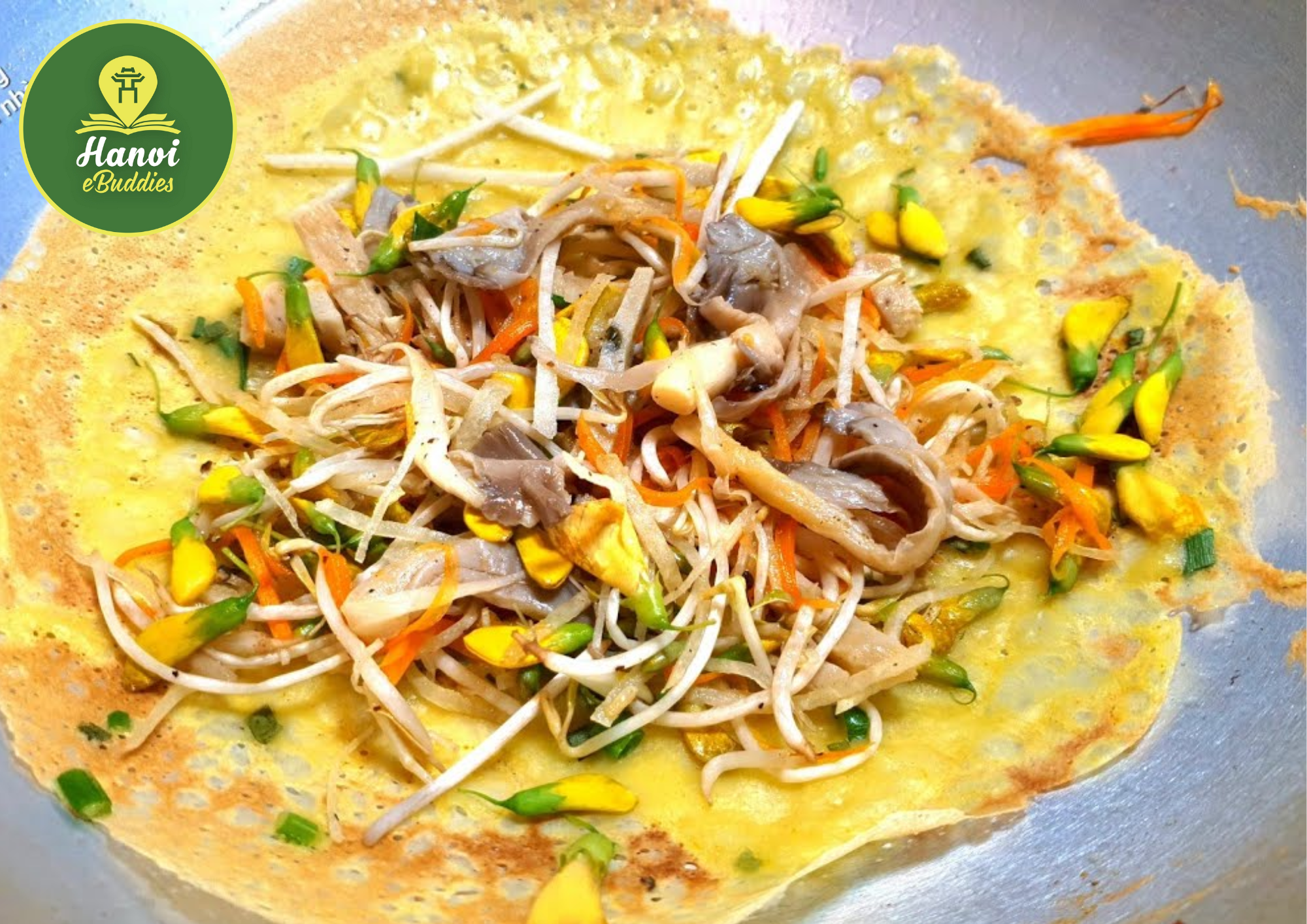
Inside Bánh Xèo is a wonderful mixture of ingredients (Source: Collected)
3. Types of Vietnamese Crepe
Today, Bánh Xèo can be categorized into two distinct types: the small, compact version popular in Central Vietnam and the larger version favored in Southern Vietnam.
In Central Vietnam, Bánh Xèo is typically smaller and filled with pork or shrimp. Nowadays, variations with mushroom or duck filling are also common. The batter is neither too thick nor too thin, resulting in a soft, slightly chewy texture. Locals often serve this food in a bowl or plate with fresh herbs and a dipping sauce.
Contrastingly, Southern Bánh Xèo is significantly larger, often three to four times the size of its Central counterpart. The batter is made crispier and is slightly chewy in the middle. Notably, Southern Vietnamese Crepe includes coconut milk in the batter, enhancing its fragrance. The filling typically includes pork belly, shrimp, and mung beans. People often enjoy southern Bánh Xèo with wild herbs and a sweet and sour fish sauce. Diners wrap the this dish and herbs in rice paper and dip it in the sauce, with many now preferring to wrap it in rice paper for a unique taste.
4. Where did Vietnamese Crepe originate?
The exact origin of Bánh Xèo is uncertain, but it is generally believed to have originated in Central Vietnam, particularly in the Bình Định Province. This is supported by the fact that the earliest known written references to this food come from this region. Additionally, the ingredients and cooking style of this dish from Bình Định are very similar to those of other Central Vietnamese dishes.
However, there is also some evidence to suggest that Vietnamese Crepe may have originated in Southern Vietnam. Additionally, Bánh Xèo is a popular street food in Southern Vietnam, while it is less common in Central Vietnam.
Ultimately, people are not sure about the true origin of this food. However, there is no doubt that it is a delicious and iconic Vietnamese dish that has been enjoyed for centuries. Lots of people considered it as food addiction of Vietnam.
II. How to make Bánh Xèo
The quality of the rice used is crucial in making a delicious dish – Bánh Xèo. At the beginning, people soak the rice until it expands, then mix with turmeric for color. Nowadays, pre-mixed Vietnamese Crepe flour is commonly used for convenience. The filling includes thinly sliced pork belly, briefly cooked shrimp, cooked mung beans, and lightly blanched bean sprouts.
To cook, heat a large pan with a little oil, pour in a ladle of batter, and tilt the pan to spread it into a thin layer. After that, cover the batter until we use to cook, then add the filling in the center, cover again, and cook until the batter is crispy. In Central Vietnam, people often use smaller, flat-bottomed pans.
For the dipping sauce, mix quality fish sauce with water, lime juice, sugar, finely shredded carrots, and minced chili.

Vietnamese people make Bánh Xèo skillfully (Source: Collected)
III. The way to eat Vietnamese Crepe
Bánh Xèo is a dish which a group of people can share together. Follow these steps to enjoy it:
- Tear Bánh Xèo into bite-sized pieces.
- Place your preferred vegetables on a sheet of rice paper.
- Add a piece of it, including both crust and filling, on top of the vegetables.
- Roll it up tightly.
- Dip the roll in chili garlic sweet and sour fish sauce.
- Add some pickled carrots from the sauce on top of the roll.
- Take a big bite and enjoy the burst of flavors.
Enjoy Bánh Xèo will bring unforgettable experience for you. Let’s enjoy it – the food addiction of Vietnam.
IV. Summary
Vietnamese Crepe is one of food addictions in Vietnam. It’s not worth if visitors coming to Vietnam without enjoying this dish. Hopefully, this post can help you to understand one of delicious food in the country’s culture and arouse your appetite when visiting Vietnam.
If you are looking for a tour to discover Hanoi and try traditional foods with real local buddies, don’t hesitate to contact us! We pledge to help you see Hanoi’s numerous sites in the most unique and unforgettable way possible with our free local tours! Don’t be shy, contact Hanoi e.buddies club right away. Your free, tailored, and fun free tours with local students are just a phone call away!!! Visit our Tripadvisor, Facebook, Instagram for more information!