Cold Food Festival – Enjoy a Vietnamese Event of Gratitude and Remembrance during Your Next Visit to Hanoi
When mentioning “Tết,” Lunar New Year (Tết Nguyên Đán) and Mid-Autumn Festival (Tết Trung Thu) are common names. But do you know that Vietnamese people also have another very special “Tết”? It’s the Tết Hàn thực (hereinafter, the Cold Food Festival). This is a small event for the Vietnamese to express their remembrance and gratitude. Let Hanoi e.Buddies introduce you to this upcoming festival so that you don’t miss out on the must-try things during your upcoming trip to Hanoi this April!
What exactly is the Cold Food Festival?
In Vietnamese folklore, the Cold Food Festival, also known as the Glutinous Rice Ball Festival, is on the 3rd day of March in the lunar month.
The festival originates from China, linked to the story of Jie Zitui, a loyal minister during the Spring and Autumn period. After helping the emperor restore the throne, he chose to live in seclusion with his mother in the forest, disregarding fame and fortune. The emperor, wanting to find him, ordered to burn the forest to force him out. The decree unexpectedly caused the death of both Jie Zitui and his mother. To commemorate Jie Zitui, the emperor decreed that people abstain from fire and only eat cold food for three days; thus, the Cold Food Festival was born.
The literal meaning of the event, “Tết Hàn thực”, with “hàn” (寒) meaning cold, and “thực” (食) meaning “food”, originates from that story.
What do Vietnamese people do on this day?
Making “bánh trôi” and “bánh chay”, a dish of the agricultural country
Although originating from Chinese legends, the Cold Food Festival was completely Vietnamized upon its arrival in Vietnam. Vietnamese people don’t abstain from fire. However, we make “bánh trôi” and “bánh chay” (hereinafter, glutinous rice balls) as offerings to our ancestors to show our filial piety. This also symbolizes farmers’ prayers for a bountiful harvest and favorable weather throughout the year.
Moreover, these pristine white glutinous rice balls are also associated with the image of Mother Âu Cơ (the Mother Goddess in Vietnamese belief) and her hundred eggs hatching into the very first 100 Vietnamese people. It reminds generations of Vietnamese people of their origins. “Bánh trôi” symbolizes 50 eggs hatching into 50 children who followed the Mother Goddess to the mountain, while “bánh chay” symbolizes the remaining 50 children who followed the Father Goddess to the sea.

100 eggs and Mother Goddess in the Vietnamese fairy tales explaining the Viet’s origin (source: Internet)
“Bánh trôi” is in sphere shape and made of glutinous rice flour with a piece of brown sugar filling. “Bánh chay” is bigger and flatter than “bánh trôi” with sweet green bean paste inside instead of sugar. After completing the shaping process, these cakes will be boiled, then “bánh trôi” will have sesame on top; meanwhile, “bánh chay” is served with thick sugar syrup and tapioca starch.
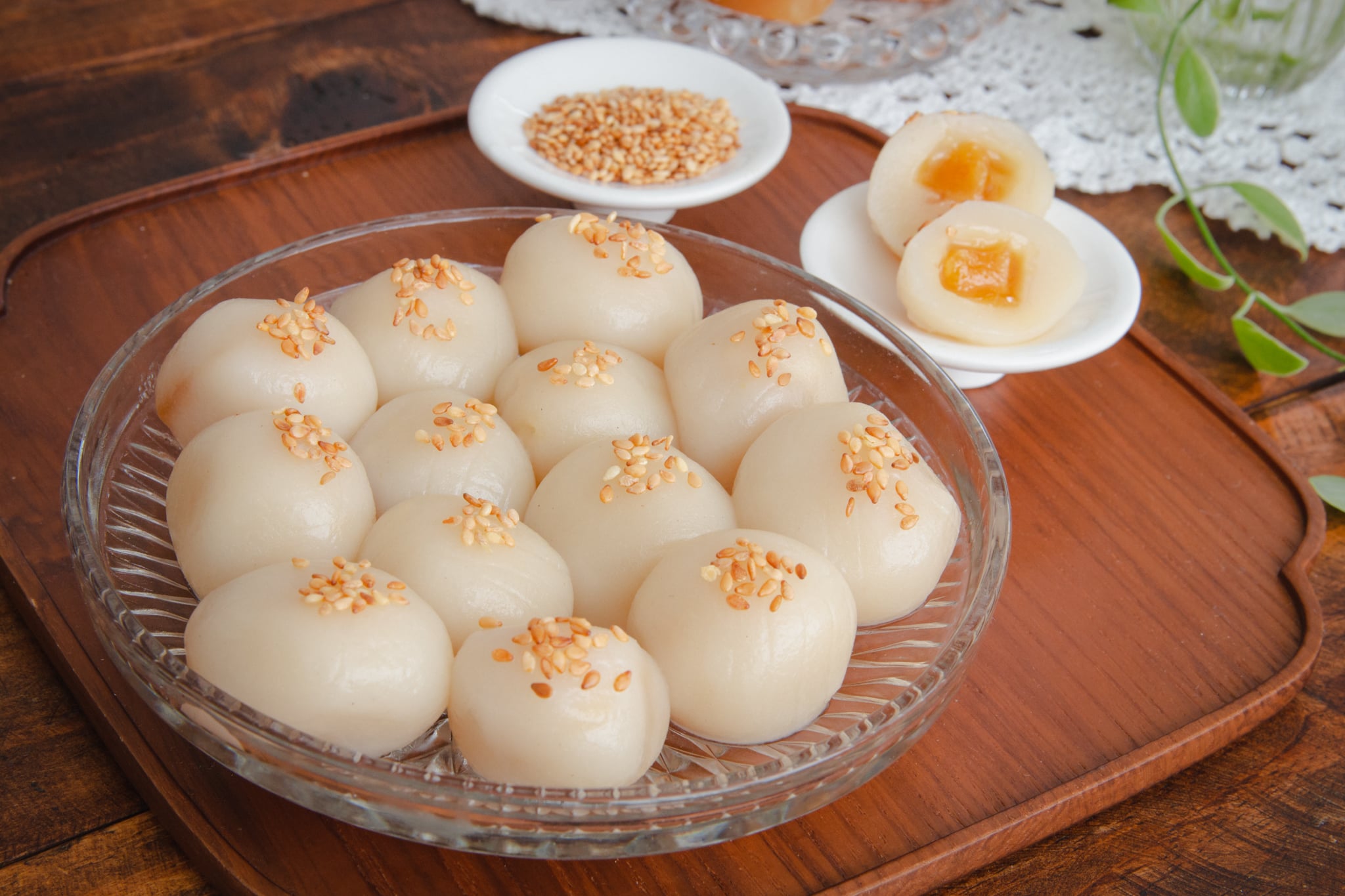
Bánh trôi of the Cold Food Festival (source: Internet)

Bánh chay of the Cold Food Festival (source: Internet)
Offering the rice dishes to the ancestors as an act of gratitude and remembrance
After the boiling step, people will put these glutinous rice cakes on a tray to offer to the ancestors. The householder will burn incense to invite ancestors to enjoy the Cold Food Festival.
Besides the glutinous rice cakes, householders also add fruits, flowers, betel nuts, and betel leaves on the altar as offerings. When the liturgy of ancestor worship ends, the whole family will eat fruits, “bánh trôi”, and “bánh chay” together.
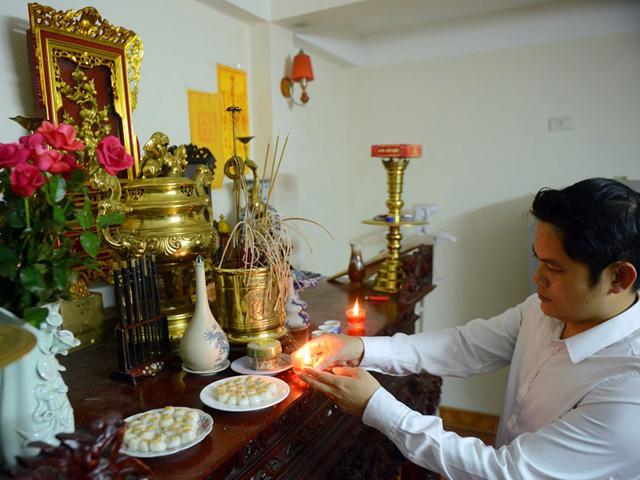
A householder and glutinous rice cakes on his altar on the Cold Food Festival (source: Internet)
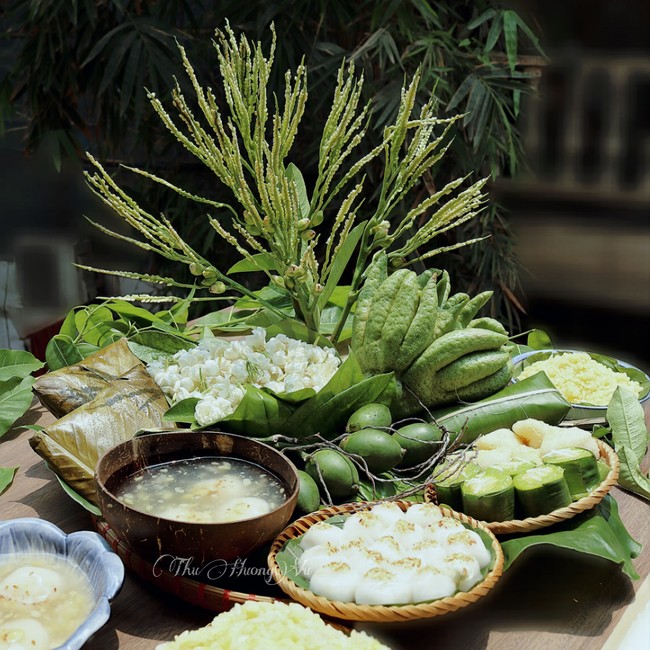
A standard offering at the Cold Food Festival (source: Internet)
Hang on there! Don’t get these glutinous cakes wrong with the glutinous dumplings (Bánh trôi Tàu) eaten in winter. The “bánh chay” of the Cold Food Festival is sweet and filled with green bean paste. So are the glutinous dumplings in Hanoi winter. However, these winter cakes are served with warm ginger and sugar broth, without tapioca starch or arrowroot starch.
Where to try those traditional desserts of the festival during your stay in Hanoi?
If you’re visiting Hanoi during the Cold Food Festival, you won’t have to look far to find these traditional treats. The best way to experience this local tradition is simply by wandering around your place to find the local market.
Small street vendors set up simple stalls selling freshly made “bánh trôi” and “bánh chay”. The locals often stop by for a quick, nostalgic bite. Walking through the streets, you’ll not only taste the food but also feel the Hanoians’ life during this event.
Some food stops selling glutinous rice cakes you can find in the Old Quarter area are:
- Xôi Chè Bà Thìn (No.1, Bat Dan Street): A century-old brand passed down through three generations of women
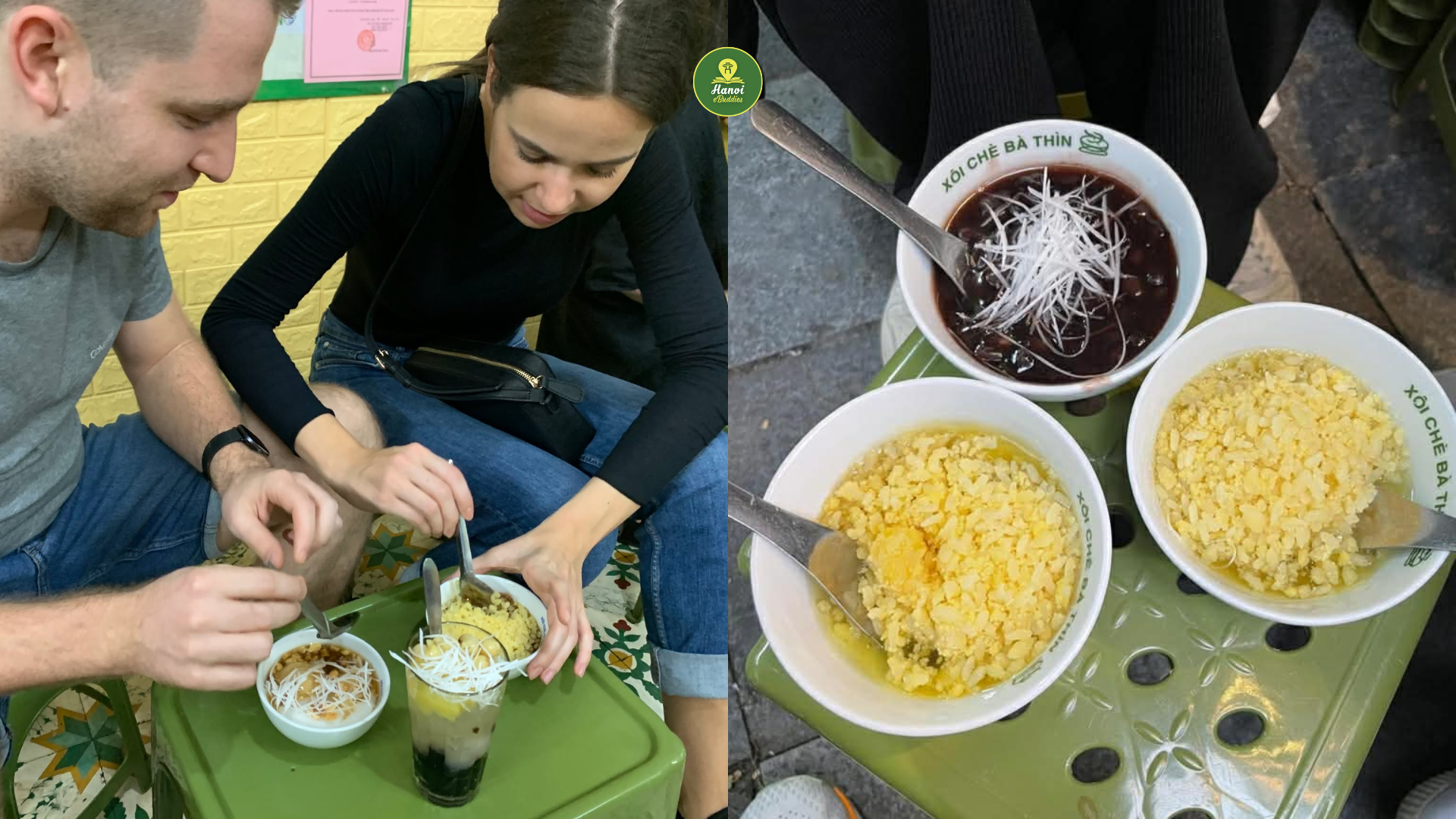
An Austrian couple tried famous sweet desserts at Xôi chè bà Thìn during Hanoi e.Buddies’ food tour
- The back of Dong Xuan market (Nguyen Thien Thuat Street): The biggest wholesale market in the area
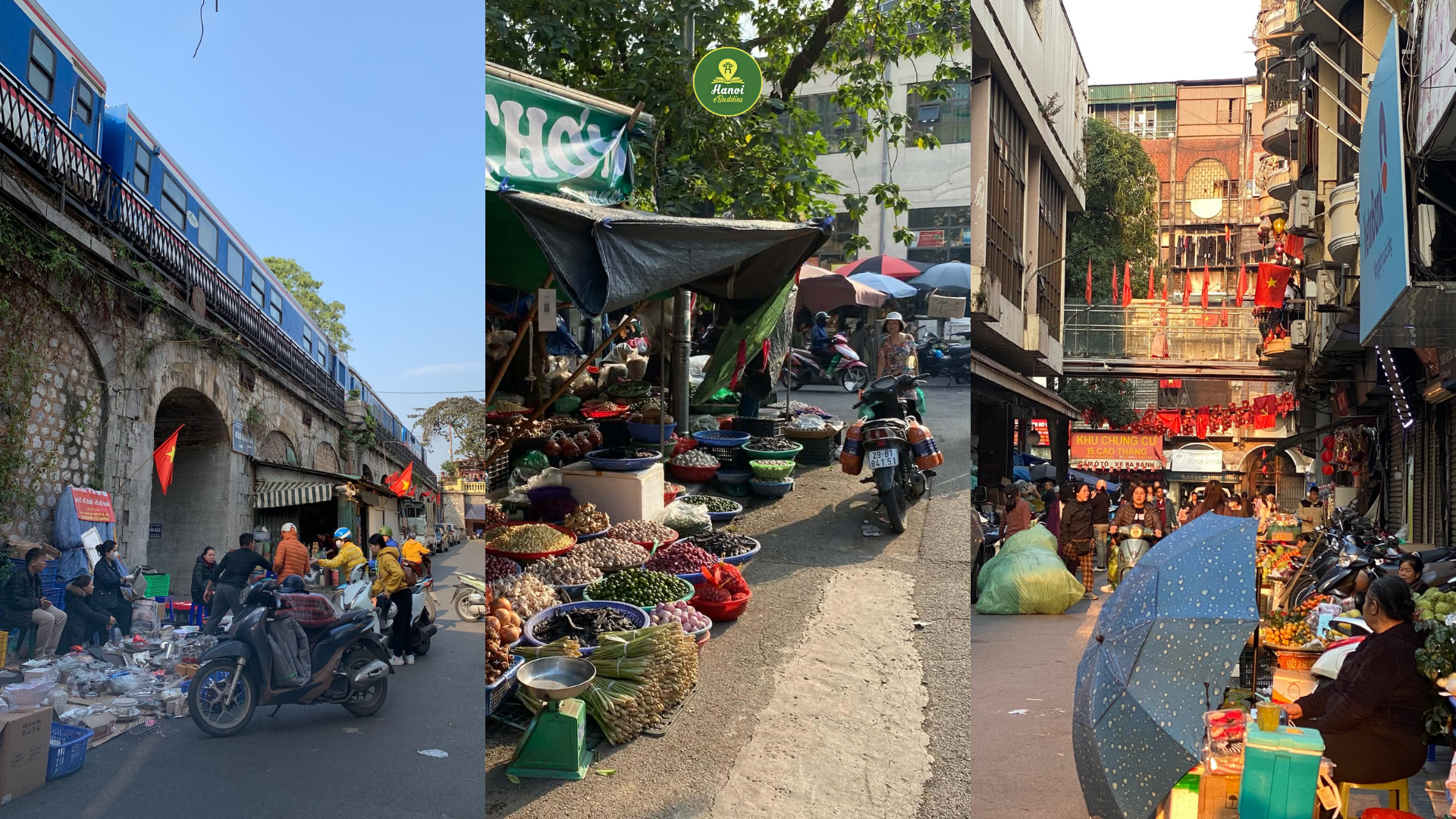
An open local market at the back of Dong Xuan market (Hanoi)
- Yen Thai market (Yen Thai Street): A small yet local market in the west of Hanoi Old Quarter, 500m from the famous train street
A chill corner of the local Yen Thai market
Got confused with these local places? You can join our Hanoi food tour to have your local buddies introduce you the best spots to try these traditional Vietnamese desserts during the Cold Food Festival.
Top Tips to Tell You About the Cold Food Festival in Hanoi
- Time and Taste: The rice cakes are best enjoyed in the morning when they’re freshly made. Prepare yourself with this sugar attack ‘cause they may be a bit sweet.
- Money: Don’t forget to prepare cash in advance. These glutinous cakes will mostly be sold at the local market or vendor shops where cards are not accepted.
- Opening Hours of Shops: See the note of the Cold Food Festival in the opening hours of shops on Google Maps? Don’t worry, most of the sites and shops will open normally without changes because this is not a public holiday.
The Cold Food Festival in Hanoi may not be the loudest or most spectacular celebration. It’s the quiet moments: families preparing offerings at home, locals stopping by a street stall for a simple dessert, and the gentle rhythm of daily life carrying on with a touch of tradition.
For travelers, it’s so niche to know about this event. No big stages, no crowds – just authentic culture, meaningful rituals, and food that tells a story. And honestly, the best way to truly understand this festival isn’t just by reading about it – it’s by experiencing it like a local.
👉 Join a tour with Hanoi e.Buddies to:
- Taste authentic “bánh trôi” and “bánh chay”
- Discover hidden street food spots you wouldn’t find on your own
- Hear real stories behind Hanoi’s traditions from young local friends
Whether it’s the Cold Food Festival or not, our tours are customized to give you a deeper, more personal connection with the city. Stay connected with us via our TripAdvisor, Facebook, Tiktok, and Instagram to get the latest news on the upcoming Vietnamese festivals and events.