Ho Chi Minh Complex: A Reflection of President Ho Chi Minh’s life and legacy
For Vietnamese people, President Ho Chi Minh is a national leader, a symbol of patriotism, independence, and one of the most important figures in Vietnam’s modern history. He played a central role in Vietnam’s struggle for independence and became the first President of the Democratic Republic of Vietnam after the country declared independence in 1945. Beyond his role as a political leader, he is also widely remembered for his simple lifestyle, dedication to the nation, and values of modesty and perseverance. This leaves behind a profound legacy that continues to inspire generations. And it is well preserved in the Ho Chi Minh Complex, one of the most meaningful historical and cultural landmarks. More than a collection of architectural sites, the complex serves as a reflection of President Ho Chi Minh’s life, ideology, and legacy.
HO CHI MINH COMPLEX – A MUSEUM OF LEGACY
Ho Chi Minh Complex is located in the centre of Hanoi. The area brings together several significant places associated with the president’s life and with important moments in Vietnamese history. It includes Ho Chi Minh Mausoleum, Ba Dinh Square, Ho Chi Minh Museum, One Pillar Pagoda, Ho Chi Minh’s Stilt House, and the Presidential Palace.
The anniversary of President Ho Chi Minh’s birthday is widely acknowledged to be on May 19th. Around this time, the complex becomes a meaningful destination for visitors wishing to learn more about his life, contributions, and lasting impact on the nation.
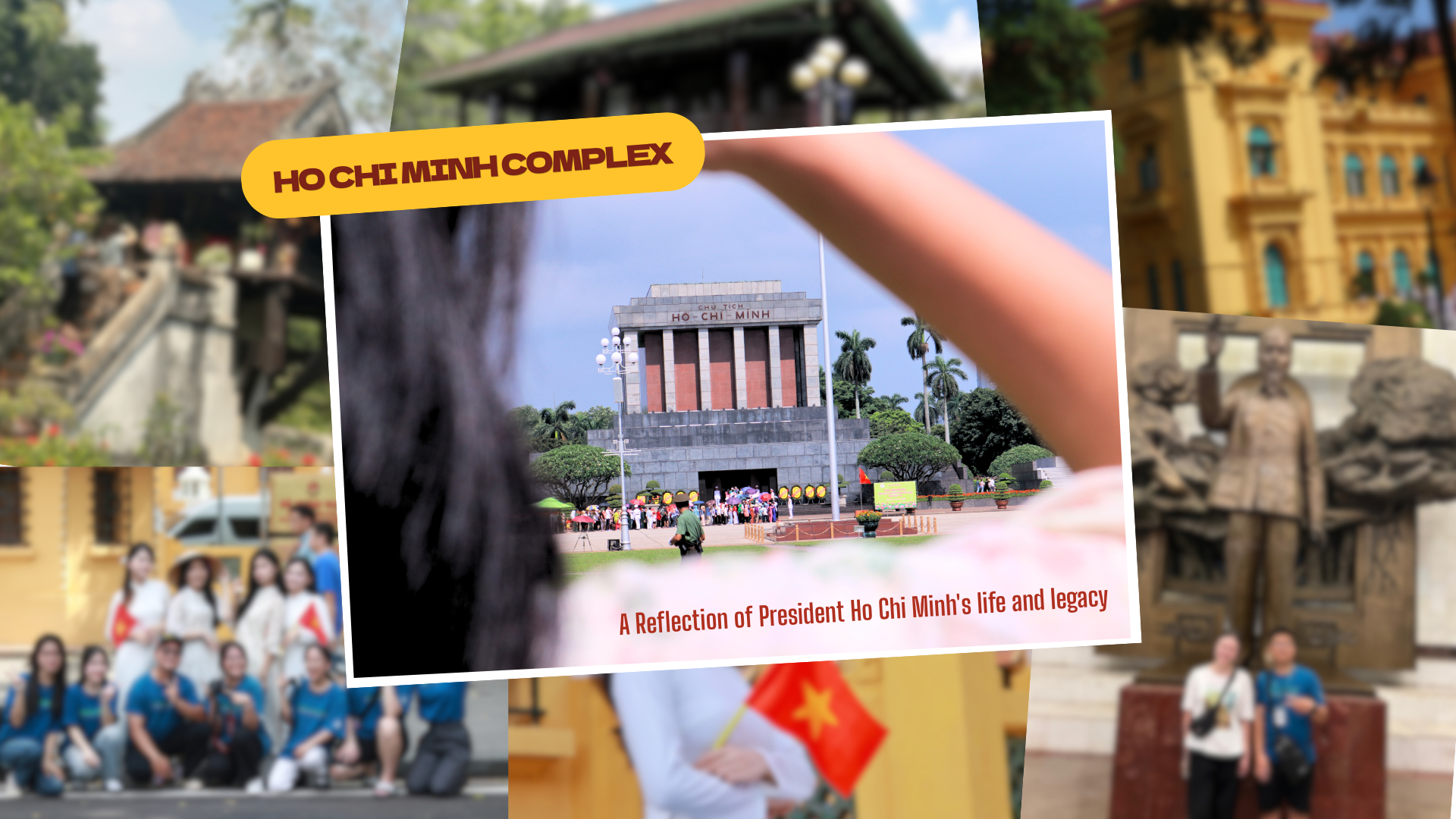
Ho Chi Minh Complex – A Reflection of President Ho Chi Minh’s life and legacy
Ba Dinh Square – Vietnam’s Independence Declaration
Located on Hung Vuong Street, Ba Dinh Square holds a special place in Vietnam’s modern history. On September 2nd, 1945, President Ho Chi Minh stood here and read the Declaration of Independence. This event officially marked the independence and freedom of the Democratic Republic of Vietnam.
As one of the largest public squares in the country, Ba Dinh Square has witnessed numerous important national events throughout history. Beyond its political significance, the square also symbolizes independence, unity, and national pride.
Ba Dinh Square is 367 meters long and 85 meters wide; therefore, it can contain up to 200,000 people. It has numerous lines of green trees and green lawns with wide pathways.
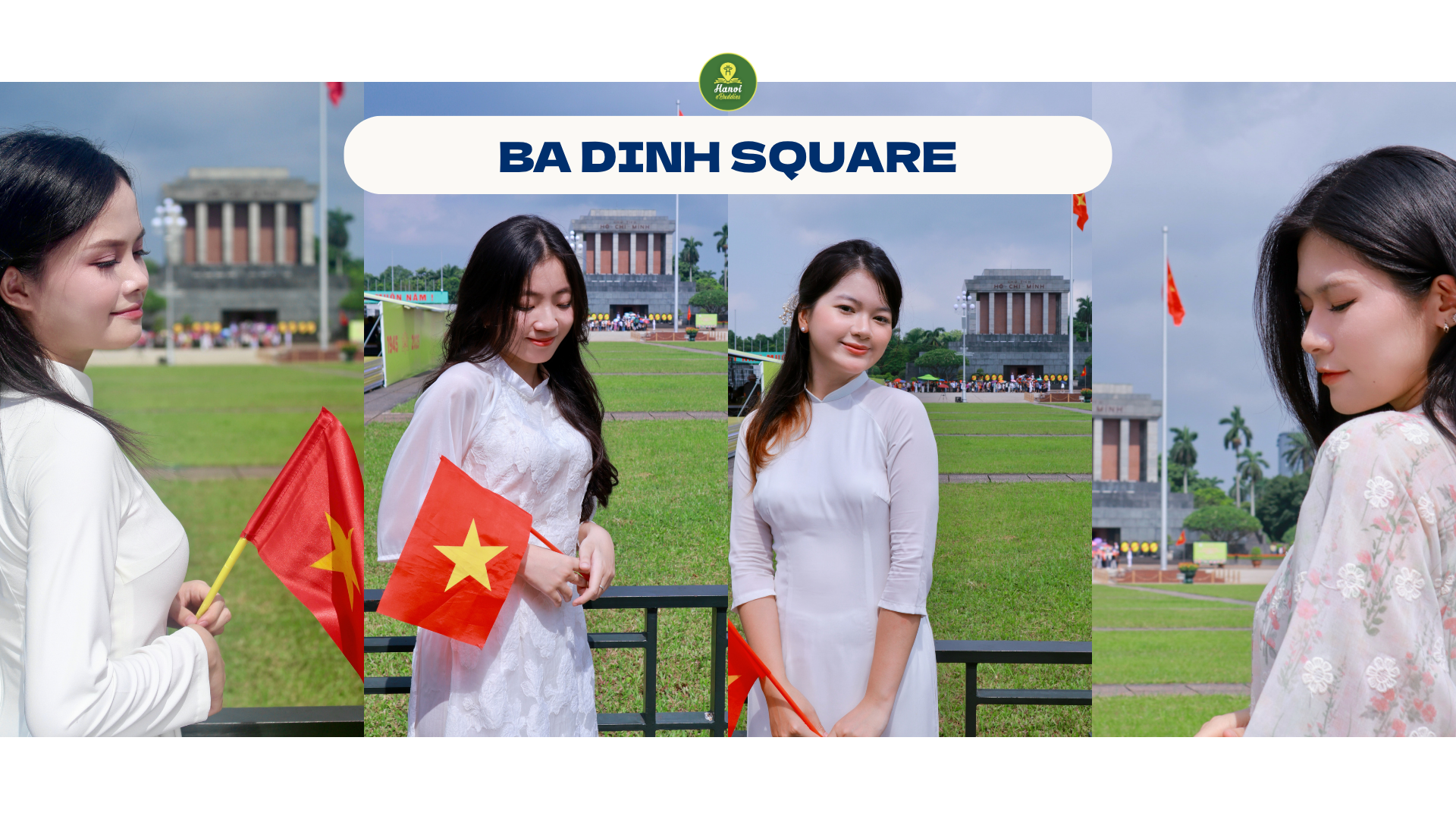
Hanoi e.Buddies girls in Ao Dai at the Ba Dinh Square
Today, the square remains a popular destination where visitors can appreciate its historical value. Early mornings often bring a peaceful atmosphere, so some people come here to exercise, walk, and gather.
Ho Chi Minh Mausoleum – The National Leader’s Resting Place
Standing solemnly at the heart of Ba Dinh Square, Ho Chi Minh Mausoleum is one of the most significant landmarks in Vietnam. After the President passed away in 1969, the government at that time decided to keep his body intact and placed it in the Mausoleum. In this way, people can come to commemorate the national leader.
Inaugurated in 1975, the structure has a solemn and monumental appearance. Its architecture combines strength and simplicity, creating an atmosphere of dignity and respect.
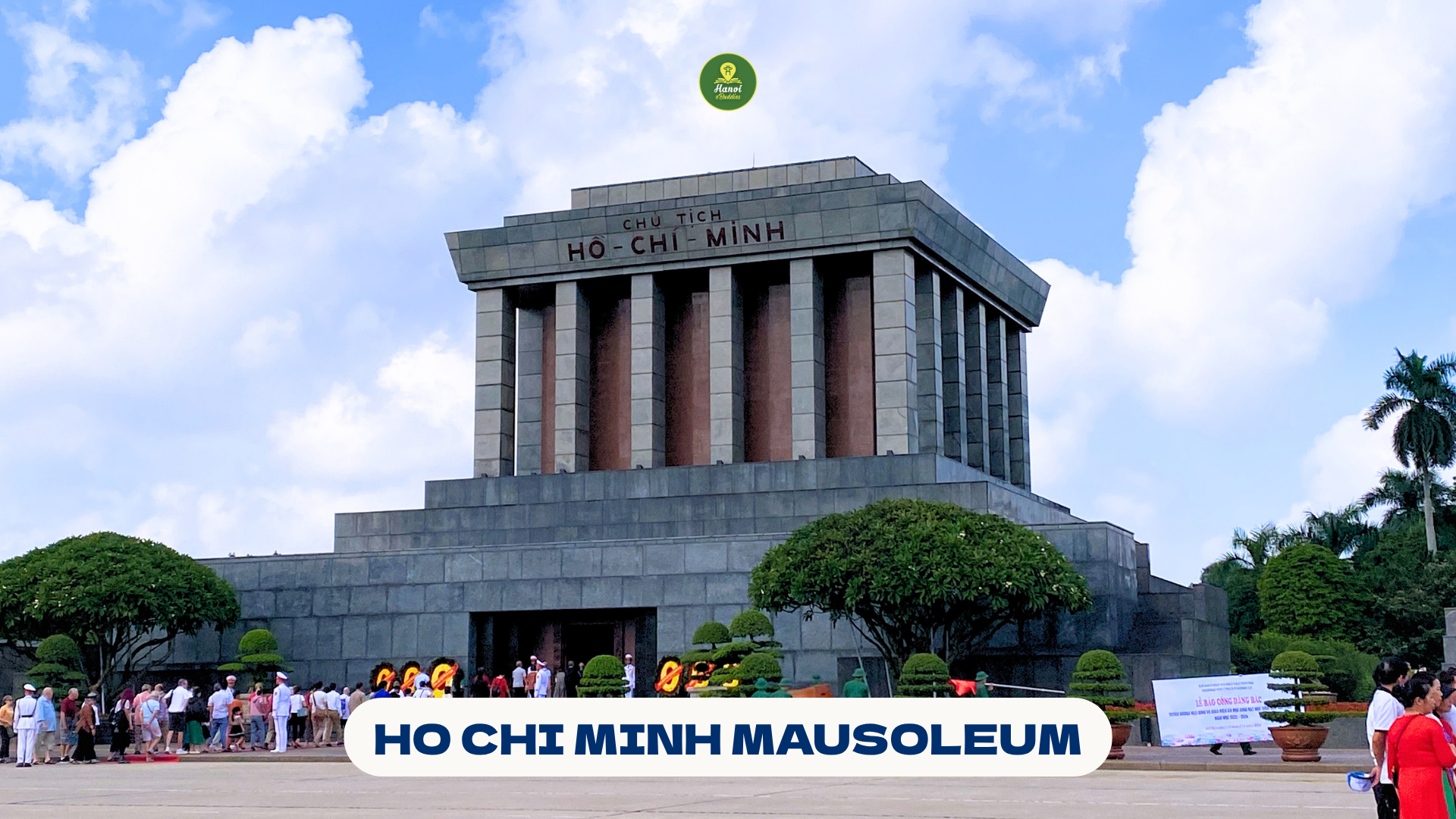
Ho Chi Minh Mausoleum – the resting place of President Ho Chi Minh
Today, many Vietnamese people and foreign tourists come to the Mausoleum to pay respect to President Ho Chi Minh. Long lines of visitors gather quietly every morning in the area. Besides, the atmosphere here remains solemn all the time.
Ho Chi Minh Museum – The Preservation of the President’s Legacy
The museum lies at No. 19 Ngoc Ha Street and was built to commemorate President Ho Chi Minh and preserve his contributions. It was inaugurated in 1990, also the 100th anniversary of President Ho Chi Minh’s birthday. The museum offers visitors an opportunity to gain a deeper understanding of his life and journey.
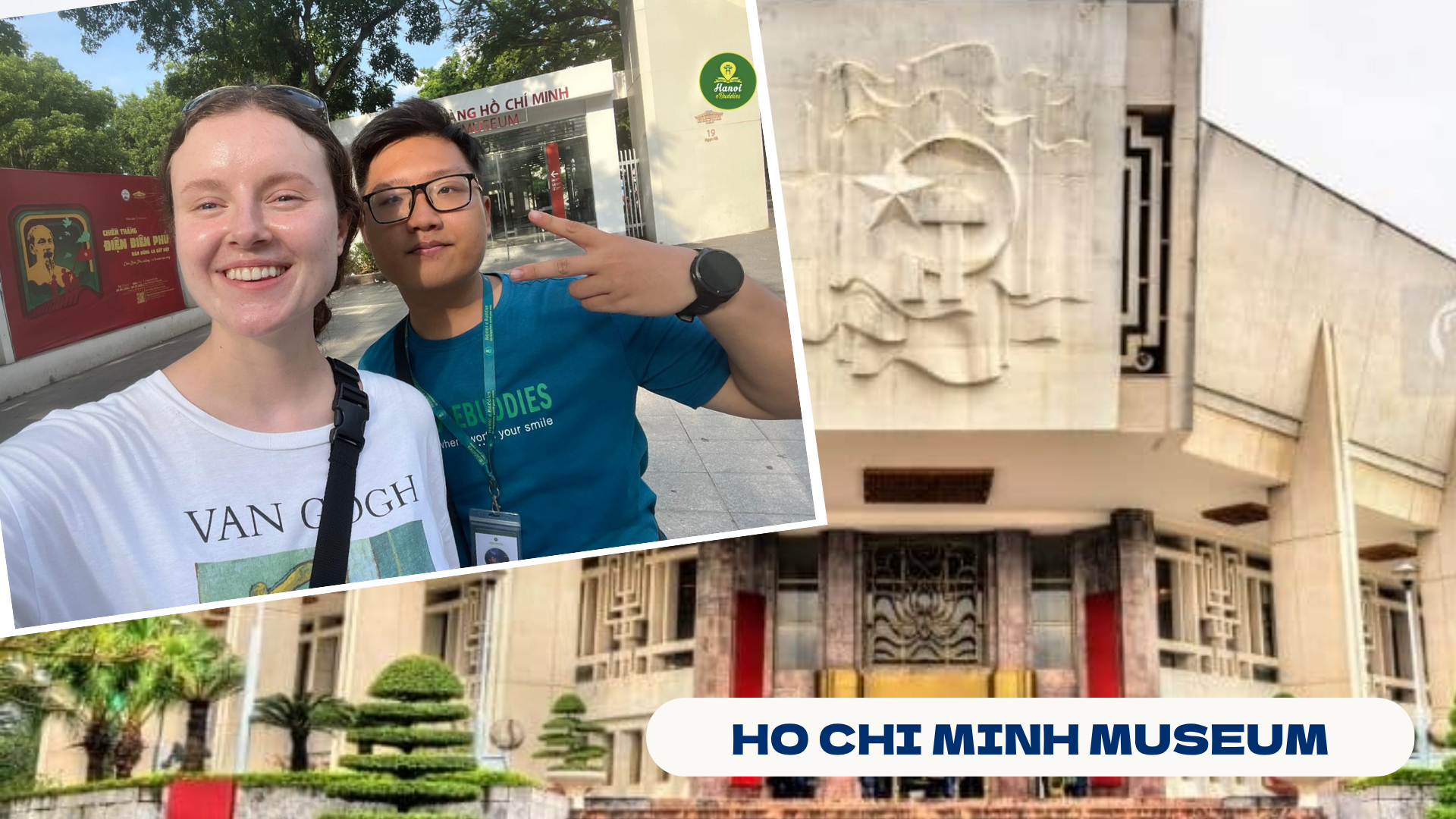
Hanoi e.Buddies tour at the Ho Chi Minh Museum
Ho Chi Minh Museum houses thousands of documents, photographs, and artifacts that present different stages of the president’s life. These range from his early years and revolutionary activities to his contributions to the country’s independence and development. Besides, there is also Vietnam’s historical journey: the country’s resilience, struggles, and victories during the struggle for independence and national development inspired by his leadership and ideals.
Through these collections, visitors can better understand not only his role in Vietnamese history but also the lasting legacy he left behind.
Presidential Palace – A Witness to History
Standing at No. 1, Hoang Hoa Tham Street, the Presidential Palace is one of the most impressive architectural structures within the Ho Chi Minh Complex. Built during the French colonial period, it originally served as the residence and workplace of the Governor-General of Indochina.
The palace features elegant European architectural influences. Meanwhile, it contrasts with the simplicity of Ho Chi Minh’s Stilt House nearby.

The Presidential Palace – the President’s workplace
Although President Ho Chi Minh worked in the area, he chose not to live in the palace. This was due to his preference for a modest lifestyle and his desire to stay close to ordinary people.
Today, the Presidential Palace continues to serve important governmental functions (so normal visitors are not allowed to entered). Meanwhile, it remains an essential part of the historical complex.
Ho Chi Minh’s Stilt House – A Reflection of a Simple Way of Life
The house lies in the garden of the Presidential Palace on Hoang Hoa Tham Street. President Ho Chi Minh chose to stay in this modest stilt house instead of the luxurious Presidential Palace. It was surrounded by gardens and trees, reflecting his simple lifestyle and connection with nature.
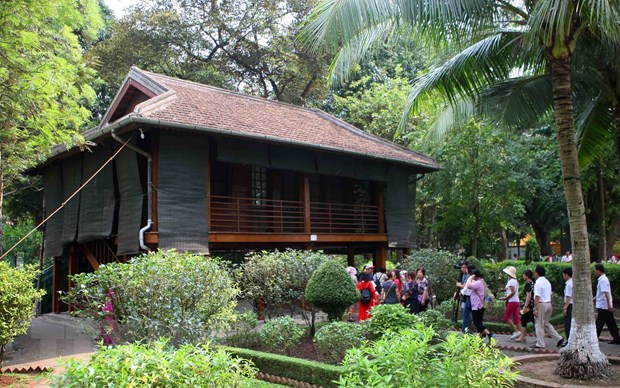
Ho Chi Minh’s Stilt House – a simple and minimalist structure (Source: Baotintuc.vn)
The house is relatively small and contains only basic living and working spaces, with a bedroom, a study area, and a meeting space. Today, the stilt house remains carefully preserved and allows visitors to get in to observe the environment where the President lived and worked.
One Pillar Pagoda – A Unique Cultural Symbol of Hanoi
Located near the Ho Chi Minh Complex, One Pillar Pagoda is one of Hanoi’s most iconic historical and cultural landmarks.
Originally built during the Ly Dynasty in 1049, the pagoda is associated with the legend of Emperor Ly Thai Tong. At that time, he dreamed of the Goddess of Mercy sitting on a lotus flower and handing him a child. Then, the pagoda was constructed based on this inspiration. It has the shape of a lotus blossom rising up in the middle of Linh Chieu Lake in the Thang Long citadel.

Hanoi e.Buddies members visiting the One Pillar Pagoda
Despite its relatively small size, One Pillar Pagoda carries significant cultural and spiritual value. Over the centuries, it has become an important symbol of Hanoi and continues to attract visitors interested in history, architecture, and religion.
Visiting Ho Chi Minh Complex on the anniversary of the President’s Birthday
To sum up, Ho Chi Minh Complex is more than simply a historical landmark. It’s the preservation of the values and enduring legacy of one of Vietnam’s most influential figures. As the anniversary of President Ho Chi Minh’s birthday on May 19th approaches, this becomes an especially meaningful time to revisit his journey and reflect on the values that continue to inspire generations today.