Mid-Autumn Festival in Hanoi
Do you know that the Mid-Autumn Festival is on the day of the fullest and brightest moon of the year? The Mid-Autumn Festival, also known as the Moon watching Festival or the Lantern Festival, is a traditional celebration in Vietnamese culture. Usually held on the 15th day of the 8th lunar month each year, the Mid Autumn Festival is a time Vietnamese people eagerly look forward to.
Let’s join Hanoi e.Buddies to learn about the origins, significance, and activities of the Mid-Autumn Festival!
Origin and Meaning of the Mid-Autumn Festival
-
Origin
The exact origins of the Mid-Autumn Festival in Vietnam remain unclear in historical records. Traditional accounts suggest that the festival is believed to have originated from Chinese culture. There are three main legends most often associated with the Mid-Autumn Festival: Hang Nga and Hau Nghe, Emperor Ming of Tang’s Trip to the Moon, and the Vietnamese Legend of Cuoi.
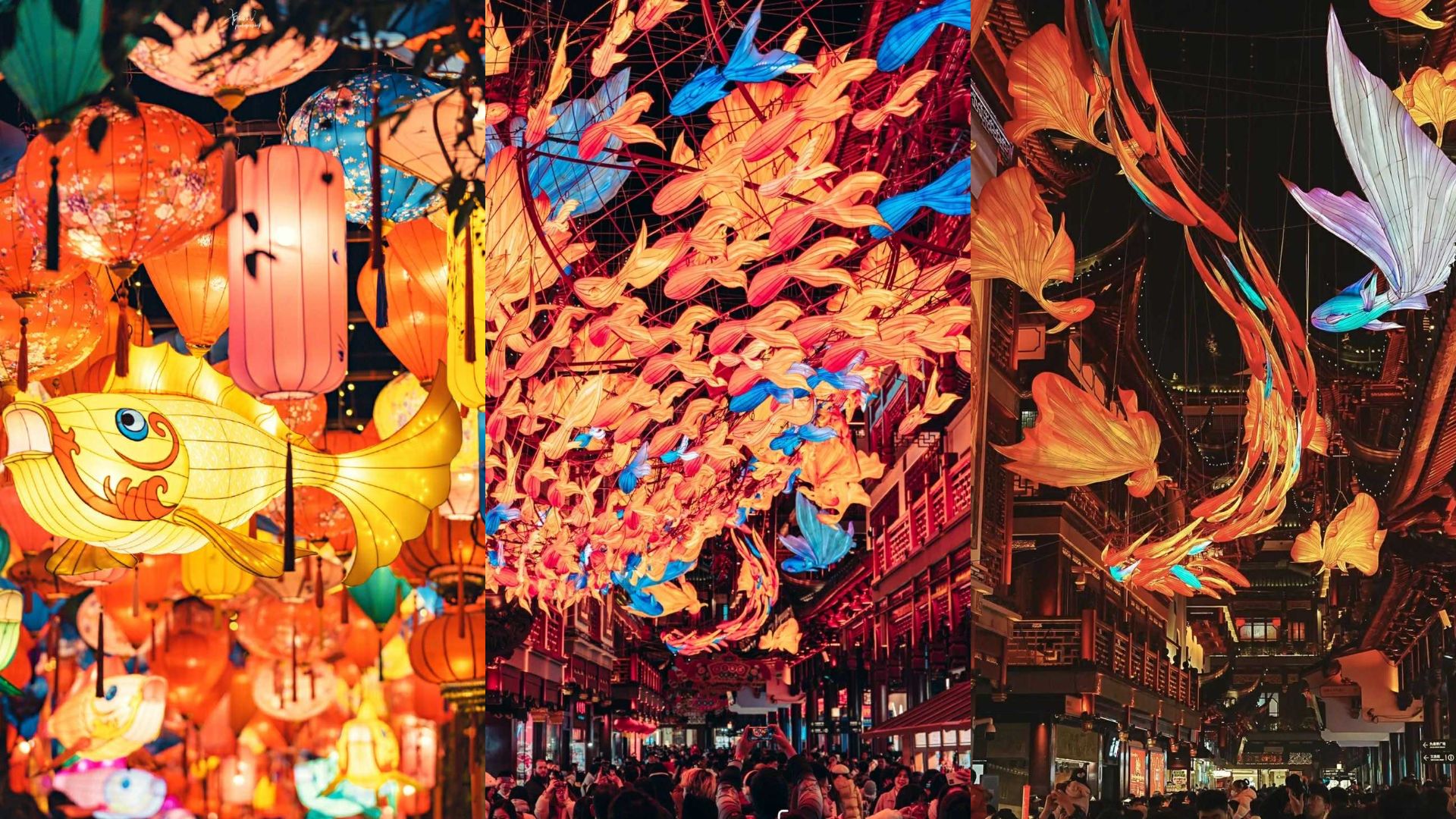
Colorful lanterns light up a street in China during the Mid-Autumn Festival
Archaeologists suggest that the Mid-Autumn Festival in Vietnam has ancient origins, with images believed to be of the festival carved on the surface of the Ngoc Lu bronze drum. According to the stele at Doi Pagoda, the festival was officially celebrated in the imperial capital of Thang Long during the Ly Dynasty. It was an occasion for the king to thank the Dragon God for bringing favorable weather and prosperous harvests.
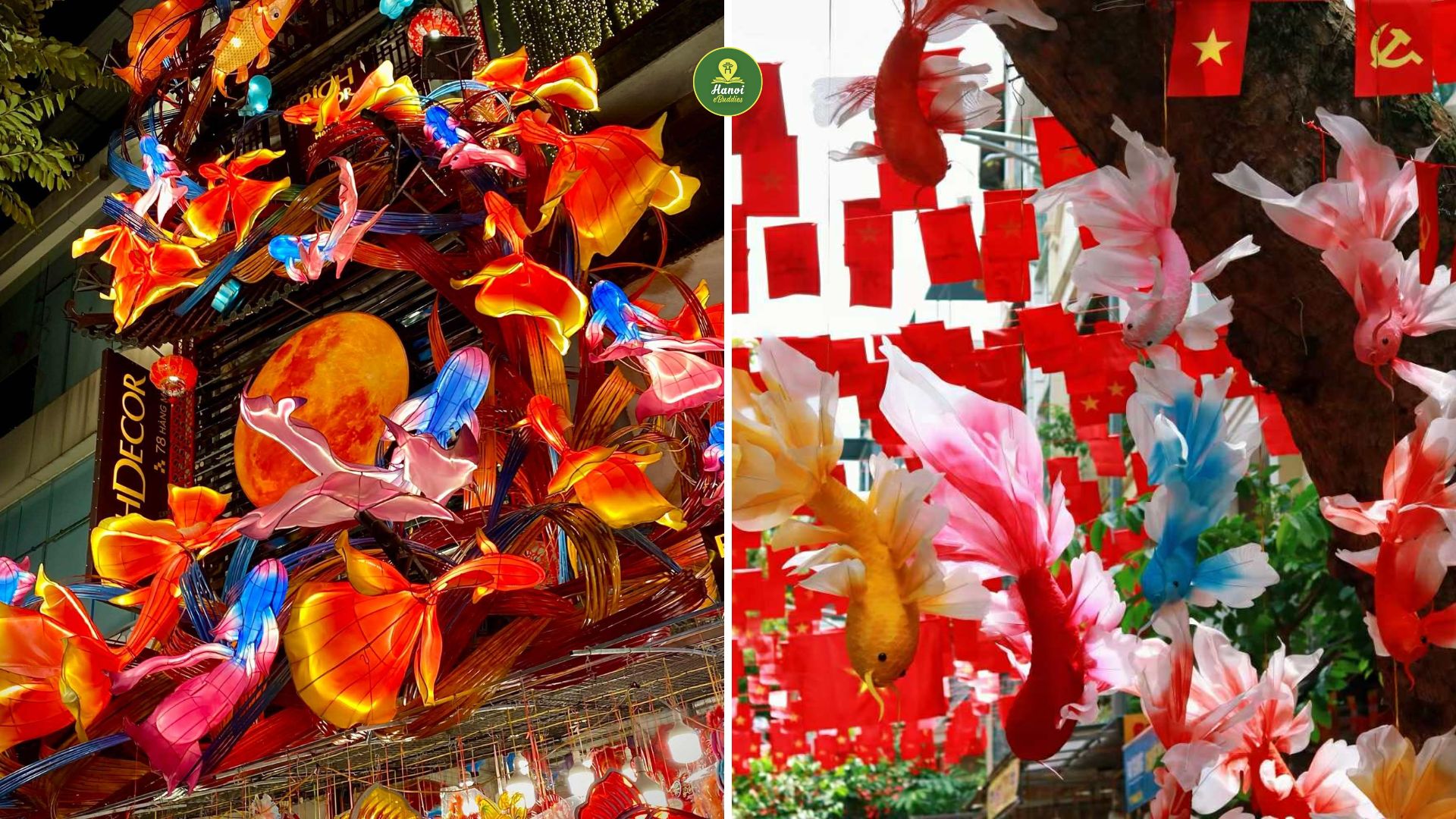
Multicolored lanterns glowing amid the red of Vietnam’s national flag, symbolizing festive pride
The Mid-Autumn Festival also signals the end of the harvest season, when farmers gather crops and pray for peace and prosperity in the coming year. Traditionally, ancient Vietnamese people celebrated this festival annually to express gratitude to the God of Agriculture for a bountiful harvest.
-
Meaning
The Mid-Autumn Festival is a time for family reunion, where everyone gathers to show love and strengthen their bonds. Additionally, it is a special day to express filial piety and gratitude to grandparents and parents for their care and upbringing. For the Vietnamese community, the Mid-Autumn Festival serves as an occasion to connect people and preserve traditional cultural values such as lion dancing and lantern processions.
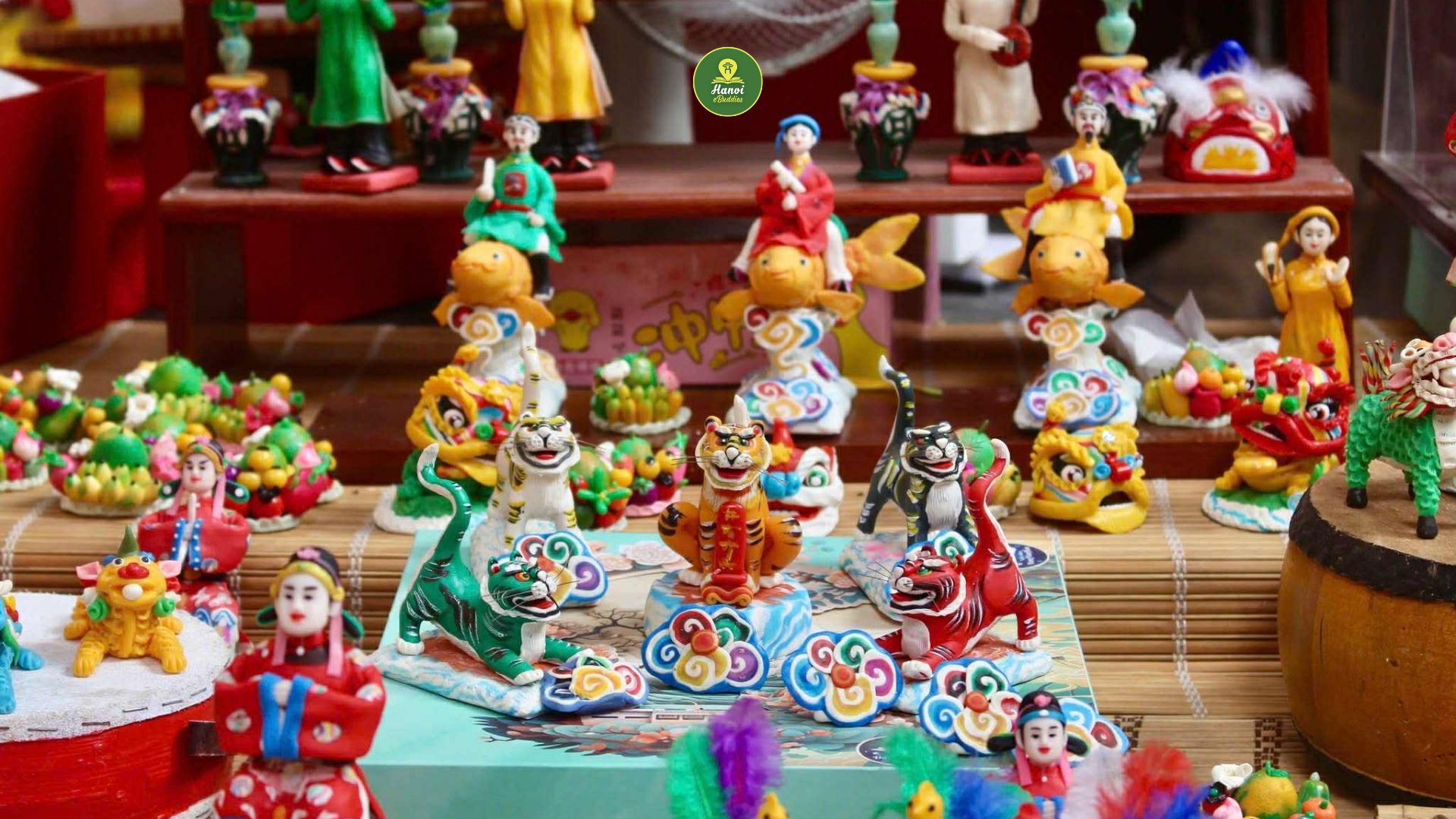
Traditional To he toys molded into colorful animal and character shapes for the Mid Autumn Festival celebration
Signs that Mid-Autumn Festival is coming
The Mid-Autumn Festival is one of the most anticipated holidays of the year. You can feel its familiar atmosphere drawing near through these telltale signs:
-
Lanterns and Traditional toys everywhere
About two weeks before the full moon of the eighth lunar month, major streets and traditional markets like Hang Ma and Hang Luoc in Hanoi begin to overflow with colors. Shops start selling a wide variety of lanterns, including star shaped lanterns and fish shaped lanterns. You’ll also see revolving lanterns and traditional toys like frog drums and lion heads. Made from paper, bamboo, and other materials, these colorful toys and lanterns create a magical, glittering sight under the streetlights. This builds a sense of excitement, especially for children. Streets like Hang Ma can be considered among the most beautiful spots for photography during the Mid-Autumn Festival.
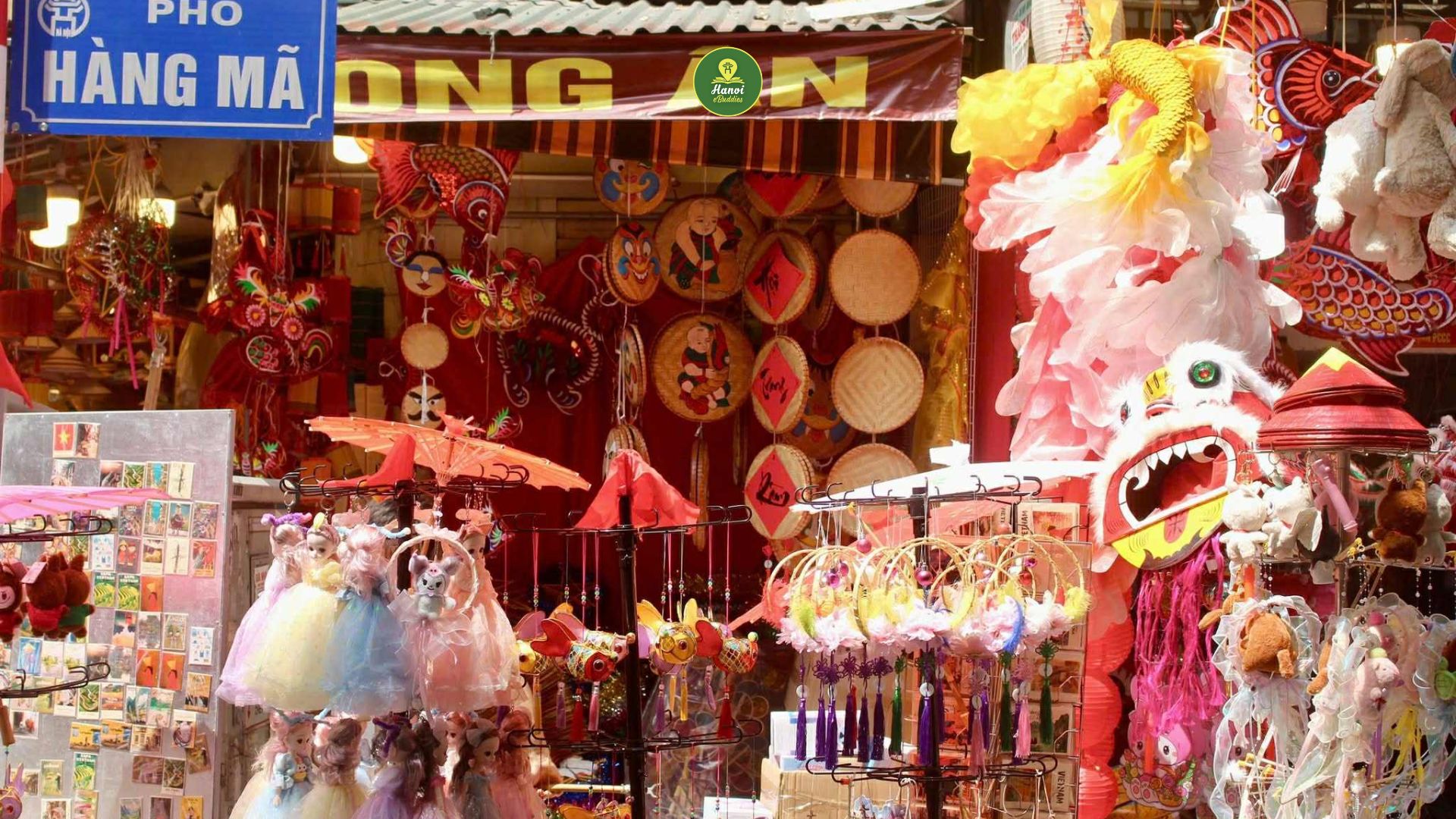
A shop on Hang Ma Street during the Mid-Autumn Festival
-
The Scent of Mooncakes
Mooncakes are the “soul” of the Mid-Autumn Festival. About a month before the festival, major brands like Kinh Do and Huu Nghi, as well as traditional bakeries, start displaying their products. There’s a common joke among Vietnamese people that when you see Kinh Do stalls, you know the Mid-Autumn Festival is just around the corner.
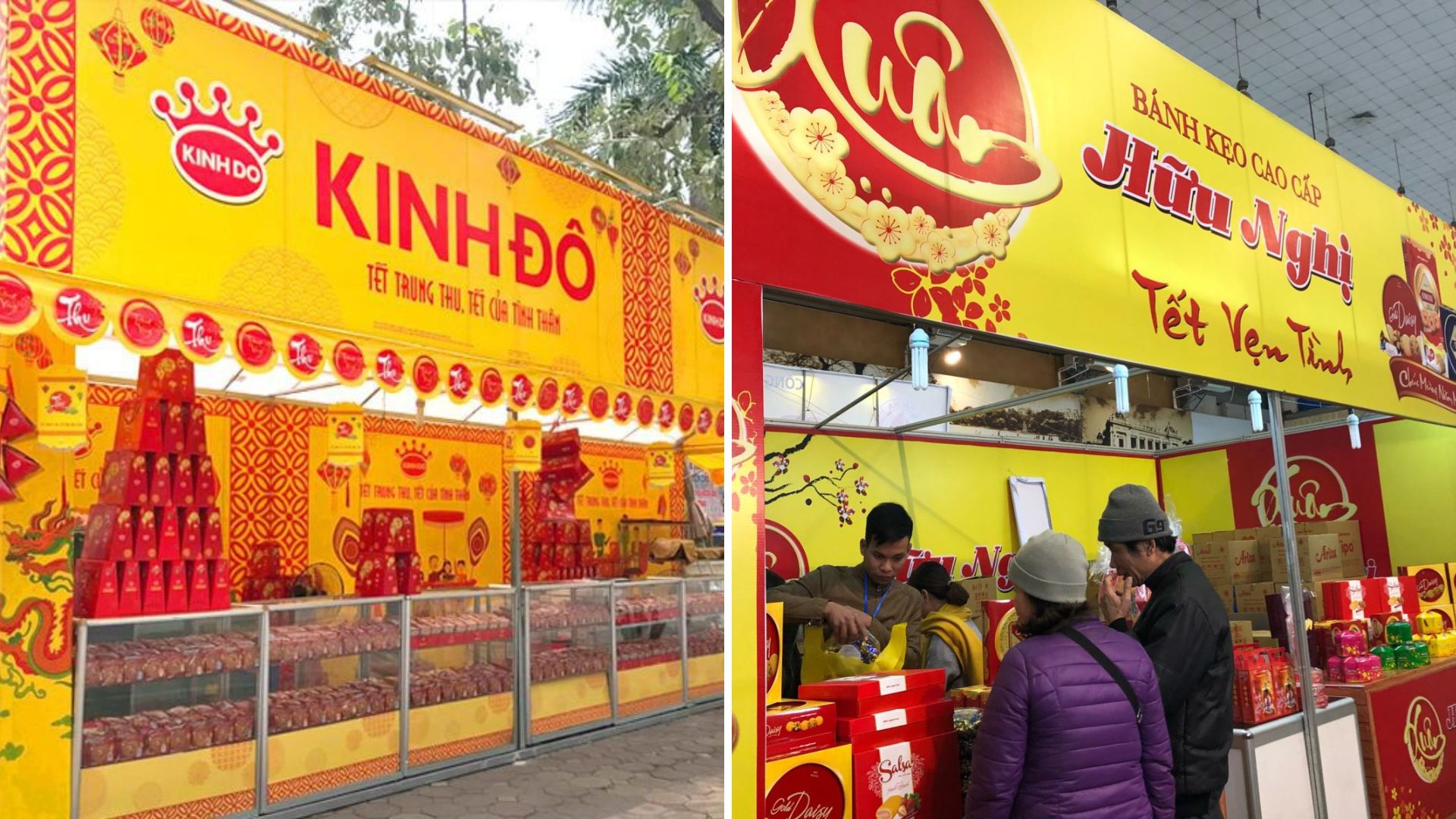
Kinh Do and Huu Nghi mooncake stalls
In Vietnam, each type of mooncake carries a different meaning. The soft, glutinous mooncake (banh deo) has a full moon shape, symbolizing family reunion. Its ivory white color represents the close, intimate love between a husband and wife.
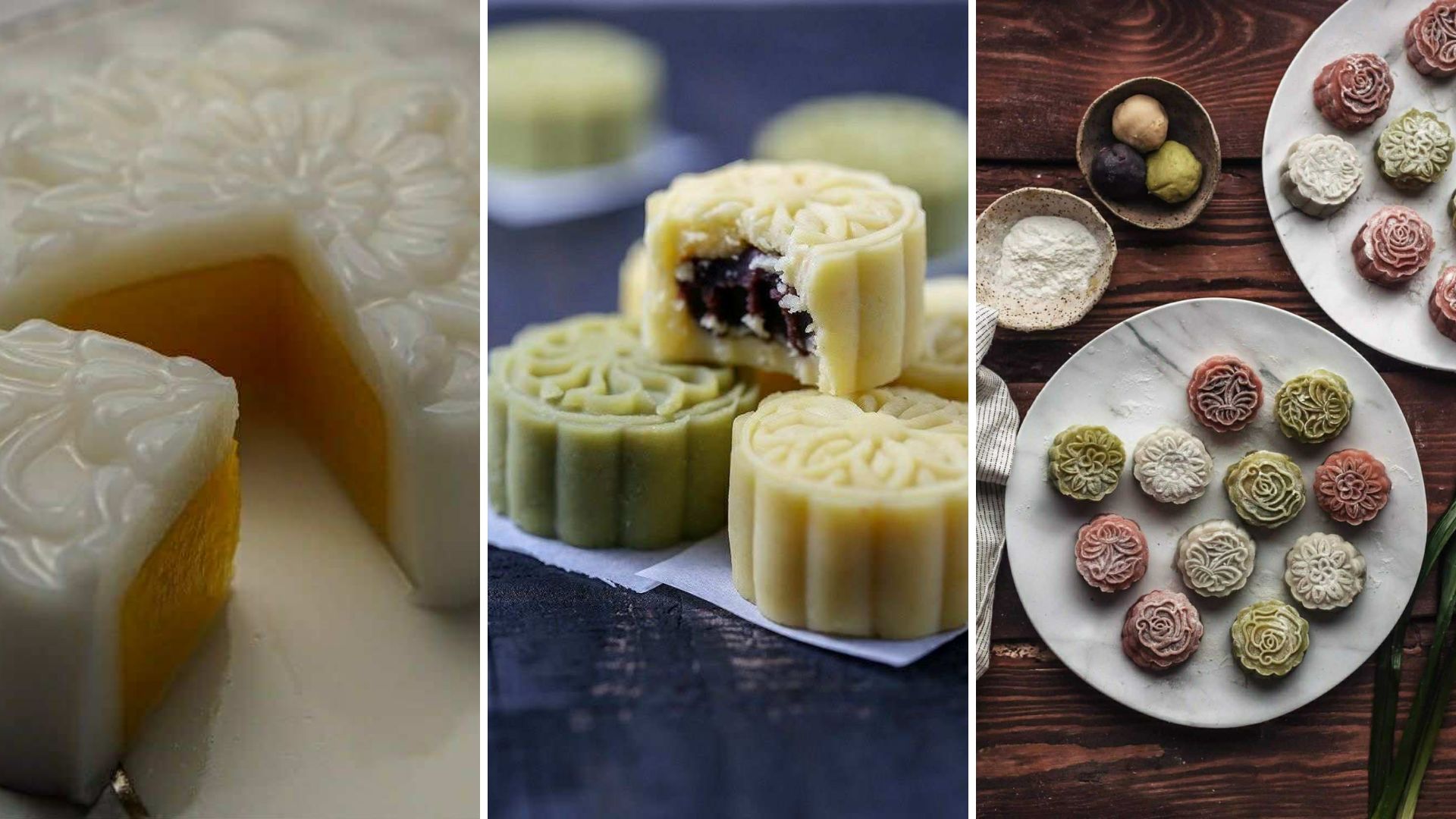
A variety of colorful banh deo with different flavors and intricate designs
The baked mooncake (banh nuong) signifies that no matter how many difficulties you face in life or at work. You will always have your loved ones by your side to support you. The fillings for this type of mooncake are incredibly diverse, with both savory and sweet options. From the traditional mung bean paste to salted egg yolk, mixed nuts (thap cam), taro,… The variety is endless. Vietnamese people often joke that during the Mid-Autumn Festival, everyone splits into two rival factions: Team Mung Bean and Team Mixed Nuts. It’s a “clash of the titans” for many Vietnamese families, with each side passionately defending their favorite.
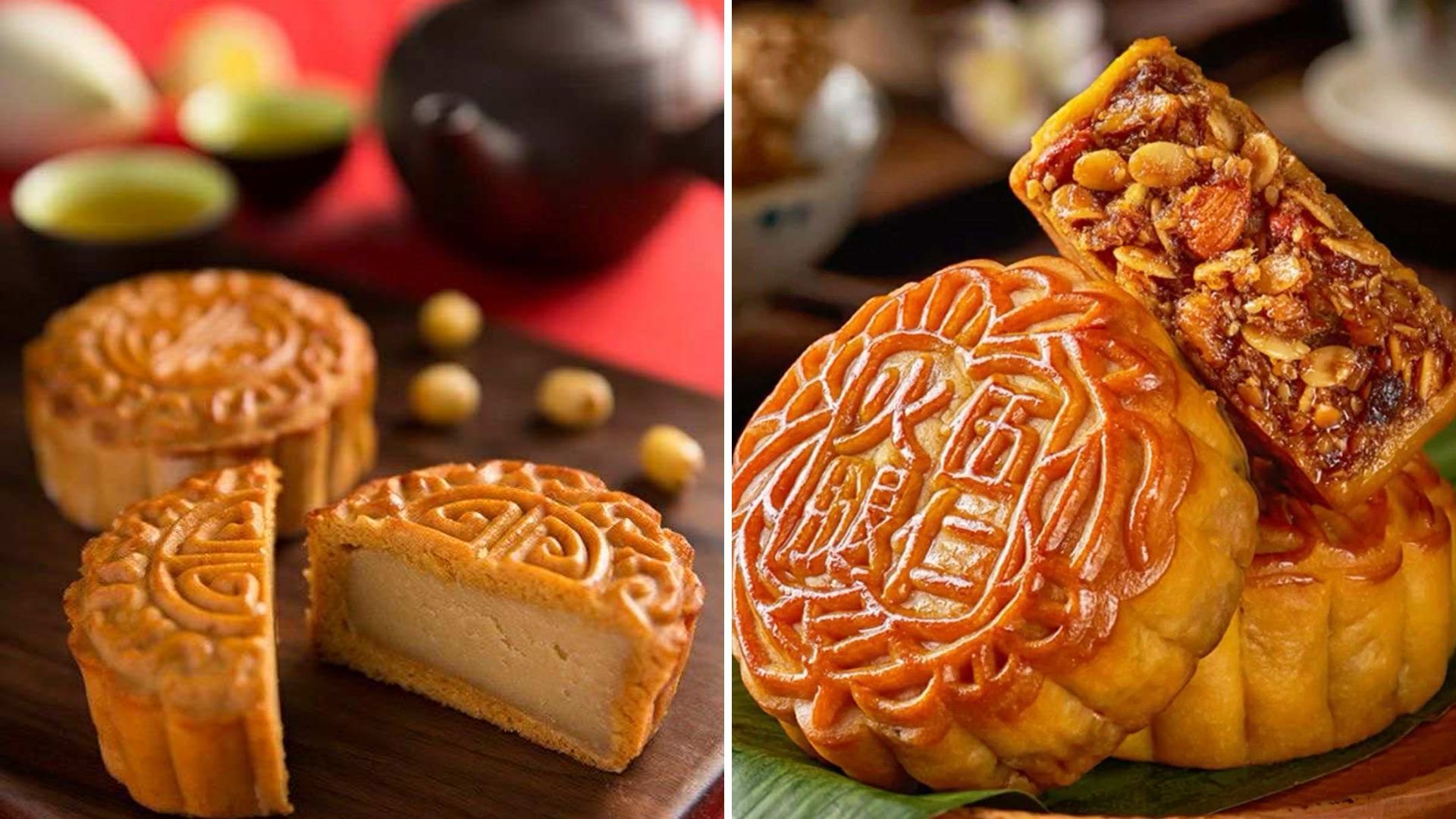
National war between Team Mung Bean mooncakes (left) and Team Mixed Nuts mooncakes (right)
Traditional Activities During the Mid-Autumn Festival
-
Decorating the five-fruit tray
On the night of the full moon, each family prepares a Mid-Autumn feast, which includes a tray of seasonal fruits like pomelo, persimmons,… various candies, and mooncakes. After offering the feast to their ancestors, the family gathers to enjoy it together. With skillful hands, mothers often shape fruits like pomelo and dragon fruit into beautiful animal figures. This special family gathering around the tray of fruits and treats is called “Pha co” (literally “breaking the feast”).
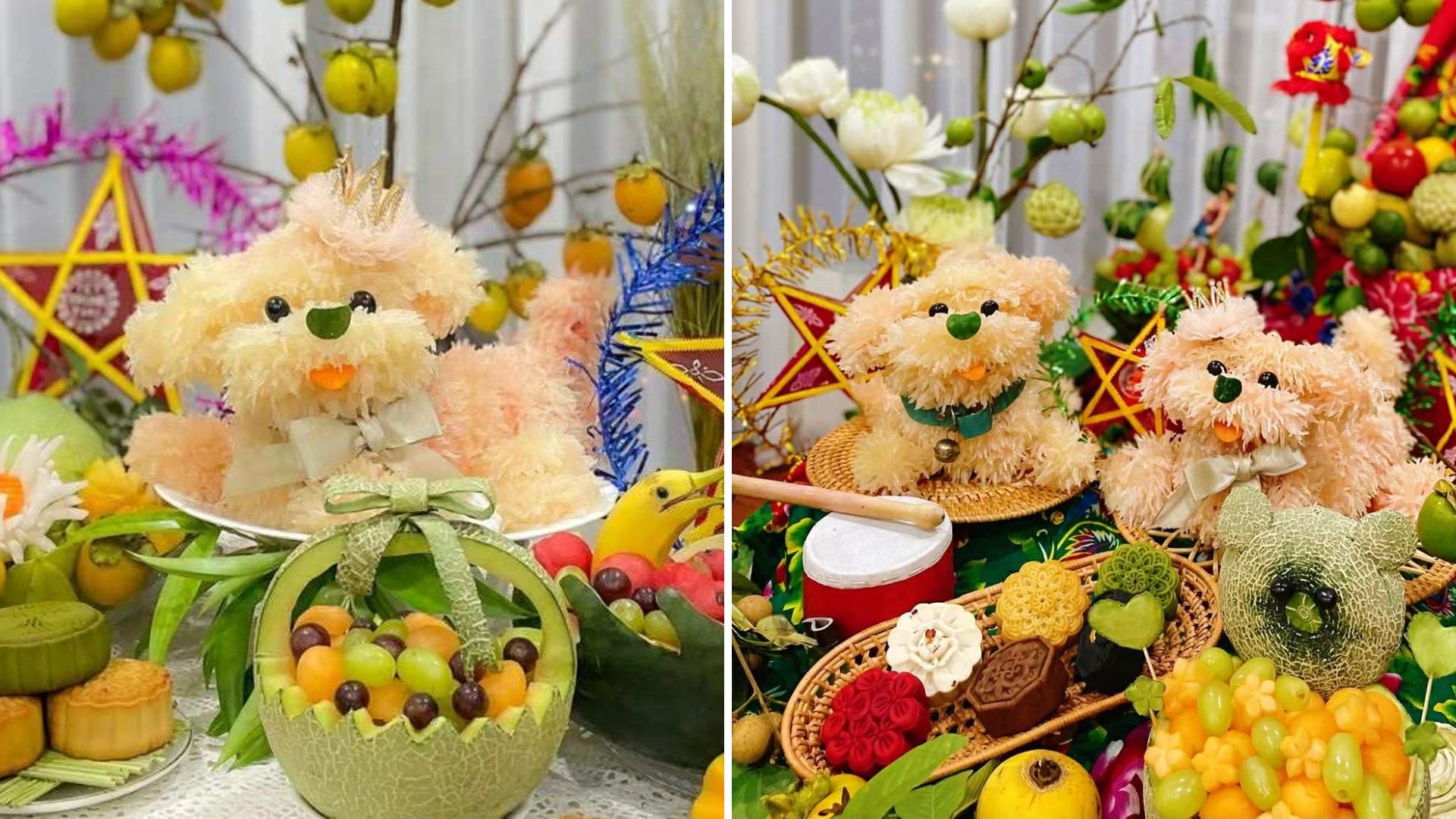
Creative Five-fruit Trays
-
Star Lantern Processions
Children and even adults carry sparkling lanterns, especially the star shaped ones, as they walk through the streets. Meanwhile, the vibrant sounds of drums and tambourines blend with the singing of familiar children’s songs. Together, they create a lively and joyful Autumn atmosphere.
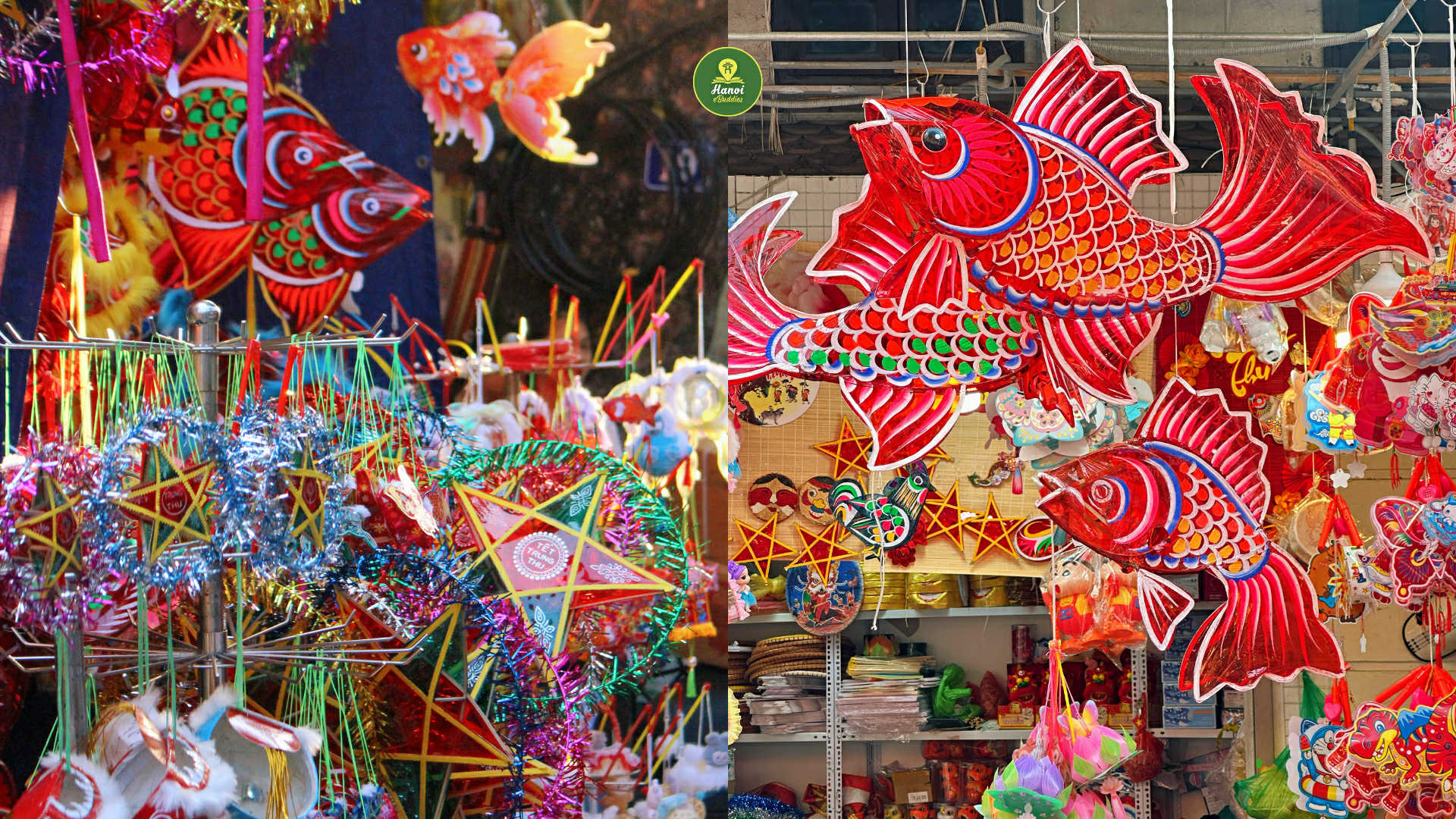
Traditional star shaped and fish shaped lanterns
-
Lion Dances
Lion dance troupes, dressed in vibrant costumes, perform throughout villages and neighborhoods to the powerful beat of drums. The “Ong Dia” (the Earth God), with his big belly and cheerful smile. He often accompanies the lion, entertaining the children with playful antics.
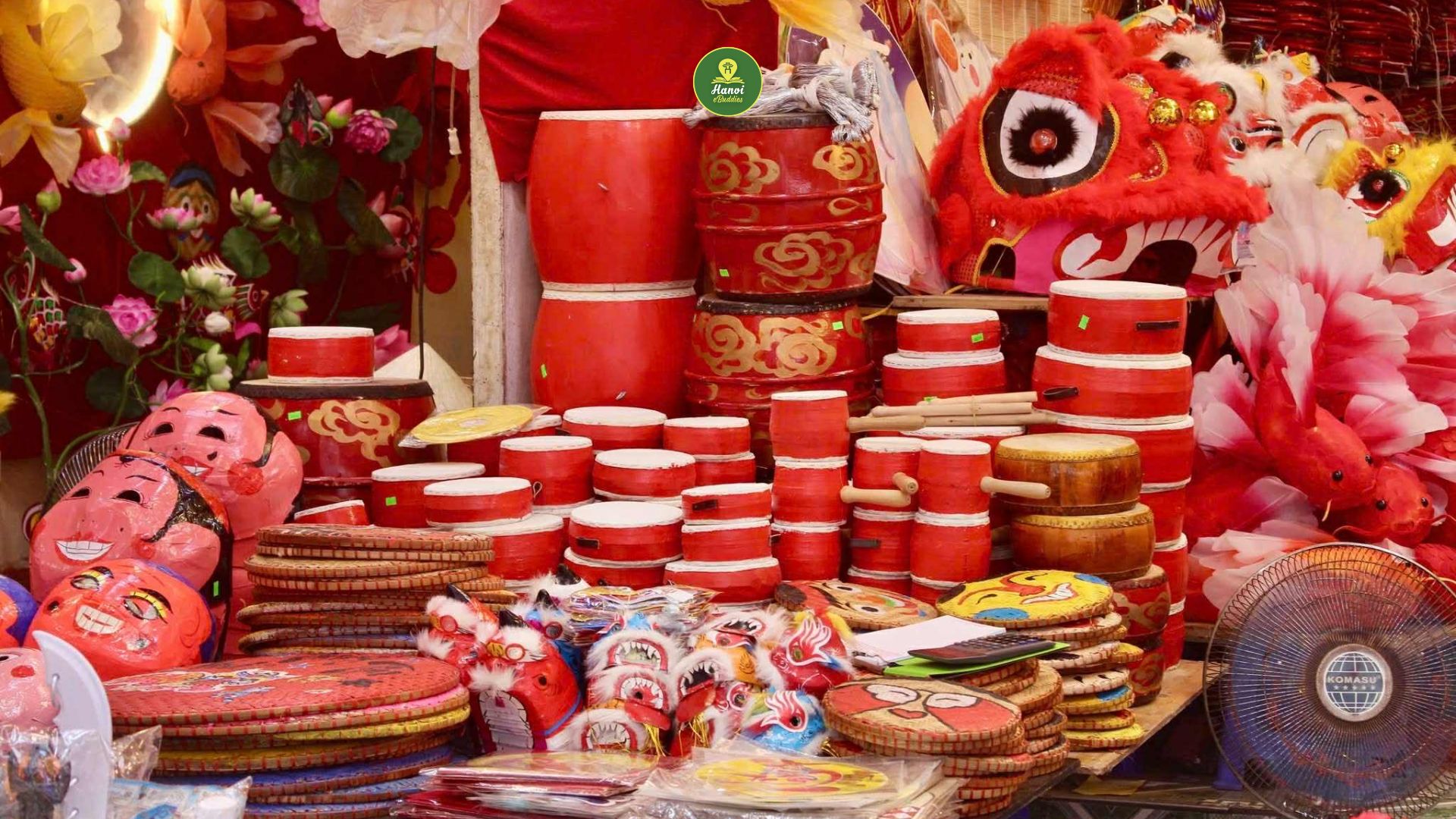
Ong Dia masks, drums, and lions’ heads for a lion dance performance
The Mid-Autumn Festival is a time to slow down, honor traditions, and enjoy quality time with family and community. Beyond traditional activities, there are many fun local experiences to explore and enjoy the festive atmosphere.
If you’re visiting Hanoi during this Mid-Autumn Festival and are unsure of what to do. Let Hanoi e.Buddies accompany you in exploring the city and show you how to celebrate like a local.
Are you ready to “break” the feast?
Follow us for more tips and recommendations. Stay inspired for your next outdoor adventure by visiting our TripAdvisor, Facebook, and Instagram for even more insights and updates!