Temple of Literature: the FIRST university of Vietnam from 1070
Book this free tour now!
The Temple of Literature, with its great cultural and historical significance, is an ideal destination for individuals interested in Vietnamese history and who enjoy a tranquil atmosphere.
The Temple of Literature is a unique national relic in Hanoi that provides a glimpse into Vietnamese history and culture dating back to the 10th century. As Vietnam’s first university, it is a popular site for students hoping for good test results, as well as a popular attraction for tourists visiting Hanoi.
1. Where is the Temple of Literature? How to get there?
- Location: No. 58, Quoc Tu Giam Street, Dong Da District, Hanoi
- Opening hours: 8:00 AM – 5:00 PM
- Temple of Literature Entrance Ticket: VND 30,000 for adults; VND 15,000 for students (student ID required)
The Temple of Literature is situated on the peaceful Quoc Tu Giam Street, approximately 2-3 kilometers west of Hoan Kiem Lake. This ideal location makes it a convenient stop on your tour of Hanoi.
You can get to the Temple in a variety of ways. A cab from Hoan Kiem Lake will take you here in just 10 minutes. Meanwhile, if you’re driving your own car or motorcycle, consult Google Maps or ask locals for directions.
You can also take a bus to travel to the Temple of Literature. The following bus lines stop nearby: no. 02, 23, 38, 25, and 41.
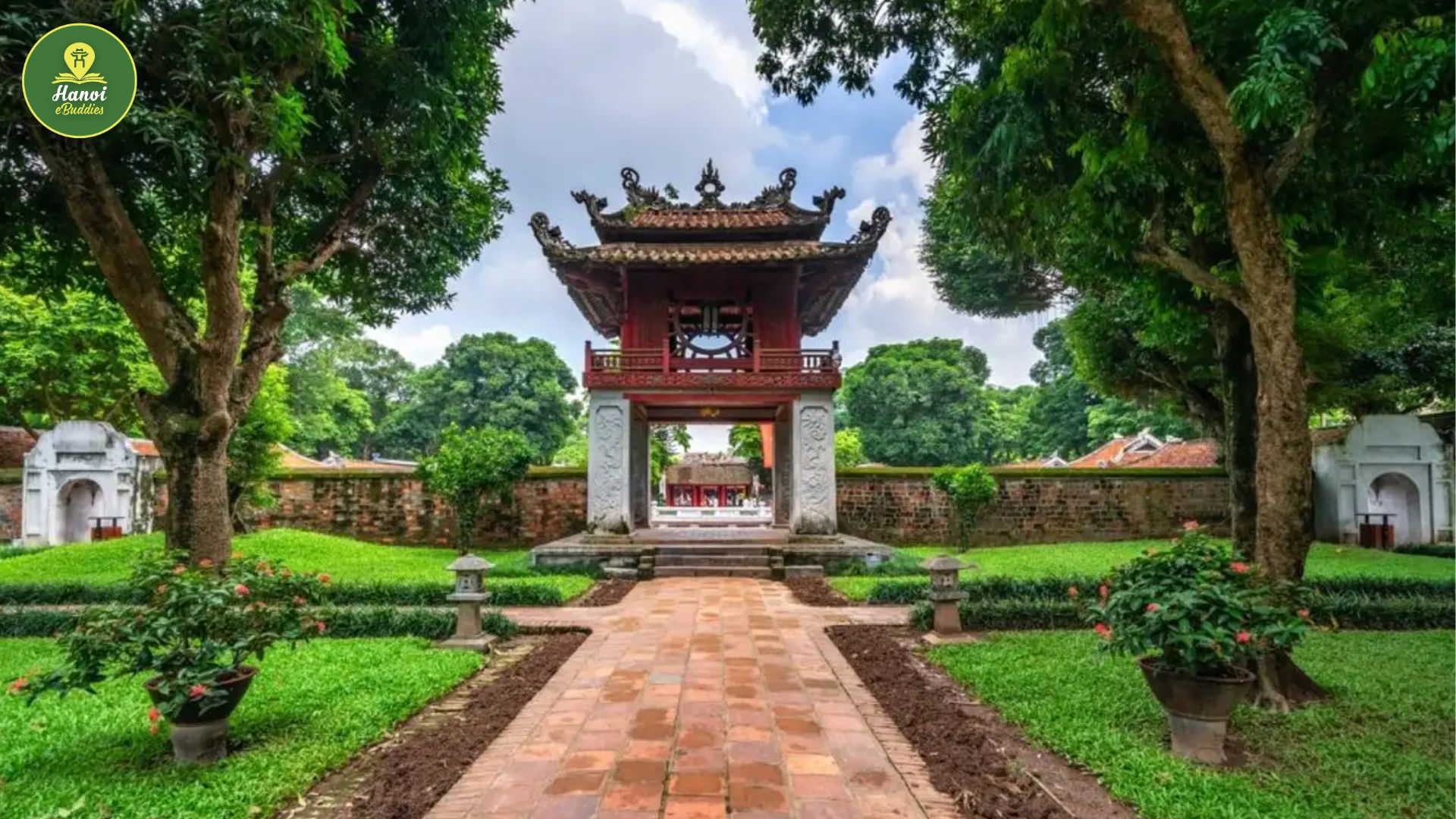
Temple of Literature Hanoi is a well-known cultural tourist attraction (Source: Collected)
2. Background of Temple of Literature
The Temple of Literature was constructed in 1070 under Emperor Ly Thanh Tong’s reign as a site of adoration for the Chinese scholar Confucius. Meanwhile, Emperor Ly Nhan Tong established the Imperial Academy (Quoc Tu Giam) in 1076 to educate the children of the emperor and noble families. During the Ly, Tran, and Le dynasties, it was the oldest university in Vietnam and the greatest educational institute.
The Temple of Literature has played an important role in Vietnamese education and culture throughout its history. Its initial educational purpose was to educate gifted individuals from royal and elite households. For nearly 700 years, Vietnam’s Temple of Literature has taught hundreds of well-known scholars and mandarins.
Today, the Temple is a location where poetry festivals are held, where outstanding students are recognized, and where students can pray for good exam results.
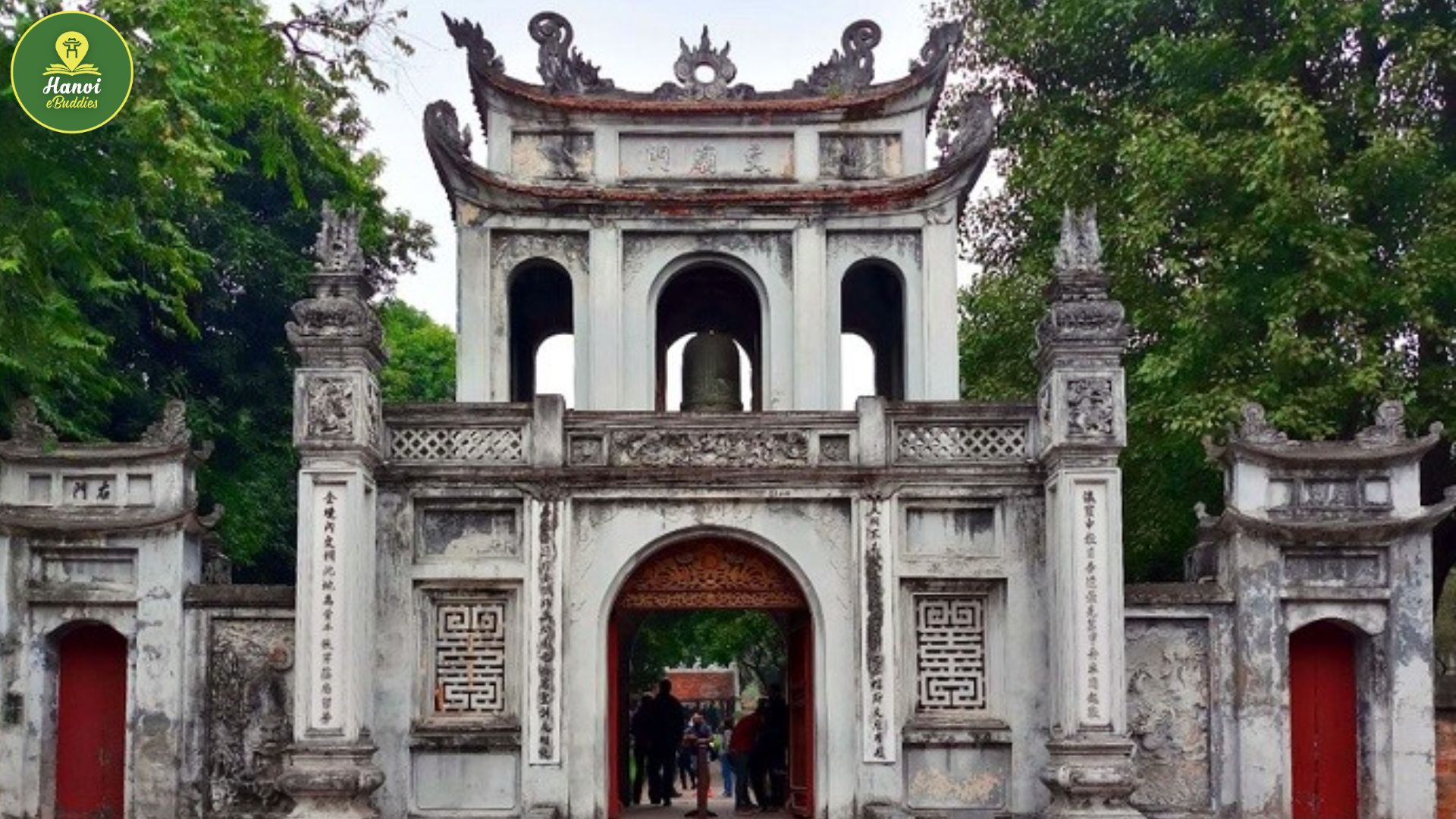
Temple of Literature Hanoi is a prestigious historical and cultural site (Source: Collected)
3. The architectural highlights of the Temple of Literature
The Temple is 54,000 square meters in size and is enclosed by an antique red brick wall. The Great Middle Gate (first), the Pavilion of Constellation (second), the Well of Heavenly Clarity (third), the Gate to Great Success (fourth), and the Grounds of Imperial Academy (fifth) make up the five courtyards.
3.1. The first courtyard (the Great Middle Gate)
The Great Middle Gate is the first thing you will notice when visiting the Temple of Literature. It is designed in the style of a traditional Vietnamese communal house, with three compartments. There is a fish motif on top of the Gate, which is thought to represent a student. To be able to leap over the sea waves and become a formidable dragon, the fish, or the student, must study diligently.
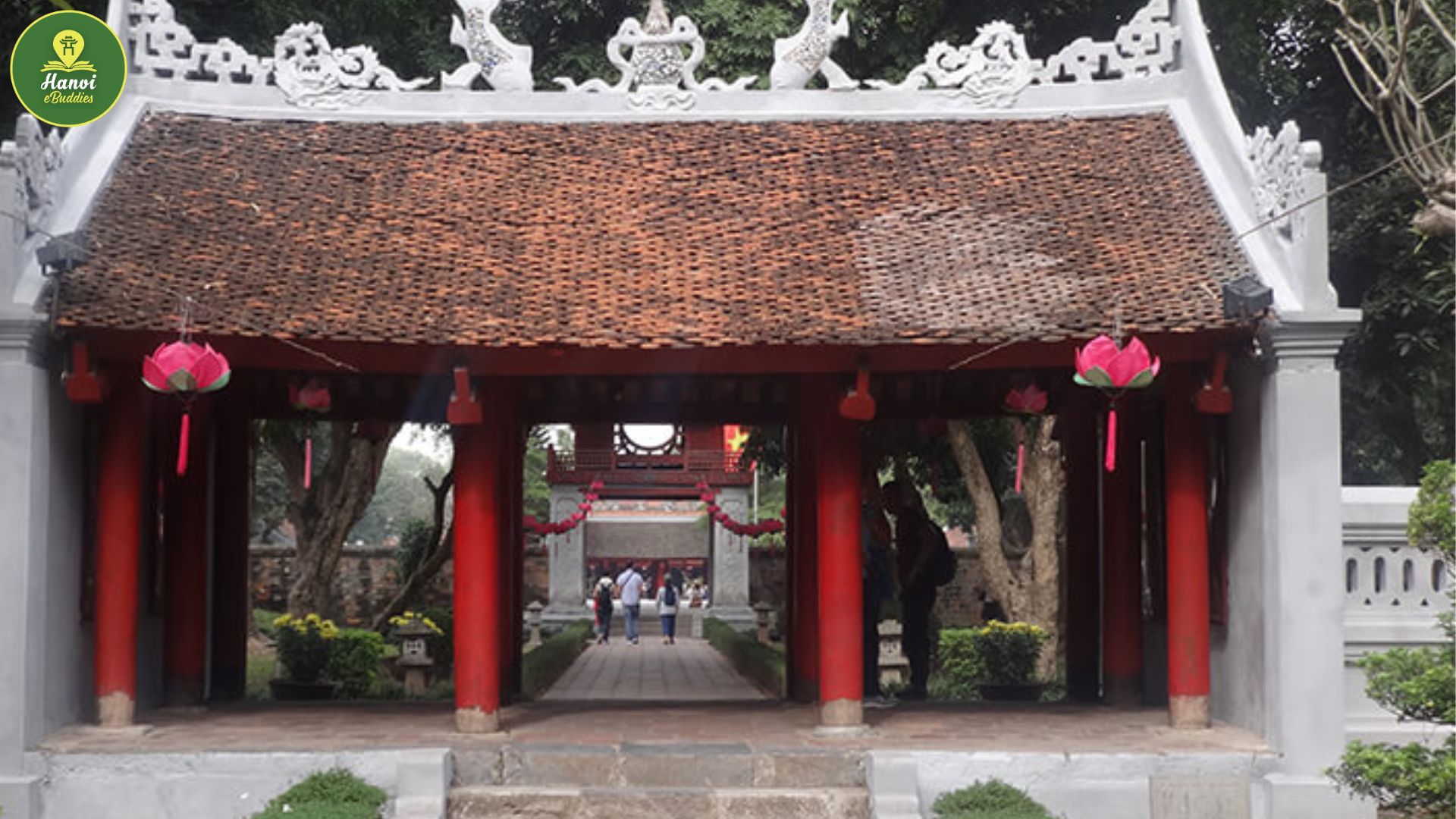
The first courtyard creates a sense of elegance and tranquility (Source: Collected)
3.2. The second courtyard (the Pavilion of Constellation)
The Pavilion of Constellation is a well-known sight. It appears on the back of the 100,000 Vietnam dong banknote. The Pavilion, whose name means “brightest star in the sky,” symbolizes the desire for affluence and advanced knowledge.
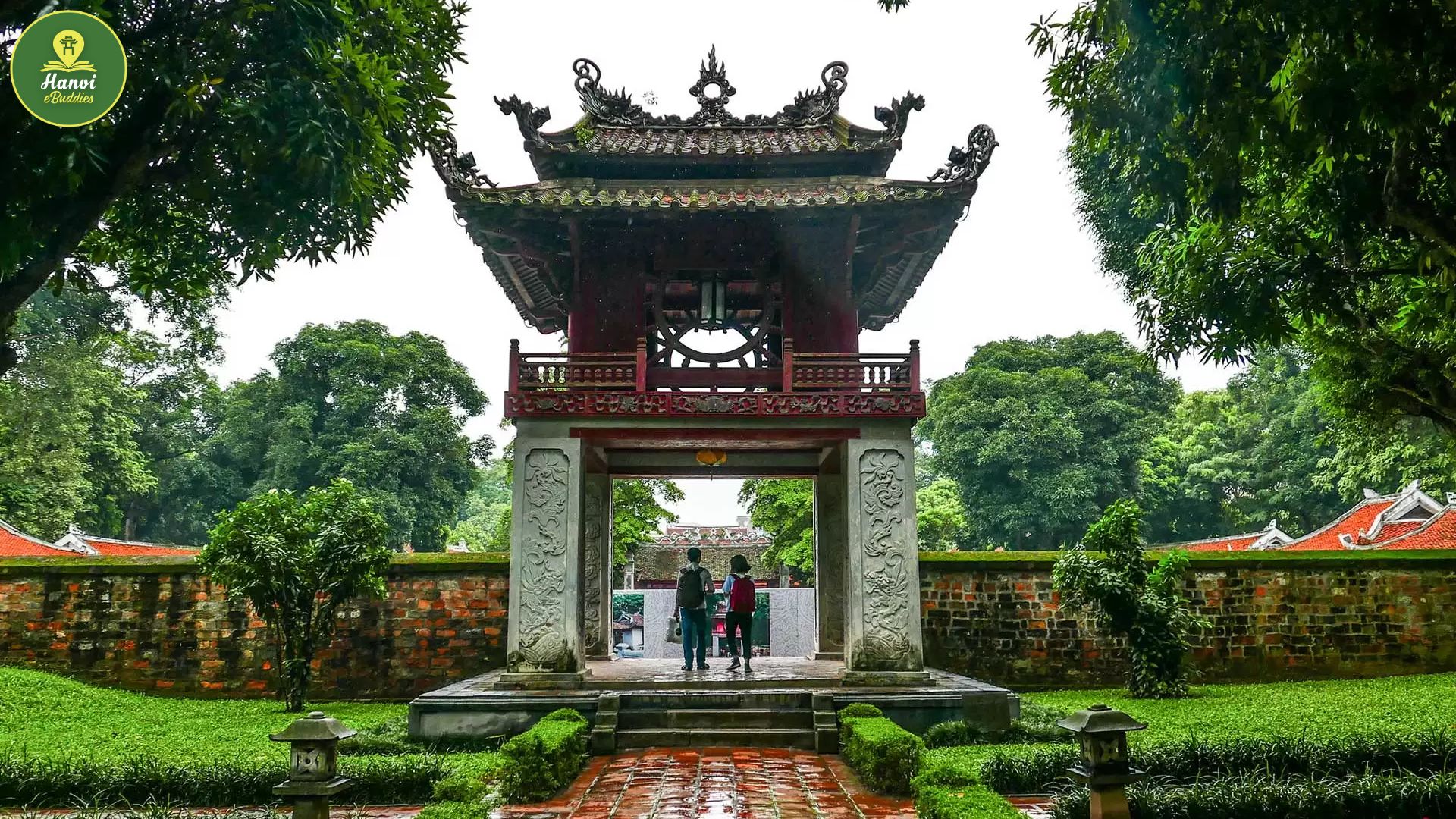
The simple and elegant Pavilion of Constellation under the shades of the ancient trees (Source: Collected)
3.3. The third courtyard (the Well of Heavenly Clarity)
The Well of Heavenly Clarity is actually a very big pond, with a square shape representing the earth and a circle representing the sky at the top of the Pavilion of Constellation. They represent the coexistence of sky and earth.
A house with stelae on stone turtles sits on the other side of the courtyard. Only 82 stone turtles and stelae survive today due to the devastation caused by wars. The etchings on the stelae honor Confucianism and the Emperor, as well as information about previous examinations and professors. They are an invaluable resource for the study of Vietnam’s history, culture, education, society, and sculpture. In 2011, these stelae were added to UNESCO’s Memory of the World Register.
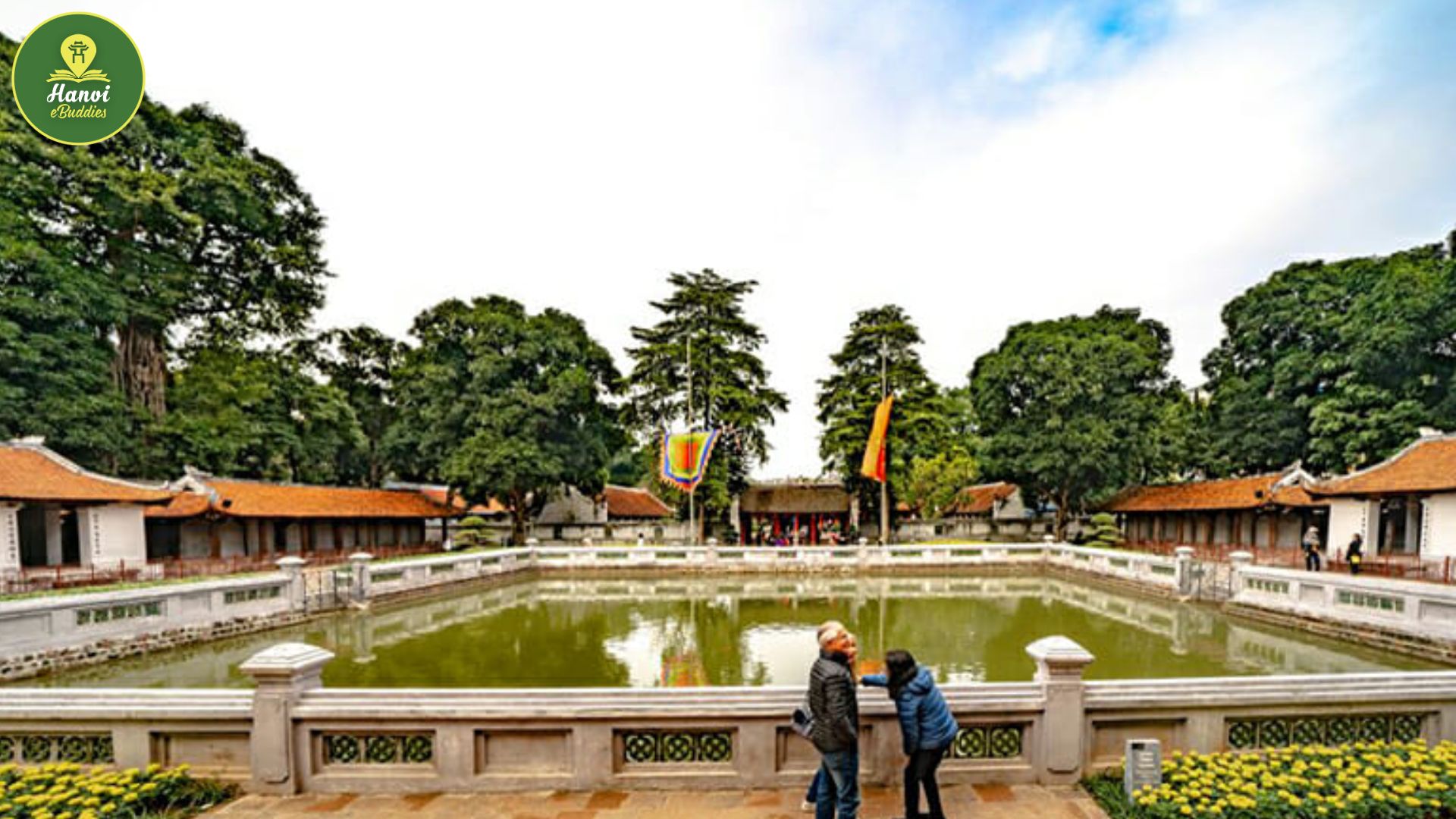
A large pond, named Well Of Heavenly Clarity, third courtyard, Temple of Literature, Hanoi (Source: Collected)
3.4. The fourth courtyard (the Gate to Great Success)
The fourth courtyard, known as the Gate to Great Success, is located in the heart of the temple complex. An altar in the courtyard honors Chu Van An (the first rector of the Imperial Academy) and the seventy-two most revered disciples of Confucius.
There is also a modest exhibition of inkwells, pens, and books belonging to students who studied here. A approximately 300-year-old ancient banyan tree serves as a symbol of longevity and health. Over the ages, the tree has seen many important occurrences at the Temple of Literature.
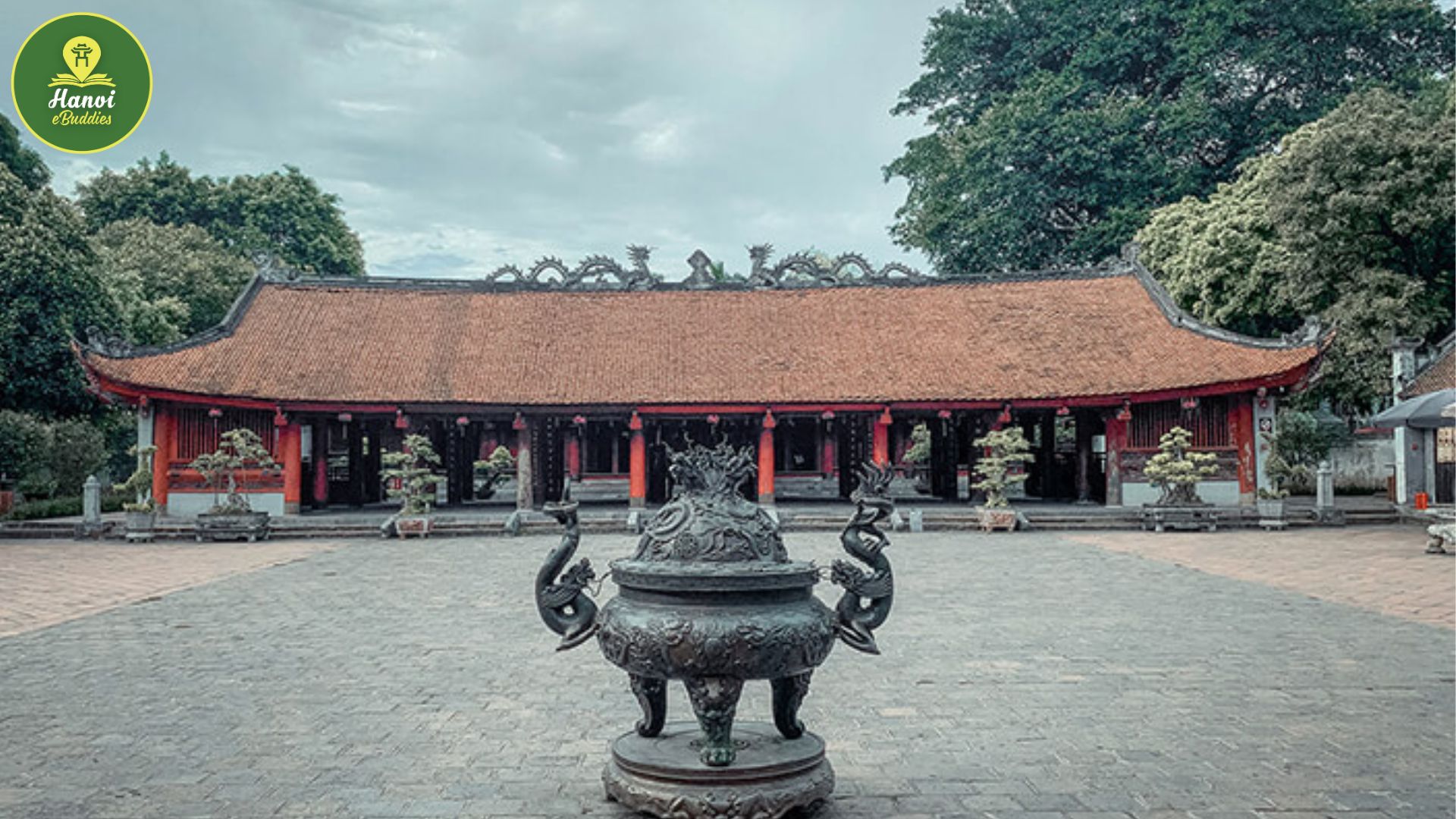
In the fourth courtyard, there is Great Court, House of Ceremonies, Sanctuary of the Great Success (Source: Collected)
3.5. The fifth courtyard (the Grounds of Imperial Academy)
The fifth courtyard on the grounds of the ancient Imperial Academy was renovated in 2000 while keeping the traditional architecture. It has two stories. On the first floor, there is a statue of Chu Van An, who dedicated his life to education. The second floor is dedicated to the three kings who donated the most to the Temple’s construction: Ly Thanh Tong, Ly Nhan Tong, and Le Thanh Tong.
There is also a massive drum and bronze bell here, which echo Vietnam’s rich tradition and draw many world leaders when they visit Hanoi.
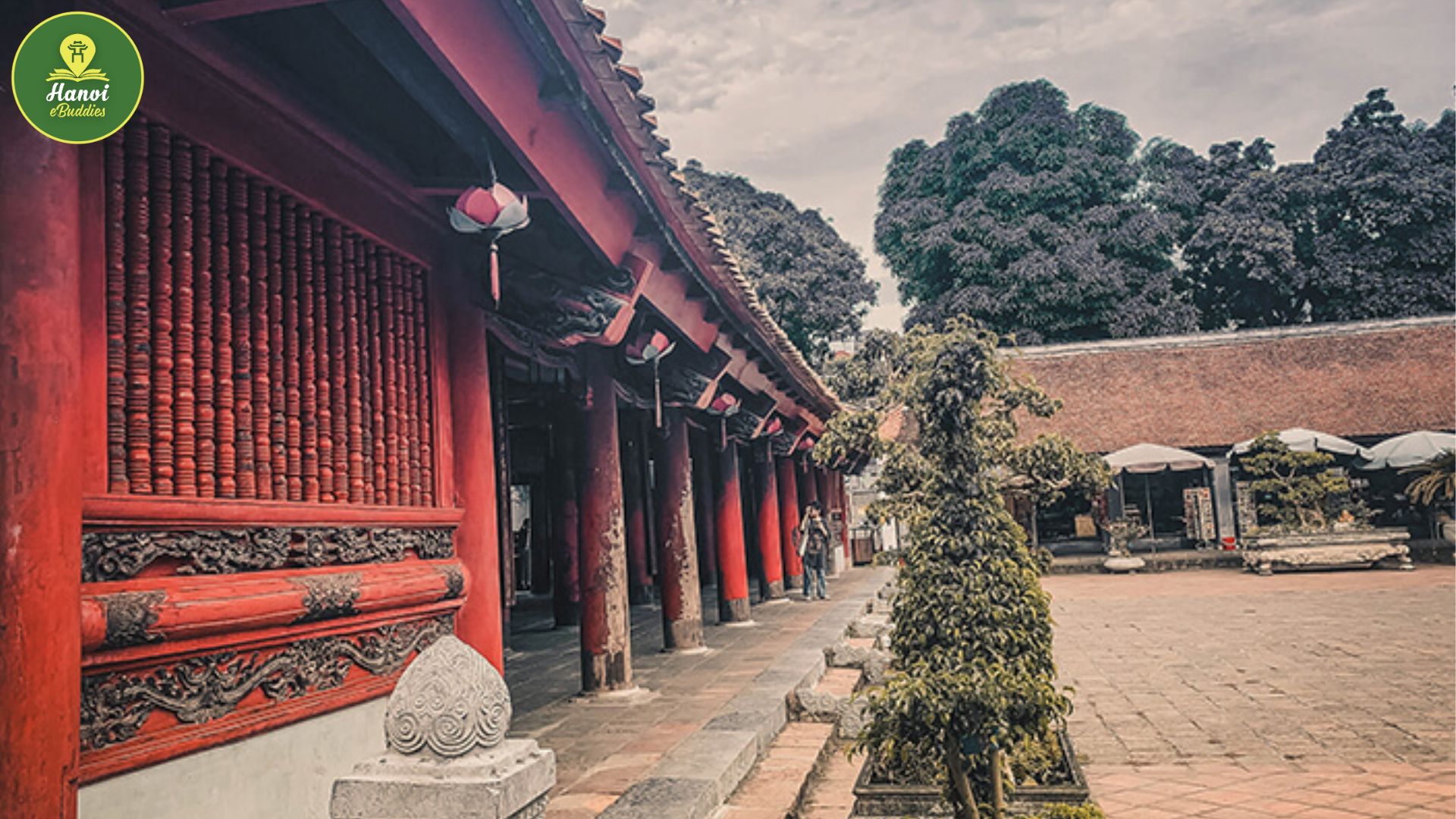
The fifth courtyard is called the Imperial Academy, made of 2 floors.
4. Caveat in Temple of Literature
Take notice of the following to make your visit to the Temple more convenient and memorable:
- Make no loud noises.
- Photography is permitted, but please do not use a flashlight.
- Dress modestly and avoid wearing anything too exposing.
- Please do not litter.
- Do not sit, lie, or touch the objects.
- No smoking is permitted on the temple grounds.
In addition to the Temple of Literature, there are numerous other well-known tourist attractions in Hanoi that you should see, including Hoan Kiem Lake, the Hanoi Old Quarter, and the Ho Chi Minh Mausoleum. We pledge to help you see Hanoi’s numerous sites in the most unique and unforgettable way possible with our free local tours! Don’t be shy, contact Hanoi e.buddies club right away; your free, tailored, and fun free tours with local students are just a phone call away!!!
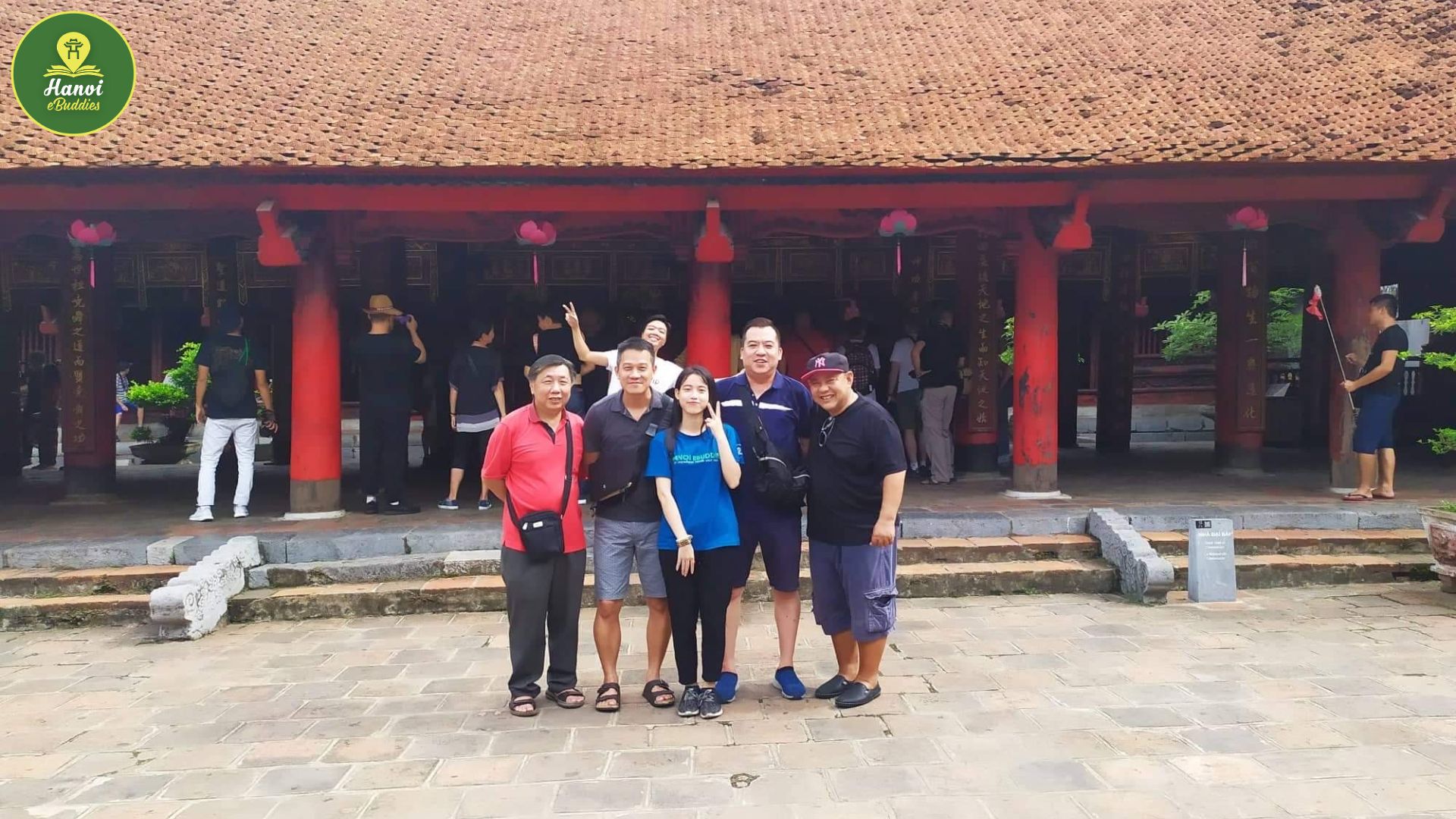
Hanoi e.Buddies Free Private Tours!
Visit our Tripadvisor, Facebook, Instagram for more information!