The diversity of Hanoi’s dried foods
Hanoi, the thousand-year-old capital of culture and history, is not only captivating with its ancient landmarks but also known as a paradise of Vietnamese cuisine. Among countless delicious dishes, Hanoi’s specialty dried foods always hold a special place.
These dried delicacies not only attract visitors but also serve as meaningful gifts that carry the traditional flavors and rich identity of the capital. Let’s join Hanoi e. Buddies to discover what makes Hanoi’s dried specialties so special!
1. Banh mi
Banh mi first appeared in Hanoi at the end of the 19th century, when the French introduced the baguette to Vietnam. In its early days, banh mi was considered a luxurious food, often enjoyed by the upper class with European dishes such as steak, butter, or cold cuts.
Gradually, the Vietnamese transformed it into their own version, a lighter baguette with a crispy crust and soft, airy interior. The fillings were also replaced with more familiar, flavorful local ingredients such as liver pâté, Vietnamese pork rolls, pickled vegetables, and cucumbers.
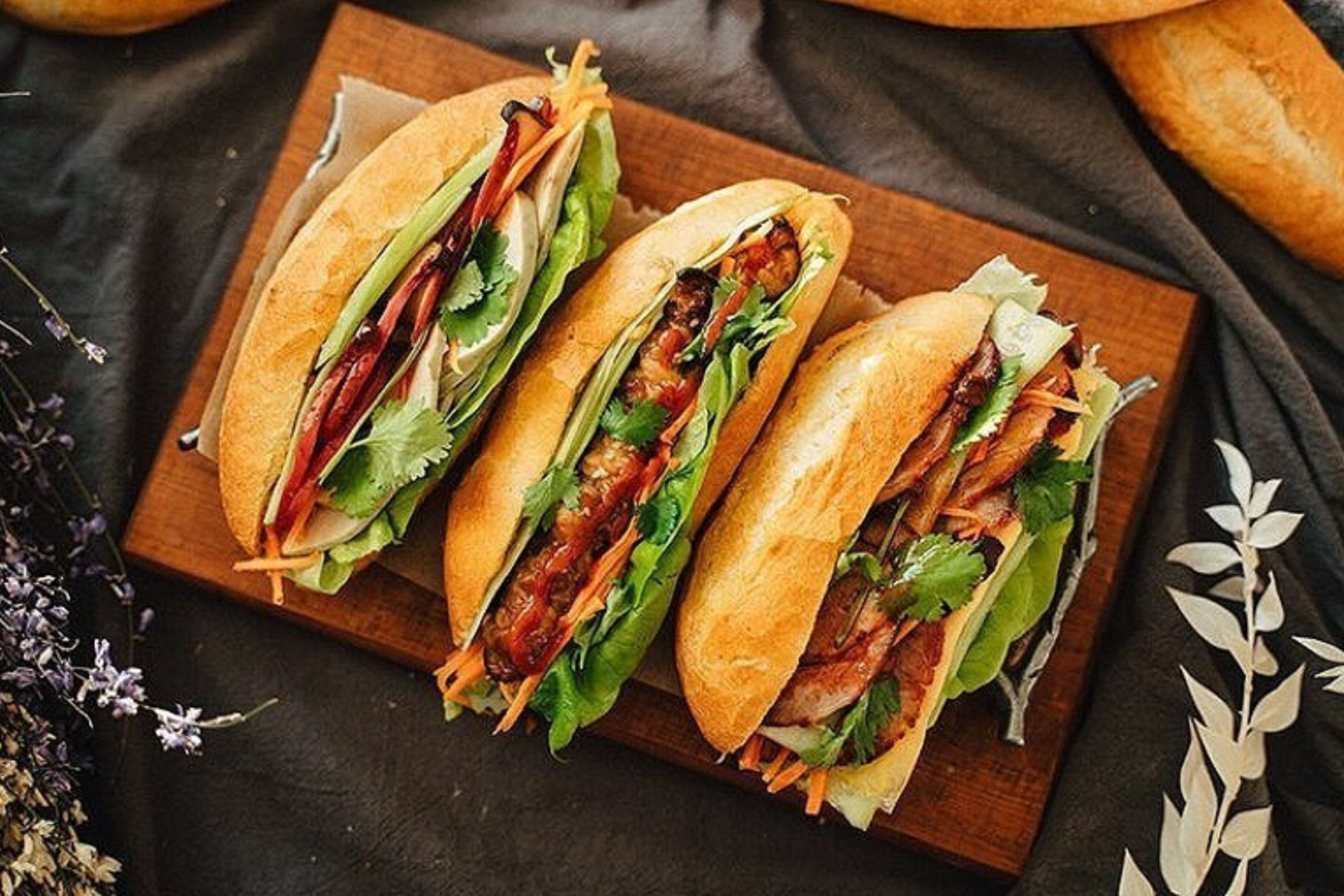
Delicious banh mi packed with fillings
Types of Hanoi Banh Mi Crusts
You might think that Hanoi’s banh mi only comes in the familiar long, slender shape with pointed ends, right? But no, the crusts of Hanoi-style banh mi are much more diverse, not only in shape but also in texture.
In Vietnam, besides the typical thin, crispy crust with a soft and airy interior that leaves room for the fillings, banh mi also appears in other shapes such as triangular or stick-shaped loaves.
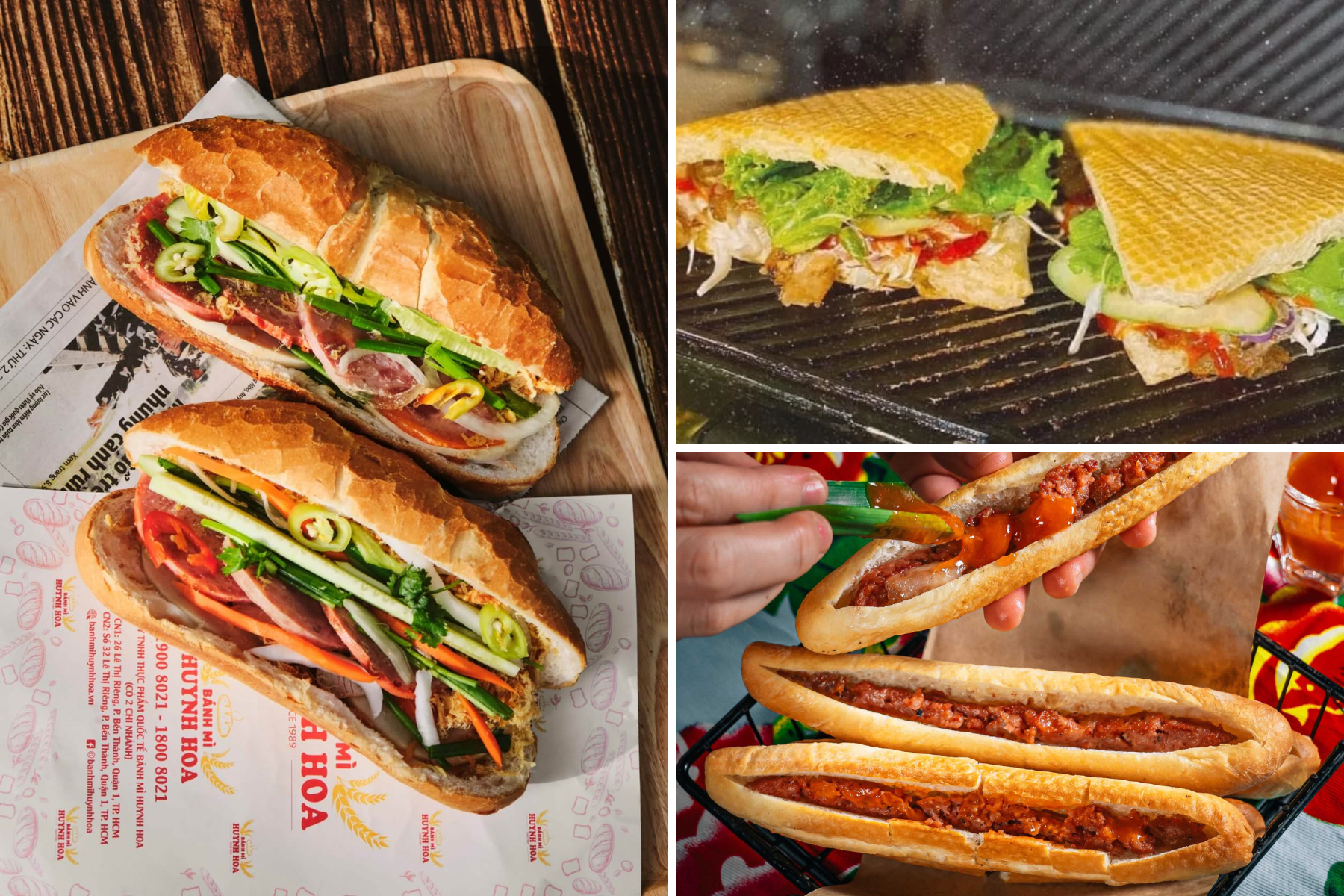
Banh mi can come in many shapes
In addition, the crust is not limited to the beautiful golden-brown color. Young Vietnamese people have also been very creative, combining ingredients such as bamboo charcoal or dragon fruit to create bread crusts with unique shades like black or pink.
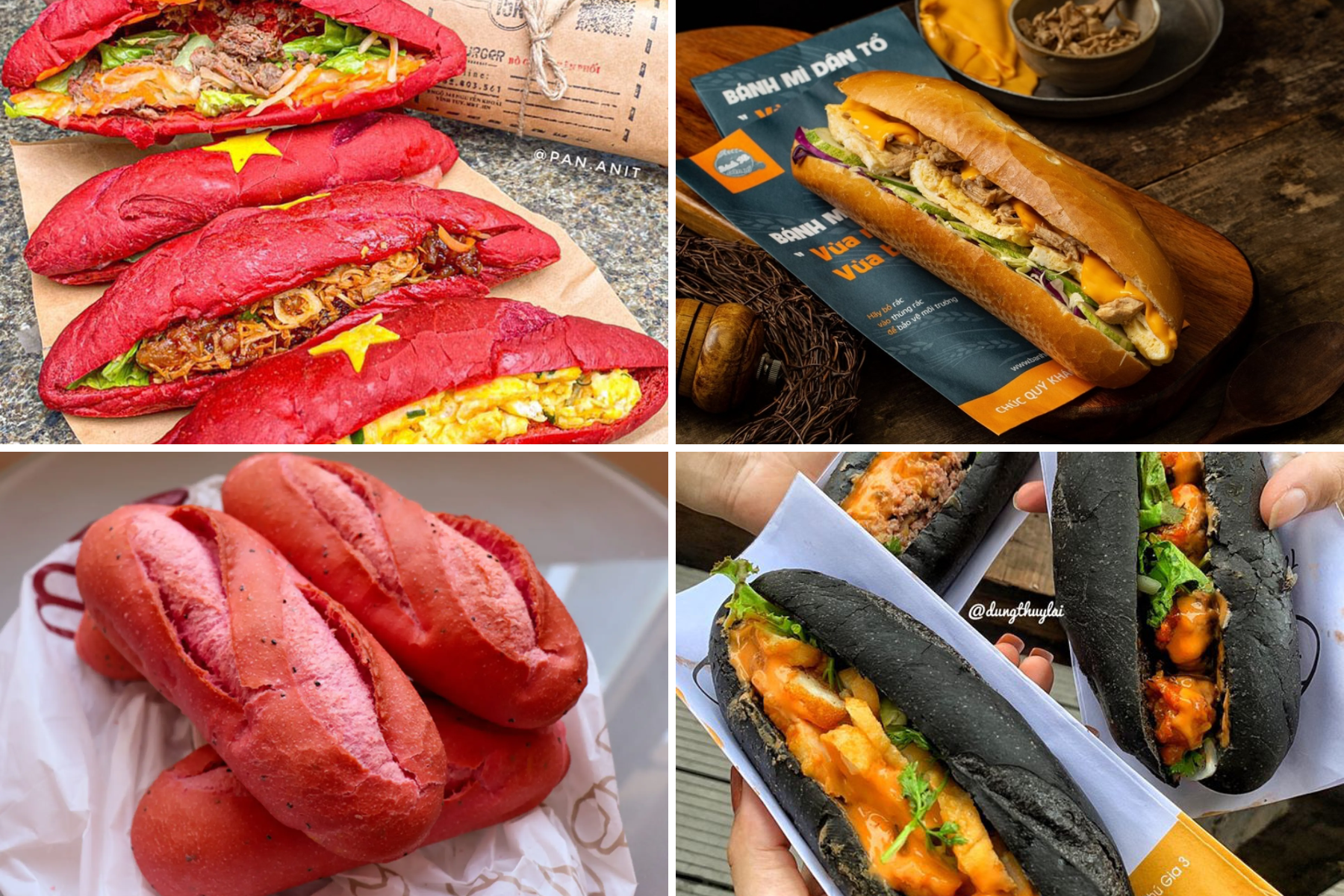
Banh mi in a variety of colours from black to pink!
Some types of Banh mi – one of the most popular Hanoi’s dried foods
-
Banh mi with pâté and egg
A classic Vietnamese breakfast favorite, banh mi with pâté or pâté and egg features crispy bread filled with rich liver pâté, cucumber, and cilantro for a savory yet refreshing taste.
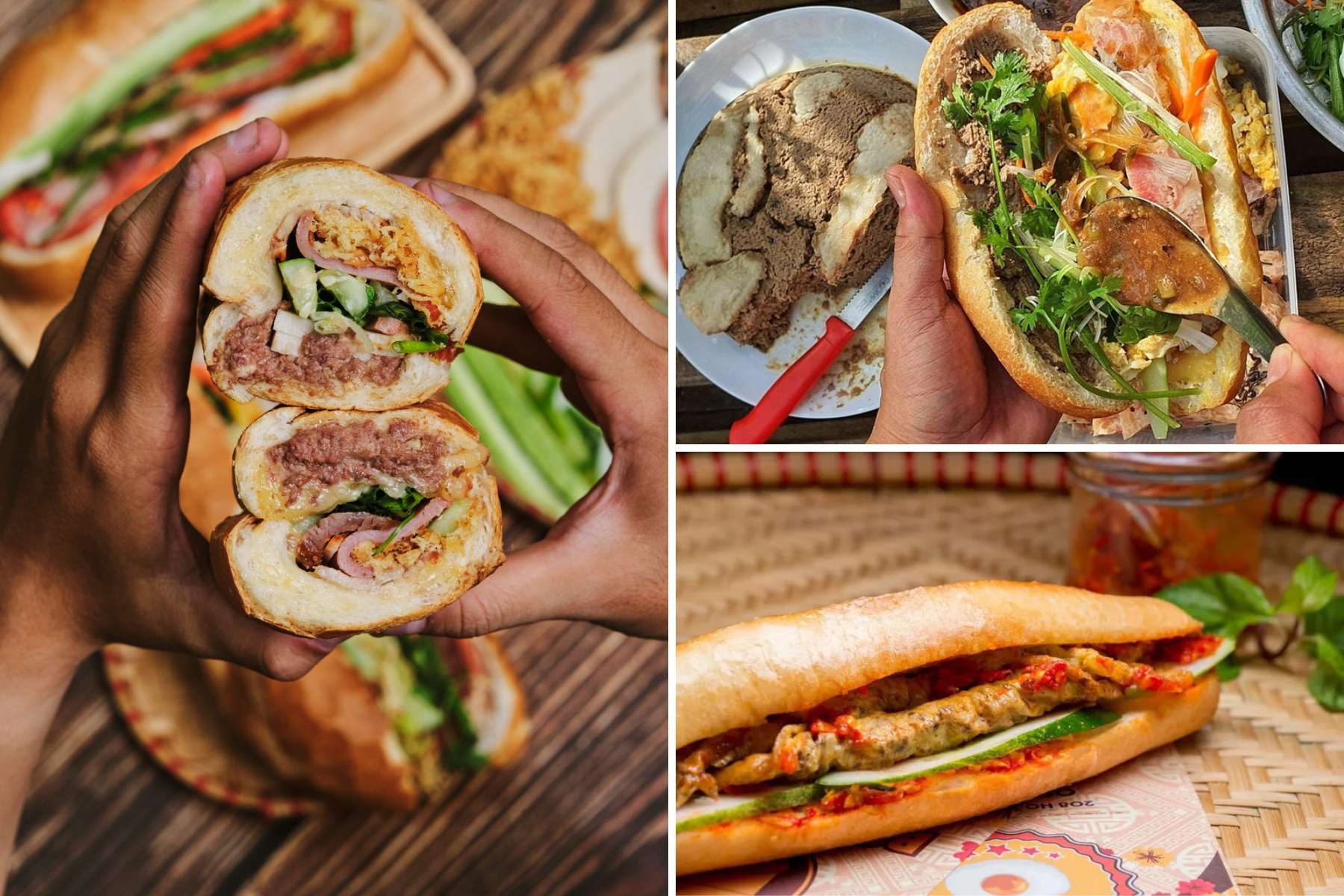
A classic Vietnamese breakfast favourite!
-
Banh mi with grilled pork
This version is especially popular in the late afternoon and evening. Marinated pork slices or skewers are grilled over charcoal until slightly charred and fragrant, then topped with a rich savory sauce and served with sweet and sour pickled vegetables.
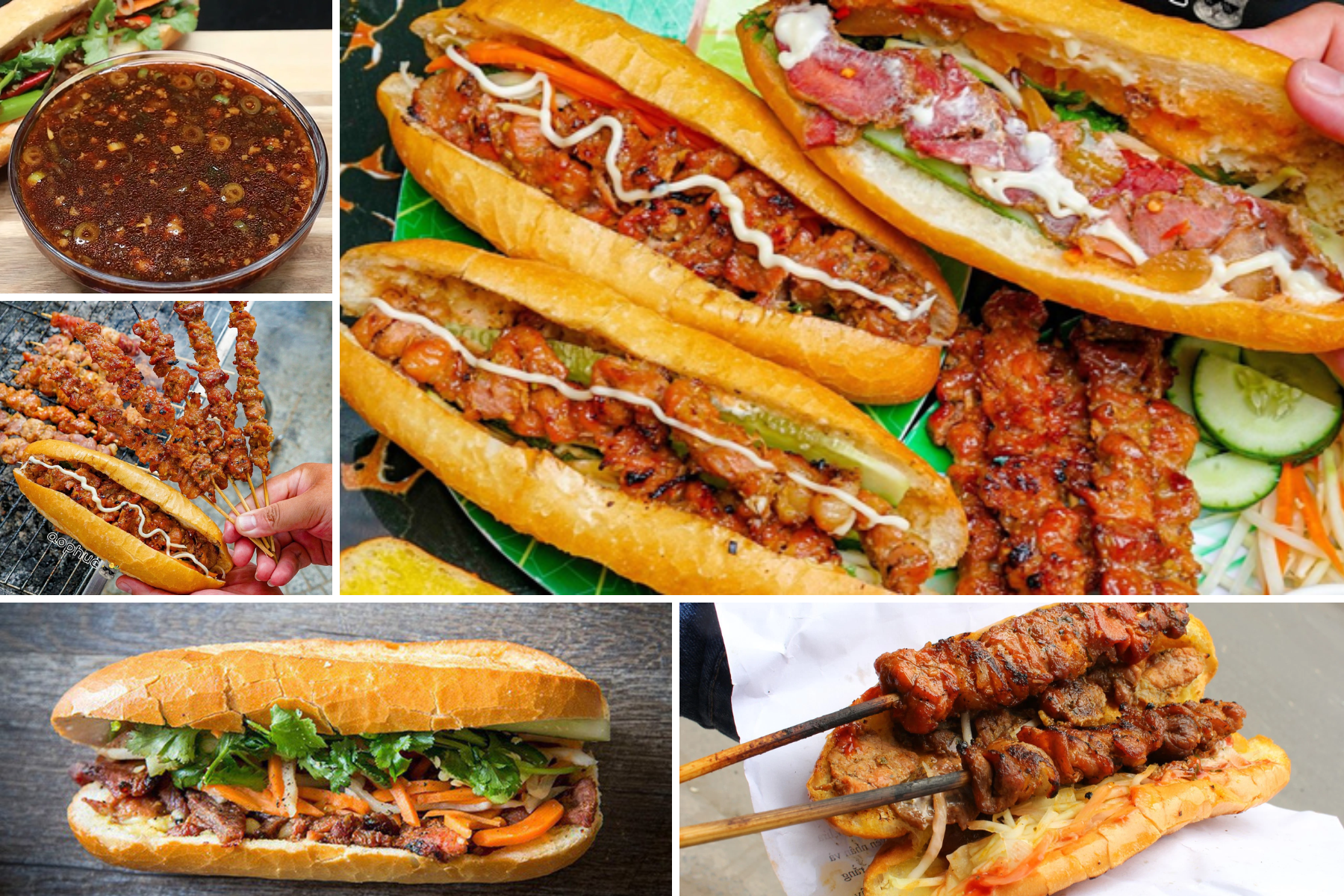
Who is ready to survive winter with a grilled pork banh mi?
-
Banh mi chao (pan-style banh mi)
This popular dipping style banh mi in Hanoi is often enjoyed for breakfast or lunch. Crispy toasted bread is torn into pieces and dipped into a hot pan filled with toppings like eggs, pâté, sausages, and a rich, flavorful sauce.
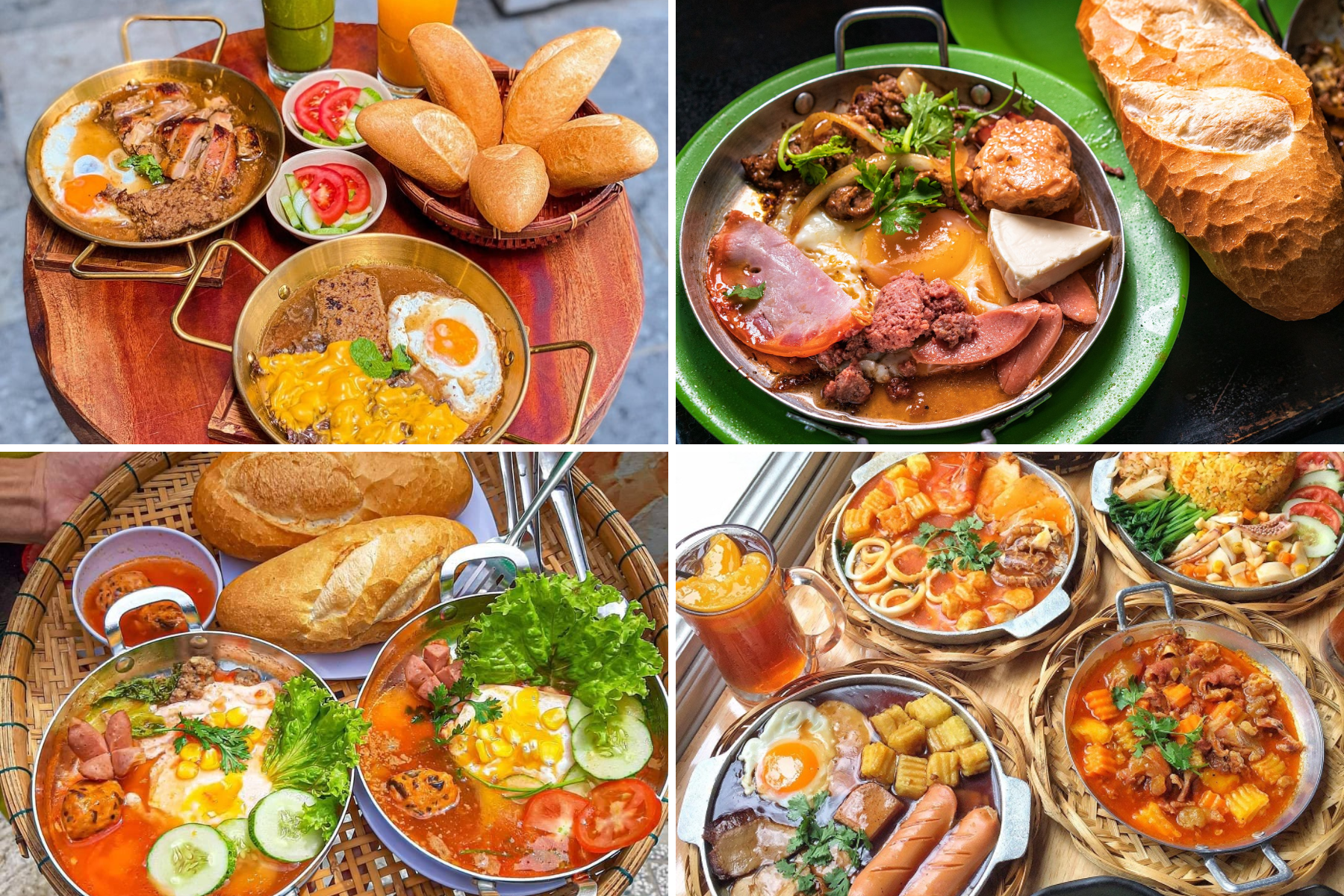
One bite and you’re in love, two bites and you’re completely hooked
Best Places to Enjoy Banh Mi in Hanoi
Vietnamese banh mi in general, and Hanoi’s version in particular, have left a strong mark on the world’s culinary map. The word “Banh Mi” was even added to the Oxford Dictionary in 2011, proving the global popularity of this beloved dish.
Here are some delicious banh mi spots you can try when visiting Hanoi:
- Old Quarter Banh mi: 38 Dinh Liet, Hoan Kiem District
- Banh mi 25: 25 Hang Ca, Hoan Kiem Districti
2. Sticky Rice (Xoi)
Xoi is a traditional and popular Vietnamese dish made from sticky rice that is steamed until soft and fragrant. It can serve as a main meal (in place of regular rice) or as a light snack. This dish reflects the culinary diversity across regions of Vietnam, with two main varieties: sweet sticky rice and savory sticky rice.
Sweet Sticky Rice
Sweet sticky rice is usually made from glutinous rice mixed with natural ingredients for color and flavor. It typically has a light, mildly sweet taste, making it suitable for festive occasions or as a dessert. Here are some popular types of sweet sticky rice:
-
Gac Sticky rice
Bright red in color, symbolizing good luck, often served at weddings and during the Lunar New Year.
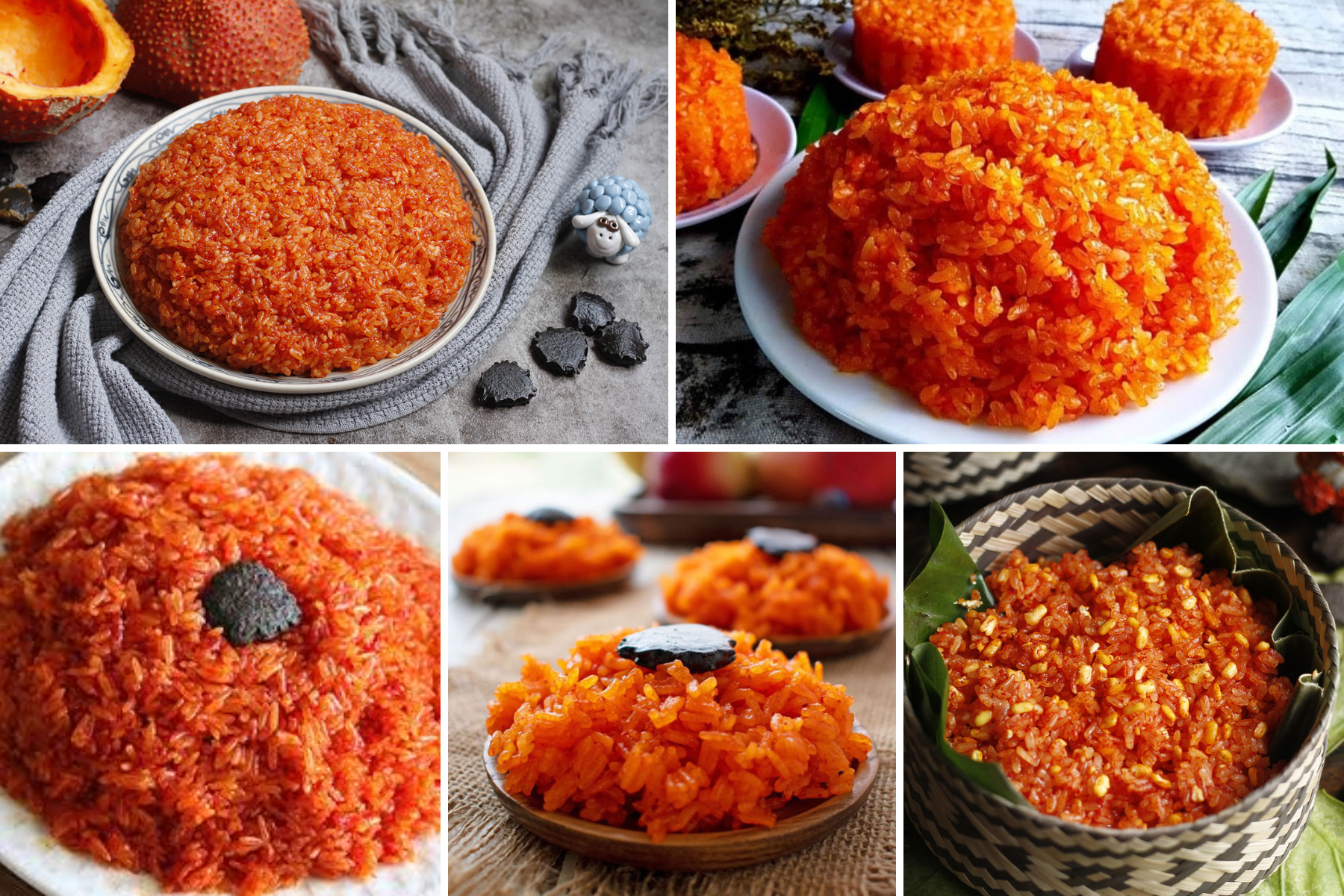
This Gac Sticky rice might steal your heart
-
Mung Bean Sticky rice
A traditional Vietnamese sticky rice dish combining the sweetness of glutinous rice with mung beans, resulting in a fragrant and delicious treat.
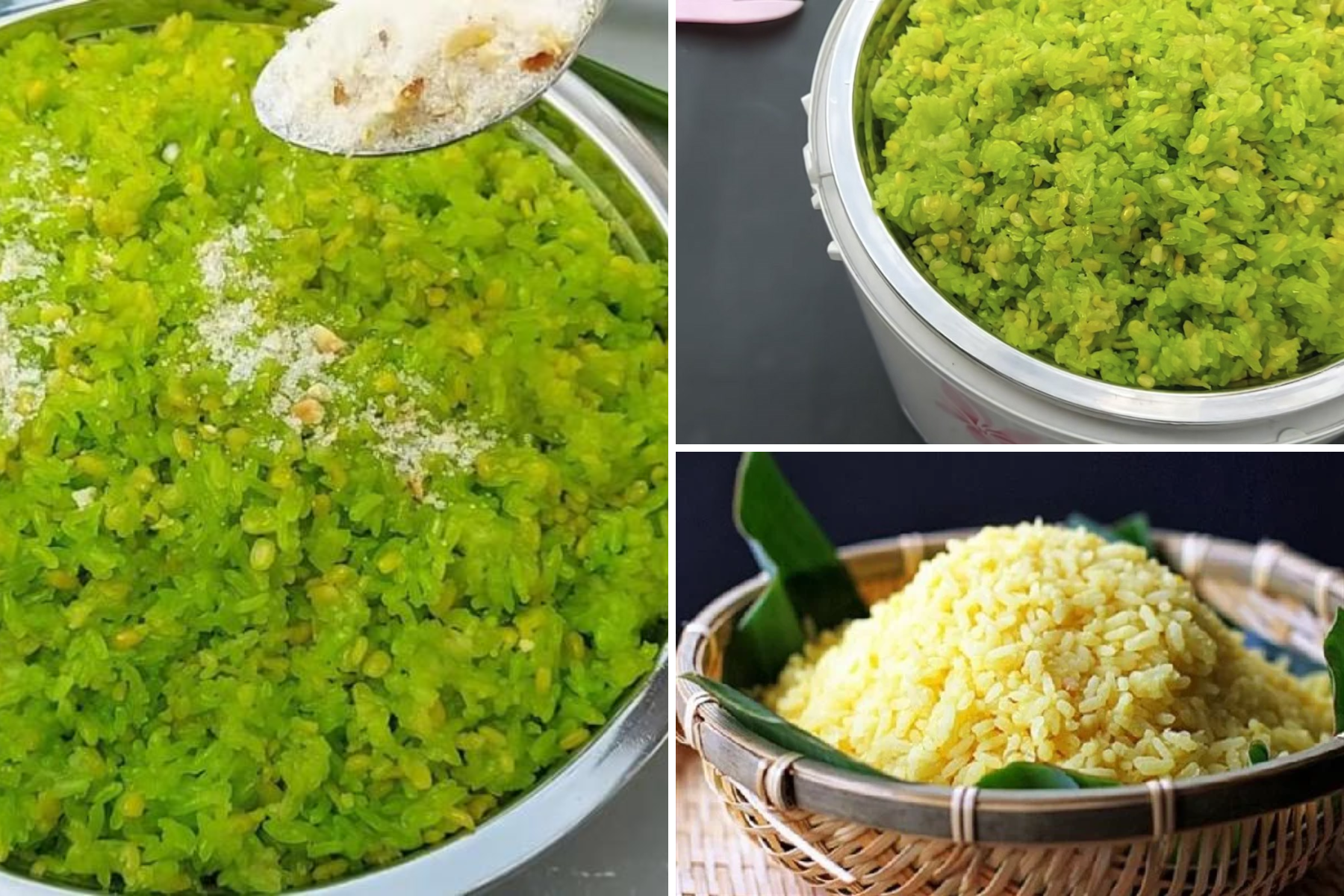
Pandan Mung Bean Sticky Rice and Traditional Mung Bean Sticky Rice
Savory Sticky rice
Savory sticky rice is a popular breakfast and dinner dish in Vietnam, often served with a variety of rich toppings. Let Hanoi’s e.Buddies show you some popular types of savory sticky rice:
-
Xeo Sticky rice
A national specialty of Hanoi, featuring golden sticky rice topped with mashed mung beans shaped into small mounds, thinly sliced, and sprinkled with crispy fried shallots.
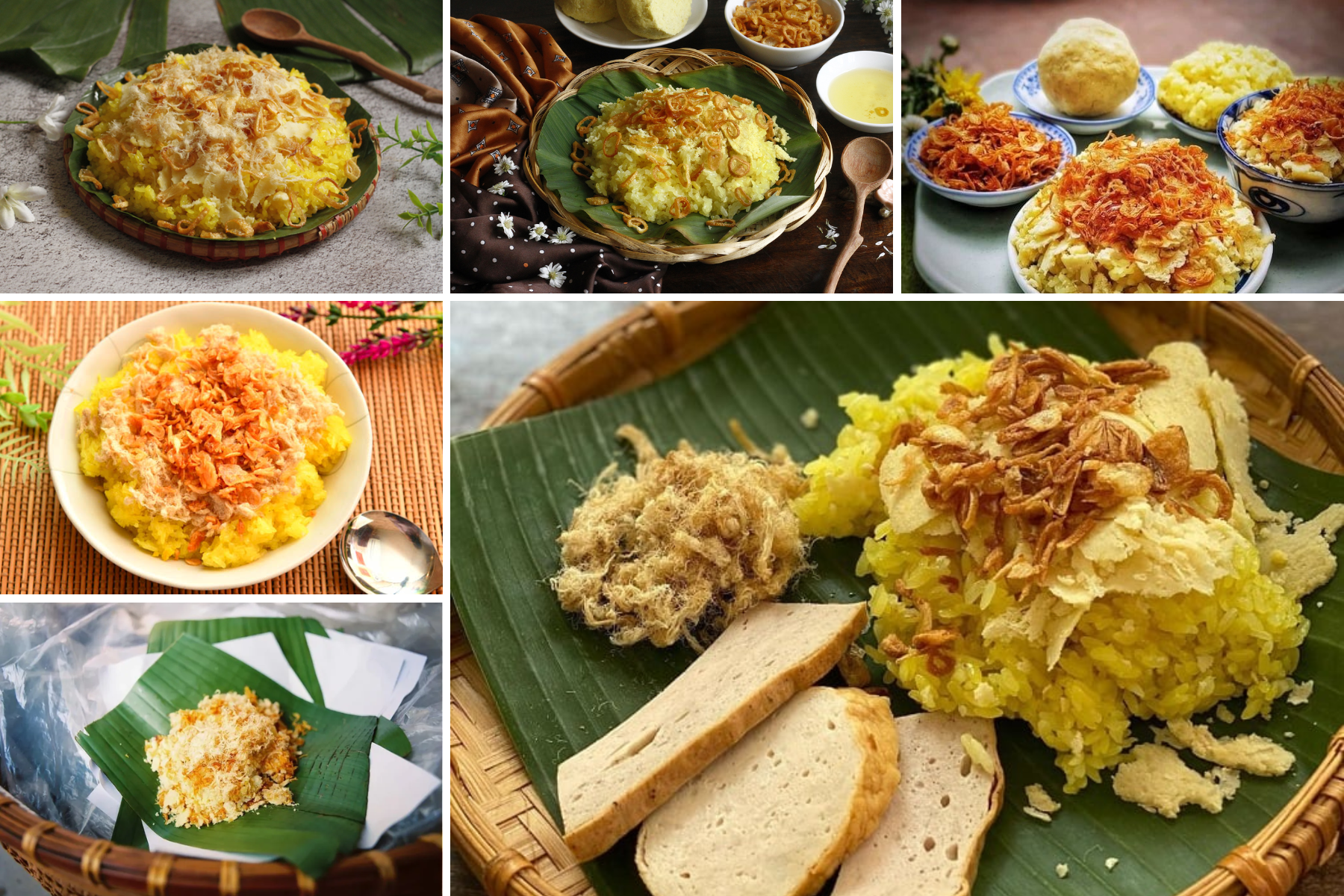
The aroma of Xeo Sticky rice can travel for miles
-
Braised Pork and Eggs Sticky rice
A rustic dish common in northern Vietnam, consisting of fragrant sticky rice served with braised pork belly and eggs.
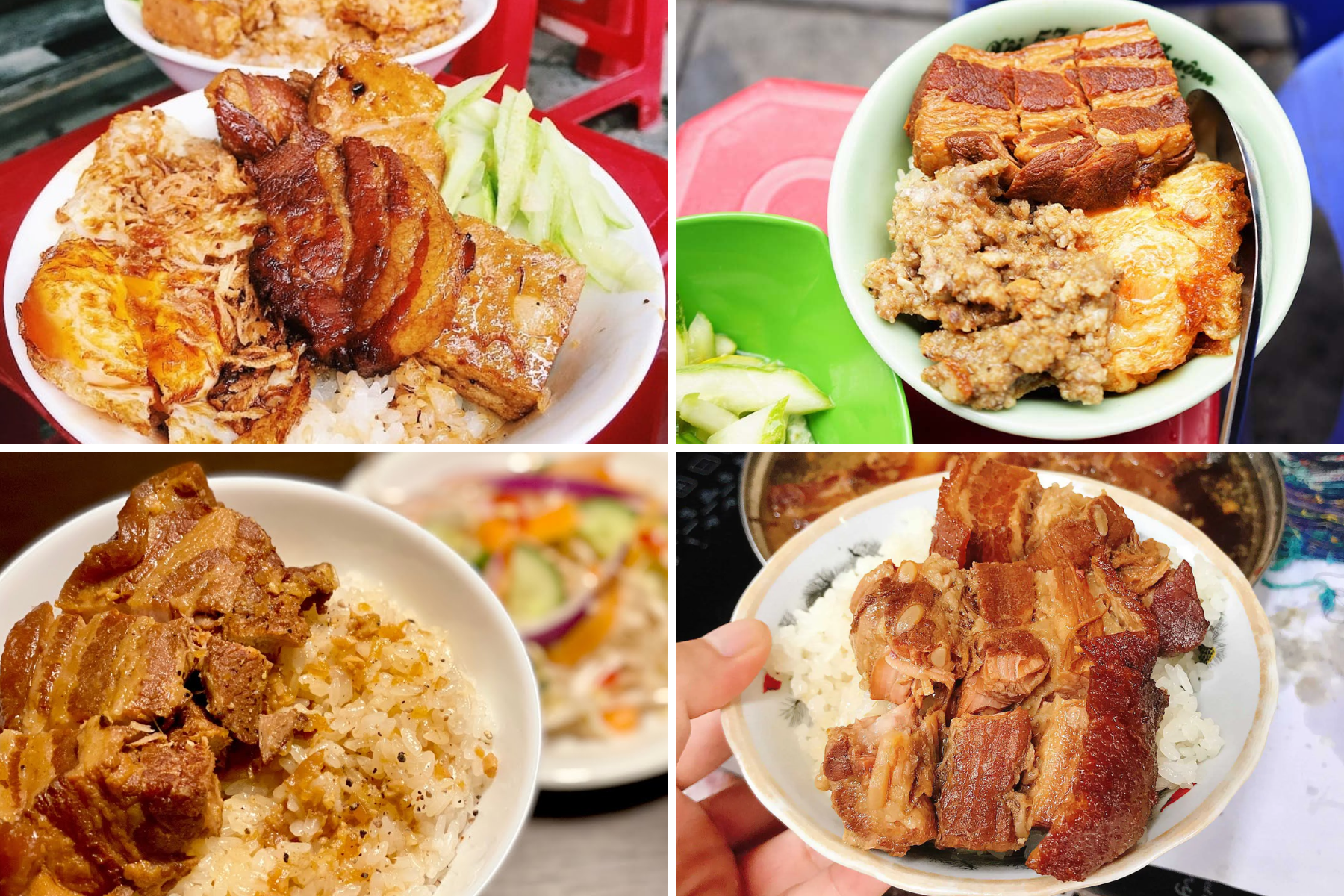
Rich, tender braised pork blends perfectly with the fragrant sticky rice
Recommended Places for Delicious Sticky Rice
- Ba Thu Sticky Rice: 57 Tho Nhuom, Ha Noi
- Ice cream Sticky rice: 84 Ba Trieu, Hai Ba Trung
3. Steamed Buns (Banh Bao)
Banh Bao is a popular and beloved dish in Vietnam and many other Asian countries, originating from China. It is a type of bun made from fermented wheat flour, shaped into a circle or semicircle, filled with stuffing, and typically cooked by steaming.
Traditional Buns: The Morning “Hit” among Hanoi’s dried foods
This is the classic steamed bun, associated with the warm, satisfying breakfast of the Vietnamese people, featuring a rich, savory filling.
The crust is white, airy, and slightly elastic, beautifully puffed after steaming. The filling usually includes minced pork mixed with shredded wood ear mushrooms, glass noodles, and shiitake mushrooms, all seasoned to taste. The heart of the filling is one or two boiled quail eggs tucked neatly inside, adding richness to every bite.
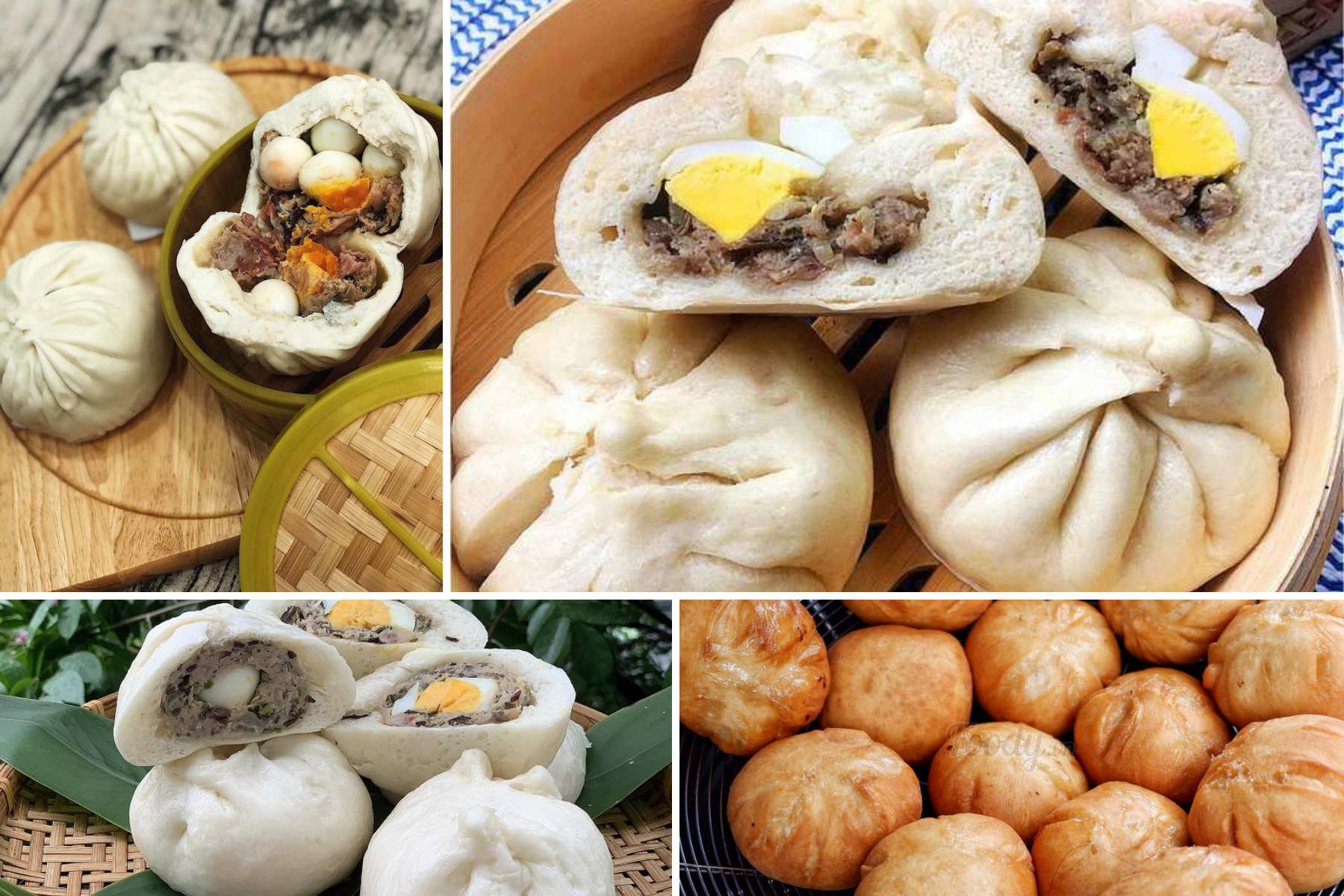
Traditional steamed buns
Today, there are many creative variations of banh bao that have appeared on the market to attract more diners, such as chicken-filled buns, cheese-filled buns, and sweet versions like red bean or taro-filled buns.
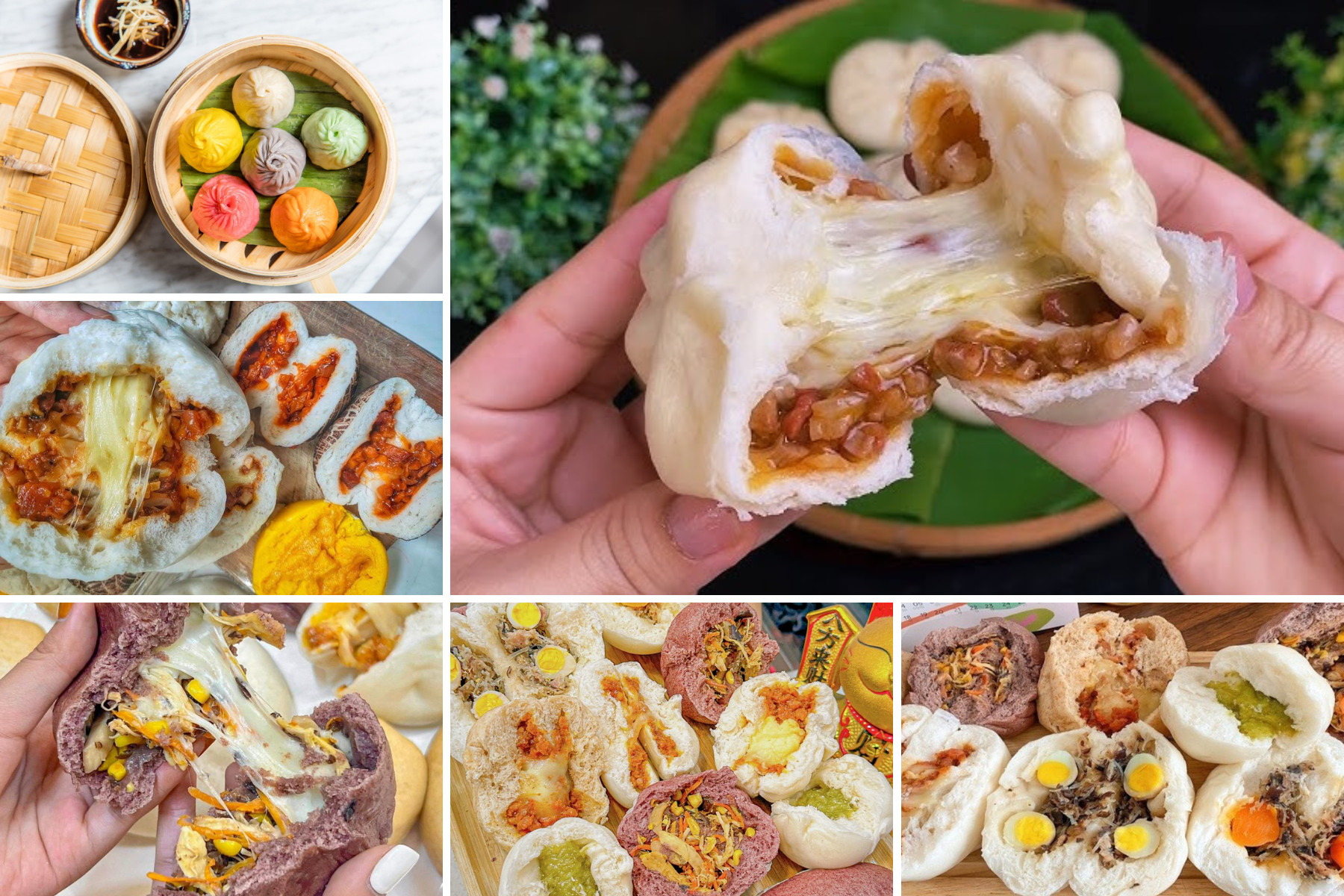
Creative versions of banh bao
When enjoying traditional savory banh bao, Vietnamese people especially love the quail egg filling. Sharing a bun with someone can be tricky; if one person takes the bite with the egg, the other might not be too happy about it! So if a Vietnamese friend offers to share their bánh bao, make sure not to eat their quail egg or you might just start a “mini war.”
Suggested Delicious Buns Stalls:
- Banh Bao Binh Mo: 72 Hang Than
- Banh Bao Thuy Do: 56A Dao Tan
Ready to eat your way through Hanoi’s dried foods like a true local?
Of course, the dishes mentioned above are just a few highlights among Hanoi’s wide variety of dried delicacies. The city has so much more to offer. If you’re an adventurous foodie who doesn’t know where to start, let Hanoi e.Buddies accompany you on a Food tour. We’ll take you to all the best local spots.
And if you want to not only enjoy the food but also learn about the city’s history and culture, our guides are more than happy to join you on a City tour, walking through the narrow alleys of the Old Quarter to show you where the most delicious bites are hidden.
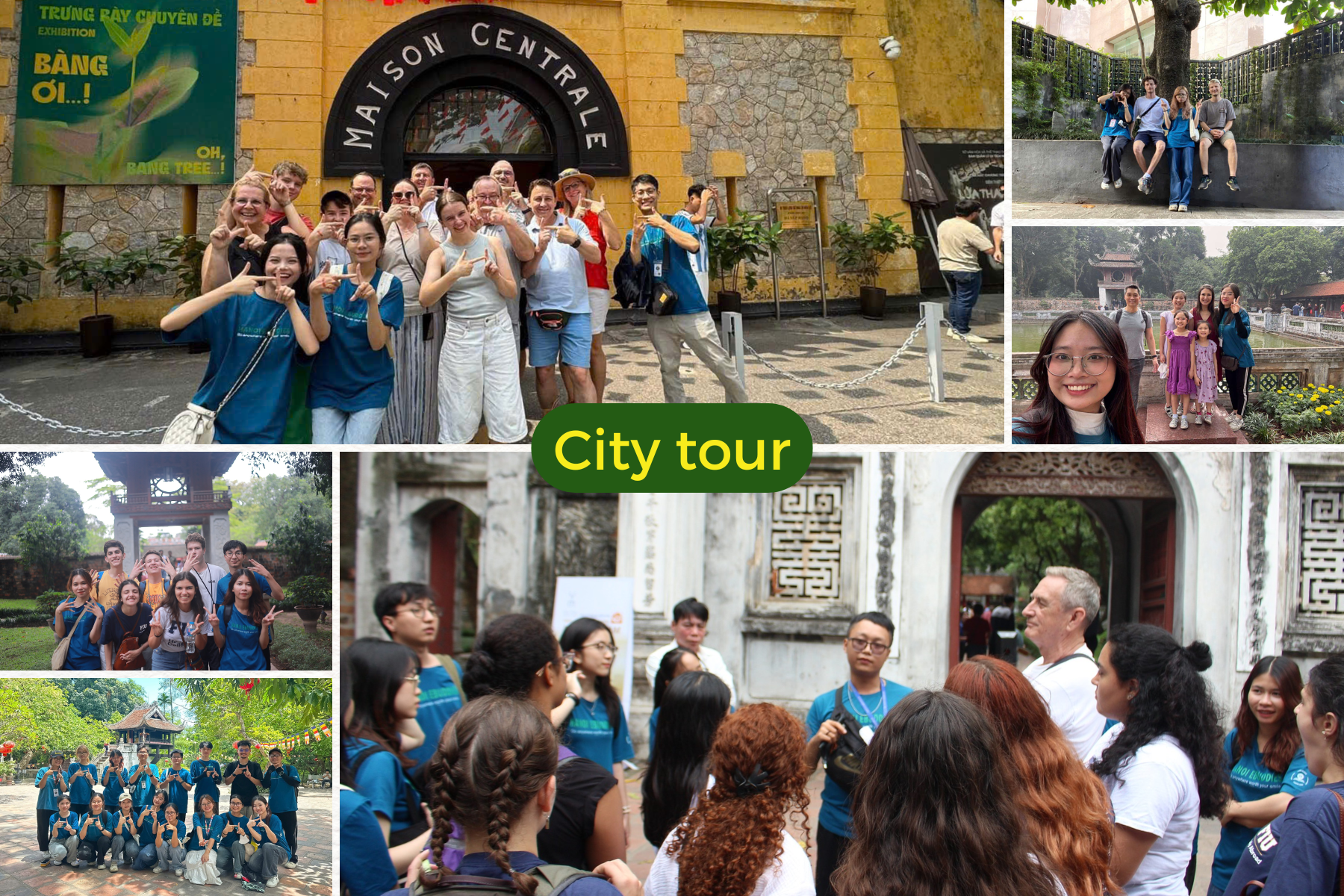
Hanoi e.Buddies City tour
So, what are you waiting for? Come and eat your heart out in Hanoi with us!
Follow us for more tips and recommendations. Stay inspired for your next outdoor adventure by visiting our TripAdvisor, Facebook, and Instagram for even more insights and updates!