Vietnam’s diversity in Dragon design
The image of the dragons has appeared in Vietnamese history, culture, and architecture since ancient times. However, depending on each dynasty, it will be depicted differently, partly reflecting the system and social situation at that time. Let’s discover with Hanoi e.Buddies to look back at the image of the dragons and their features through the typical dynasties of Vietnam.
I. The figure of the Dragon in Vietnam
1. The origin of Dragon
Dragons appeared very early in the mythology, legends, and visual arts of many cultures around the world. The Four Sacred Beasts are mythical creatures in the folklore of several East Asian countries, including: Dragon, Kirin, Turtle, and Phoenix. These divine beings are associated with the four elements that make up the universe: Earth, Water, Fire, and Wind.
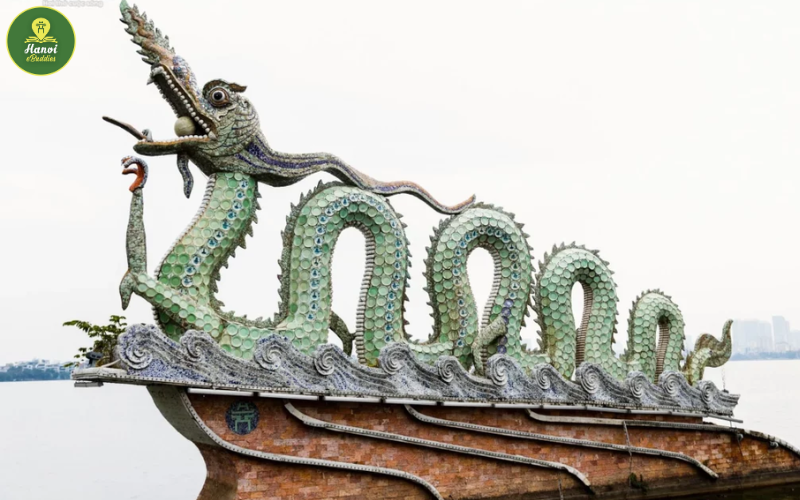
Depending on each culture, the dragon has a different meaning (Source: Collected)
If the West considers dragons as symbols of evil and malevolence, beings that humans need to conquer, then in contrast, the East sees dragons as symbols of goodness, luck, and prosperity. Dragons in Eastern legends and mythology are different from Western dragons in both appearance and temperament.
Later, in the process of formation and development of Eastern civilizations, dragons gradually acquired new meanings that aligned with the characteristics of the times, such as symbols of national origin, royal authority, nobility, luck, and prosperity…
2. The meaning of Dragon imagery in Vietnam’s culture
II. Differences of Dragon designs in different dynasties
1. Ly Dynasty’s Dragons (11th-13th century)
From 1010, the dragon became a symbol of kingship. Dragons of the Ly Dynasty were influenced by Buddhism, exhibiting elegance. They were characterized by a flaming crest on the head, a smooth, round, slender body resembling a snake, and a soft, meandering, gently winding shape. Ly dragons’ recognizable features included their mouth holding a pearl, and three long claws.
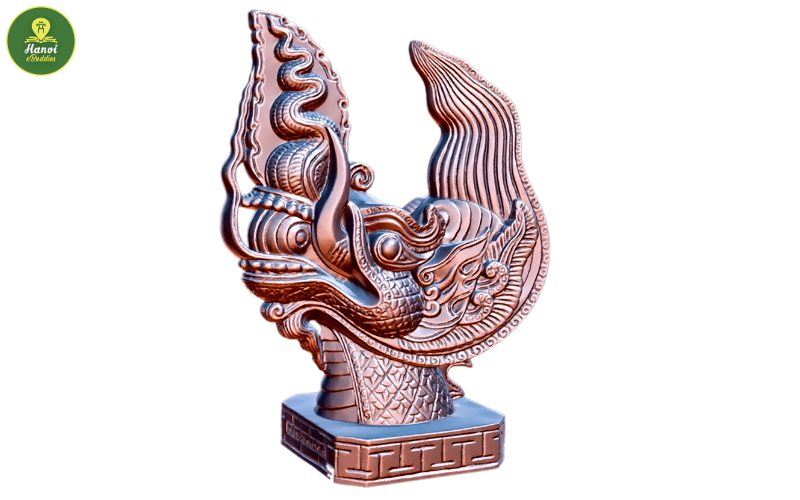
The image of Dragon during Ly’s Dynasty (Source: sggp.org.vn)
2. Tran Dynasty’s Dragons (13th-15th century)
Overall, the Tran dragon resembled that of the Ly period, with a thicker, more robust body. While Buddhism influenced the image of dragon in Ly’s dynasty, Tran dragons portrayed strength inspired by East Asian cultures. They looked stronger, fatter, less curved, and had horns or a serrated dorsal fin due to the martial spirit forged by many wars of resistance against foreign invaders during the dynasty.
3. Later Le Dynasty’s Dragons (15th-18th century)
During this greatest and longest-lasting dynasty, the stylization of dragons also witnessed differences in different periods. However, they shared the same features of their five claws and majestic, ferocious appearance.
In the early period of the dynasty, dragon sculptures were basic, with features resembling lions, including a nose and thick lips. Confucianism influenced this concept and served as the foundation for the dragon depictions in later periods such as Le Trung Hung and Nguyen.
From the rule of Le Trung Hung or Le Dynasty’s later period (16th-18th century), the shape of dragons inherited from its previous period but with a more protruding head, horns, and mane in strips. The straight and sharp beards and fire clouds around the bodies of dragons were typical of this era.
4. Nguyen Dynasty’s Dragons (19th century)
Dragons in the Nguyen Dynasty had several typical features, like swirling/fan-shaped tails, widened spread horns, big eyes and noses, short snouts, and five sharp claws. These features are clearly depicted in the dragon stones in Hue Imperial City, the golden imperial seal of the Nguyen Kings.
Unlike previous dynasties, when dragons were only allowed to be associated with kingship, dragons in the Nguyen Dynasty were popular to appear more closely among the people. These popularized dragons were sometimes more lively and expressive than the majestic dragons in the royal palace.

The image of the dragon in the Nguyen Dynasty (Source: Tu An)
III. Dragon in famous tourist destinations nowadays
In Hanoi, the Thang Long Imperial Citadel, a UNESCO World Heritage Site, reflects its name, meaning “Ascending Dragon,” signifying the city’s aspirations for growth and prosperity. The Hoan Kiem Lake, steeped in legend, tells the tale of a dragon king who played a crucial role in Vietnamese history, adding a mystical charm to the lake’s picturesque scenery.
At The Temple of Literature, the ornate carvings on the roofs and walls of various structures within the temple complex depict dragon statues. These carvings showcase intricate details that highlight the dragon’s graceful form and fierce expression, embodying the protective qualities attributed to this mythical creature.
Beyond the capital, the Dragon Bridge in Da Nang mesmerizes visitors with its spectacular fire and water shows, symbolizing the enduring significance of dragons in Vietnamese culture.
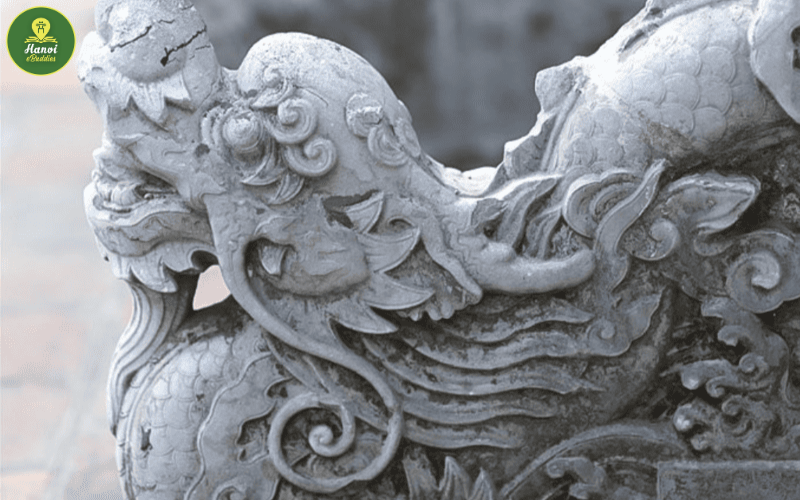
Dragon has become a signature mascot of Vietnam (Source: Collected)
Besides, in Ninh Binh, the stunning landscapes of Tam Coc – Bich Dong show the dragon motif. It is referred to as “Ha Long Bay on land” where legends speak of dragons creating the karst formations.
Additionally, in Hue, the ancient capital, the architecture of the Imperial City prominently displays dragon imagery, signifying imperial power and wisdom.
Across Vietnam, the dragon remains a revered symbol of strength, luck, and prosperity, deeply woven into the nation’s identity and folklore.
IV. Summary
Overall, the dragon in Vietnam is a multifaceted symbol that embodies the country’s cultural heritage, connecting the past with the present. Its representation is in mythology, art, architecture, and traditions. Moreover, it highlights its importance as a guardian of prosperity and a source of national identity. The dragon serves as a reminder of the resilience and strength of the Vietnamese people throughout their history.
If you are looking for a tour to discover Hanoi and try traditional foods with real local buddies, don’t hesitate to contact us! We pledge to help you see Hanoi’s numerous sites in the most unique and unforgettable way possible with our free local tours! Don’t be shy, contact Hanoi e.buddies club right away. Your free, tailored, and fun free tours with local students are just a phone call away!
Visit our Tripadvisor, Facebook, Instagram for more information!