Hanoi Pho: The Story Behind Vietnam’s Most Iconic Noodle Soup
HANOI PHO: THE STORY BEHIND VIETNAM’S MOST ICONIC NOODLE SOUP
Following our previous post about The diversity of Hanoi’s dried food, today let’s dive into another symbolic cuisinary feature of Hanoi – Hanoi Pho. It is more than just a bowl of noodles – it is a special part of Vietnam’s food culture. Originating from the streets of the capital, people have enjoyed and cherished this soup for generations. Its simple ingredients, gentle flavors, and long history make Hanoi Pho a symbol of Vietnamese life. Learning about Hanoi Pho helps us understand how this famous dish became loved both at home and around the world.
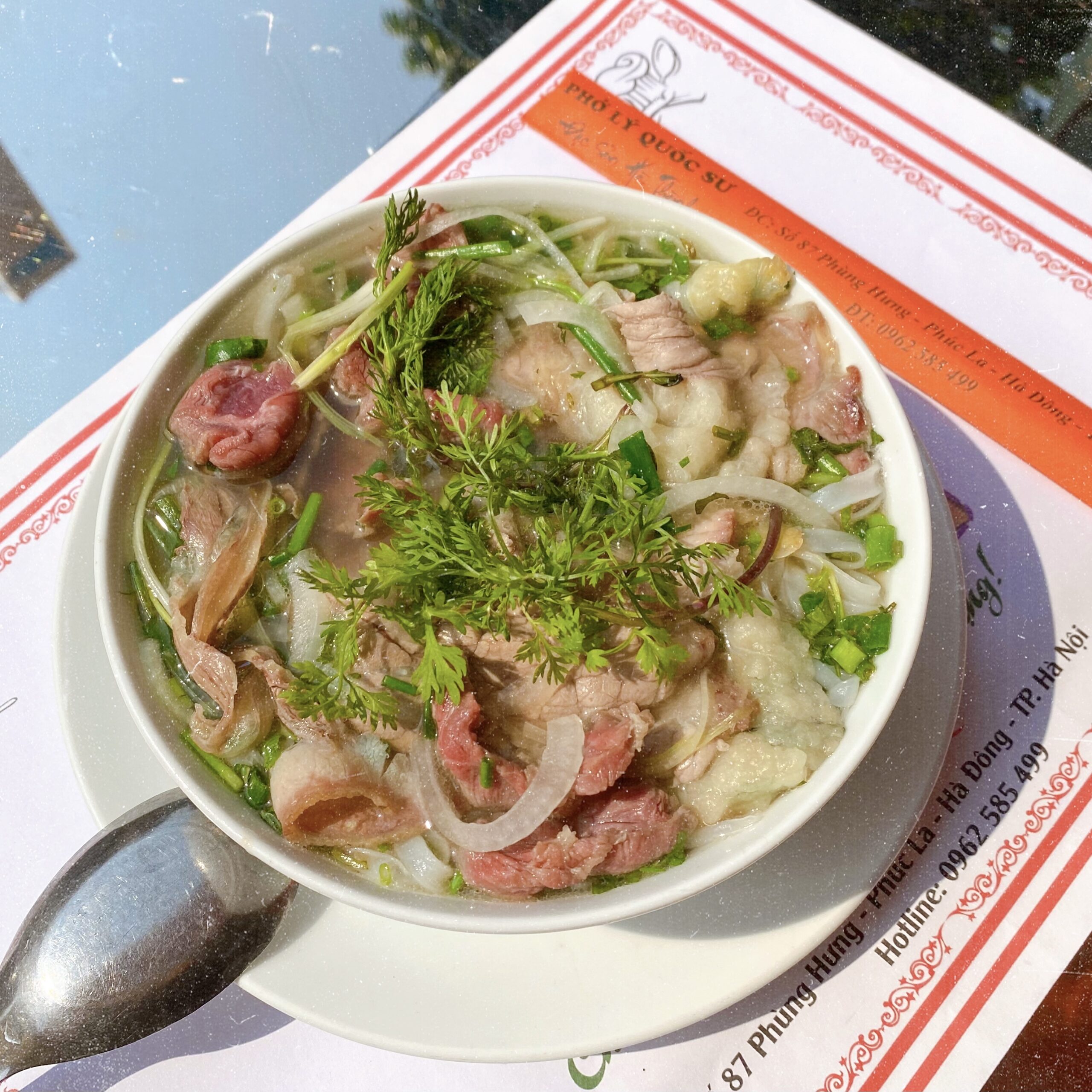
Hanoi Pho – an iconic noodle soup
HISTORY OF HANOI PHO
Since the early 20th century, there has been much debate about the true origins of Hanoi Pho. Although people still disagree about its exact birthplace or the precise time it appeared, most agree that it dates back to the French colonial period, when the French began intensifying their exploitation of Vietnam. Specifically, it was when street vendors carried pots of hot broth through the city and served bowls of noodles to workers and travelers. The word “Pho” was officially coined for the first time in the Vietnamese Dictionary (1930), which defined it as: “A dish made from thinly sliced rice noodles served with broth cooked from stewed beef.”
At first, they mainly used beef for the dish, a new ingredient in Vietnamese cuisine at the time. Over the years, as Hanoi grew and changed, Hanoi Pho also developed its own style. It had clear broth, soft rice noodles, and delicate flavors.
HOW IT IS PREPARED
A delicious bowl of Hanoi Pho depends heavily on the cook’s experience and traditional skills, especially the broth. The broth is usually clear and made by simmering beef bones (or pork bones for those who are less experienced at removing the strong smell of beef bones), peanut worms (sa sung), and a variety of spices, including cinnamon, star anise, roasted ginger, cardamom, cloves, coriander seeds, and grilled shallots. The meat in Hanoi Pho can be beef or chicken, typically made with boiled free-range hens for a sweet, rich flavor. The rice noodles traditionally come from rice flour, steamed into thin sheets, and cut into strands. It will be best to enjoy Hanoi Pho when it is piping hot.
WHAT MAKES HANOI PHO DIFFERENT?
Hanoi Pho stands out because of its signature broth: clear, light, and gently sweet. It is thanks to long hours of simmering bones and spices without overwhelming the natural flavors.
The noodles in Hanoi Pho are thin, soft, and smooth, giving the bowl a delicate texture that differs from the thicker, chewier noodles often found in other kinds of Pho. While Southern Pho comes with a large basket of herbs and bean sprouts, Hanoi Pho just goes with green onions, a squeeze of lime, and slices of fresh chili to enhance the broth rather than change it.
For many Hanoians, enjoying a hot bowl of Pho in the early morning is almost a daily ritual that marks the beginning of a new day. However, whether at dawn or late at night, eating a well-made bowl of Hanoi Pho always brings a sense of warmth and comfort.
THE SECRET IN THE BROTH: WHAT IS “PEANUT WORM” (SA SUNG)?
Peanut Worm (“sa sung” in Vietnamese) is a type of high-value seafood found on Quan Lan Island (Quang Ninh Province). For generations, it has been one of the secret ingredients in truly authentic Hanoi Pho. In the past, cooks would dry-roast and then simmer it together with beef bones. This creates a natural sweetness and a deep, clean aftertaste that no seasoning powder can replace.

Peanut Worm (Sa sung) – the secret in Hanoi Pho’s broth (Source: VnExpress)
Today, very few places still use the Peanut worm because of its cost. However, some long-standing traditional Pho shops continue to preserve this method. Peanut worm is the reason why Hanoi Pho broth is often described as “sweet but not sharp, rich but never salty”. This is because of a balanced, elegant flavor that has become the hallmark of the city’s iconic dish.
WHERE TO TRY AUTHENTIC PHO IN HANOI?
Pho 10 Ly Quoc Su
Located on Ly Quoc Su Street in Hoan Kiem district, this is one of the most iconic and refined Pho shops in Hanoi. The restaurant is clean and somewhat modern, with a corner kitchen behind glass so you can watch the chefs at work. It received recognition from Michelin with a Bib Gourmand, which means great food at a reasonable price. Traditionally, by simmering beef bones and spices slowly, we could get that natural sweetness without relying on MSG. The beef is high-quality and comes in a variety of cuts – rare beef, brisket, flank, even filet.

Pho 10 Ly Quoc Su (Source: Gody.vn)
Bo Ho’s Pho Thin
The original shop is at No. 61 Dinh Tien Hoang Street, in the alley opposite to Hoan Kiem Lake, but recently, it has just been relocated to No. 19, Hang Voi Street. This is a classic, family‑run shop that many Hanoians and visitors consider “the authentic” Pho Thin. It is very modest and packed. It has narrow alley, small tables, a simple old stove, and a very “Hanoi old town” feel.
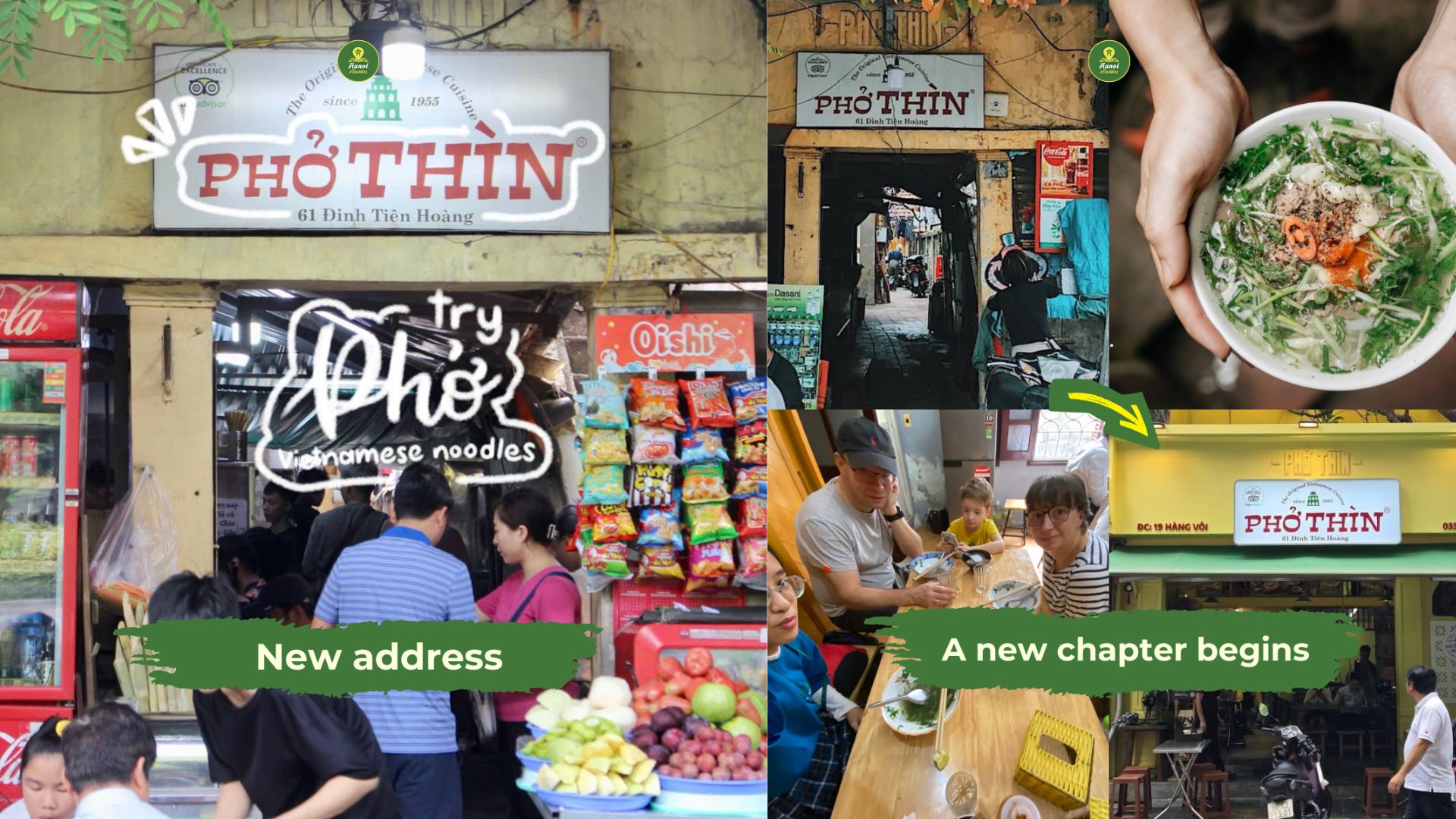
Bo Ho’s Pho Thin and its new address
Lo Duc’s Pho Thin
Located at No. 13, Lo Duc Street in Hoan Kiem District, people often mistake this shop for the Pho Thin Bo Ho (mentioned before). However, despite the same name, this is a different shop belonging to another founder. Pho Thin here is special due to how they cook the beef: they stir-fry it (with garlic, ginger, onions) before adding it to the soup. This gives the meat a slight smoky, caramelized flavor and makes the broth richer and more aromatic. The broth has a layer of fat, making it more robust and “meaty.” It’s not the delicate, ultra-light northern style; it’s bold. Locals and visitors say it’s one of the richest and most flavorful kinds of Hanoi Pho.
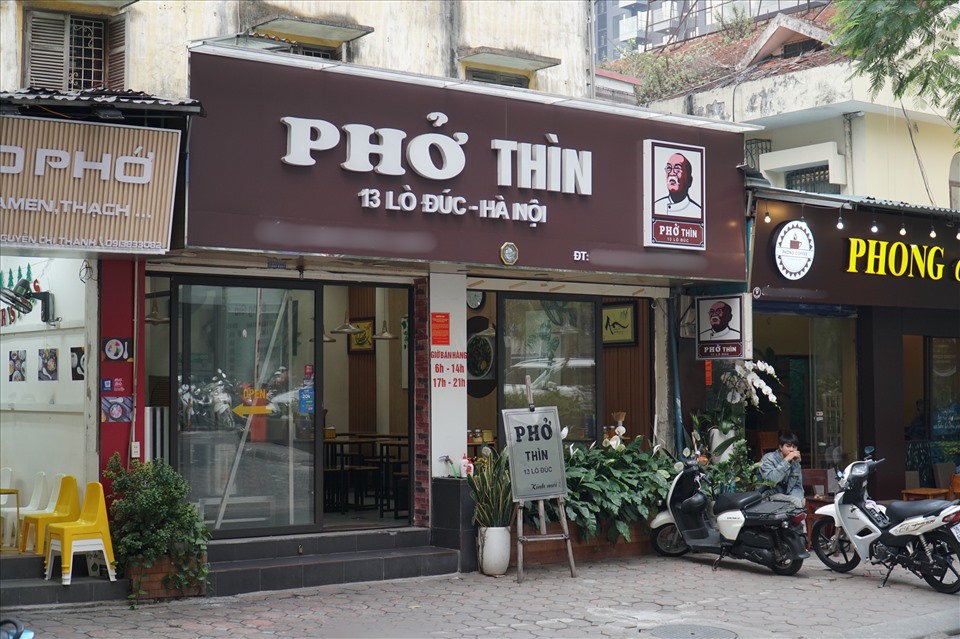
Lo Duc’s Pho Thin (Source: Báo Lao động)
Traditional Bat Dan Pho
Located at 49 Bát Đàn Street in the Old Quarter, this shop has been over 100 years rooted in tradition. One of its charming things is that customers will have to self‑serve: you order, pay, and pick up your own bowl.
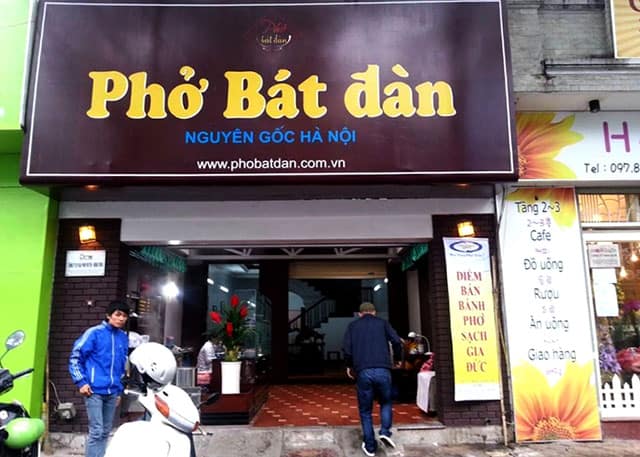
Bat Dan Pho (Source: Vntrip.vn)
TASTE PHO DIFFERENTLY WITH HANOI E.BUDDIES
If you are interested in tasting Hanoi Pho like a true Hanoian, join a tour with Hanoi e.Buddies. Let’s discover the flavors, stories, and hidden gems of the city together!
Join thousands of travelers who’ve discovered Hanoi through the eyes of passionate student guides. Whether you’re here for a day or a week, we’re here to make your journey unforgettable.
Book a Free Tour with Hanoi e.Buddies Today and start walking, learning, and connecting – the local way!
Follow us on TripAdvisor, Facebook, Instagram and TikTok!