VIETNAM’S VOTIVE PAPER CULTURE – TRADITION OR SUPERSTITION?
In Vietnam, there is only one type of fake money that is legal to print: Votive Paper money, known locally as “vàng mã”. But the term “fake money” hardly scratches the surface. In markets across the country, you’ll also find fake houses, fake clothes, fake motorbikes, fake jewelry, and even fake luxury Iphones. They are all made of paper. These objects are not toys, props, or counterfeits. They are gifts for the dead.

Houses, machines, daily items,… – all from paper (source: VTV. vn)
To many visitors who suddenly see a small fire burning by the sidewalk, with locals calmly tossing stacks of “money” into the flames, the scene can be puzzling. Many tourists end up asking the same question on Google:
“Why do the Vietnamese burn money?”
The answer lies in this post – Vietnamese Tradition of Burning Votive Paper for the Afterlife.
What is Votive Paper?
Votive Paper, also called joss paper or spirit money, refers to paper offerings burned for ancestors and spirits. This tradition belongs to the broader East Asian custom of ancestor worship with varying forms in China, Taiwan, and Hong Kong. But in Vietnam, the practice has developed a unique aesthetic and social meaning.
The Diversity of Votive Paper
Votive papers generally fall into three broad categories, each reflecting different needs that the living believe their ancestors may have in the afterlife.
Paper Money
This is the most common form of Votive Paper: stacks of printed “banknotes” – currency for ancestors and spirits. These notes may resemble traditional Chinese-style money, modern-looking banknotes, or even “dollar bills”. The idea is simple: just as the living need money, the deceased are believed to require financial means to live comfortably in the spiritual realm.
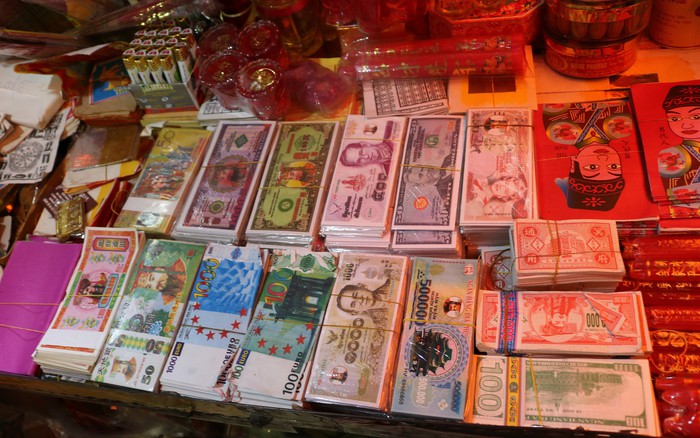
Different kinds of Votive Paper Money (Source: Người Lao Động Newspaper)
Daily Necessities
– include paper replicas of everyday items which can bring comfort and dignity in the afterlife. It ranges from basic sets of clothing, shoes, hats, and jewelry to personal items such as combs, cosmetics, food, and cigarettes. These objects are in realistic miniature form, often with meticulous details. The message is: whatever one used in life should also be provided after death.

“Miniature” Basic Necessities made from Paper (Source: Lao Động Newspaper)
Luxury & Modern Goods
In recent decades, Votive Paper has expanded to include high-value items. Paper villas, multi-storey houses, luxury cars, motorbikes, smartphones or tablets are common. Some workshops design elaborate sets that mirror modern lifestyles. This includes entire wardrobes, gaming consoles, or home appliances. They reflect the belief that ancestors deserve not just comfort but prosperity, mirroring the rising living standards of the living.
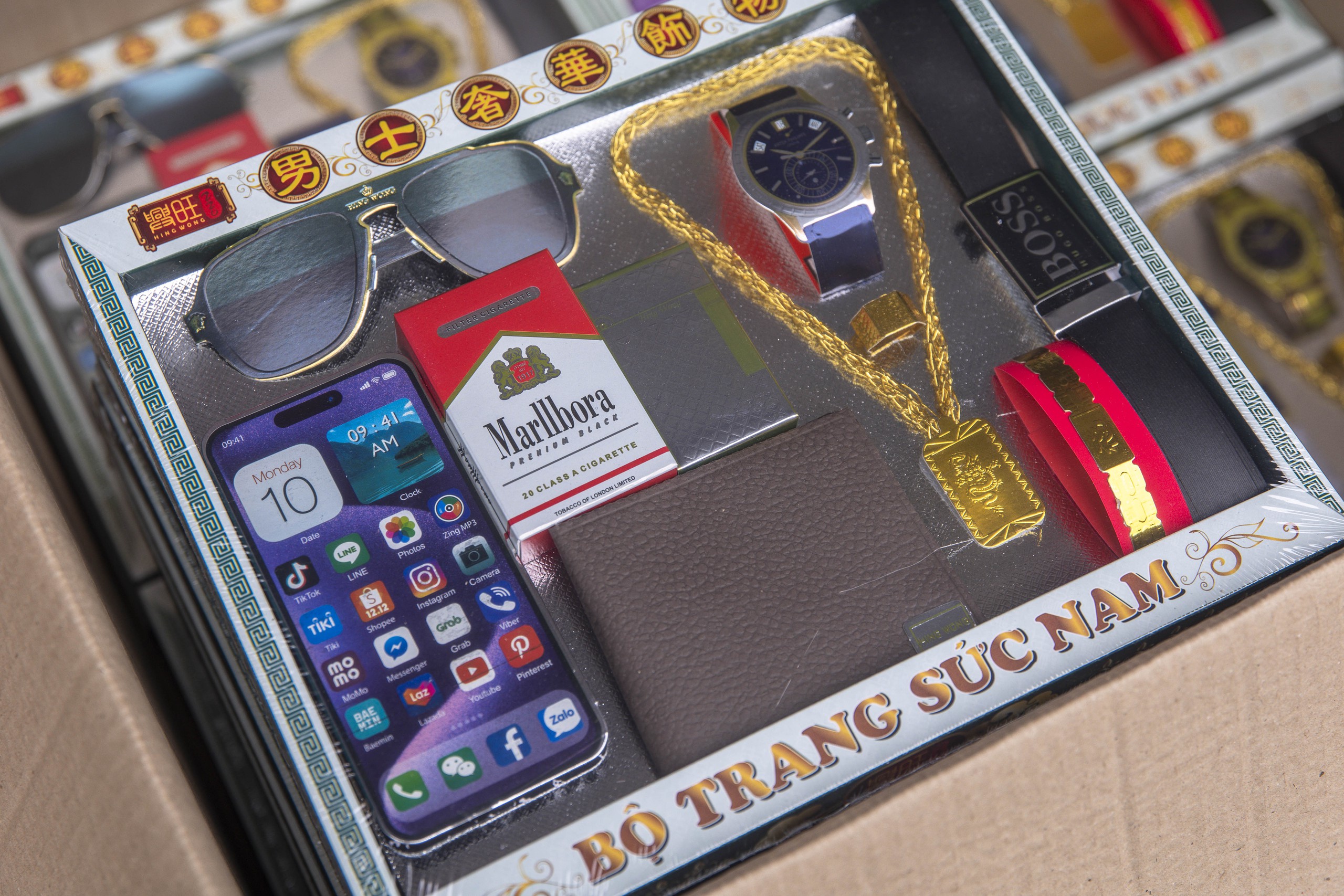
Votive Modern Items (Source: Thanh Niên Newspaper)
Why Do the Vietnamese Burn Votive Paper?
There are many reasons behind this tradition, but most of them have a spiritual and cultural foundation.
A way of showing care and gratitude for ancestors
Vietnam is deeply shaped by Confucian family values and ancestor veneration. In their culture, the dead do not disappear. Instead, they remain part of the family’s spiritual ecosystem. Providing for them shows filial piety, respect, and gratitude.
By burning votive paper, descendants help ensure that ancestors have money and other essential necessities. This may help them to enjoy a comfortable afterlife.
A means of communication with spirits
During certain rituals, votive paper is not just offerings for family ancestors but also to wandering spirits, local deities or gods of wealth and prosperity. This also expresses the Vietnamese people’s respect for these forces, creating a relationship between the living world and the spiritual one.
A wish for blessings
Whether votive paper is for ancestors or other spiritual forces, Vietnamese people believe that these offerings can bring good fortune, protection, and blessings to the household. Ancestors are believed to watch over the family, ward off misfortune, and bless descendants with health, wealth, and harmony. Votive offerings for deities, guardian spirits, tutelary gods of villages, or wandering souls are to ensure peace at home or favorable outcomes in study, work, travel, or health.
Even though beliefs vary by region and by household, the underlying idea is consistent. The world of the living and the world of the dead are not separate, but interconnected through acts of communication, gratitude, and exchange.
On Which Occasions Are Votive Papers Burned?
In reality, votive paper can be burned all year round, especially in spiritual sites like Ngoc Son Temple or the Temple of Literature. However, for normal households, certain times in the year are especially significant:
Funerals/Ancestral Death Anniversaries
In Vietnam, right after someone passes away, votive offerings are burned to accompany them into the afterlife. Every year after that, the family tracks the lunar death dates of the dead. Annually on these days, living people often prepare meals and incense to commemorate the person. Besides, they also burn votive paper to provide the dead people with adequate means of living.
Lunar New Year
During Lunar New Year, Vietnamese people often refresh the ancestral altar and prepare offerings of fruits, traditional foods, and votive money. This is to symbolically invite their ancestors home for the Tet holiday to celebrate with the living. After the festive days come to an end, families perform rituals to send the ancestors back to the spiritual realm. Along with prayers and offerings, votive papers are burned to “deliver” gifts to honor ancestors and welcome good fortune for the new year.
Ghost Festival/Vu Lan Festival
On the 15th day of the 7th lunar month, known in Vietnam as the Ghost Festival and Vu Lan Festival, Vietnamese communities also burn votive paper. The Vu Lan Festival is based on Buddhist Culture, a sacred occasion to honor filial piety. Therefore, votive paper is burned for their ancestors to show gratitude and commemoration. Besides, people also burn it for restless or wandering spirits who have no descendants to care for them. This is to prevent them from feeling hungry, angry, or causing misfortune. The 7th lunar month is believed to be a time when the boundary between the living world and the spirit world becomes thinner, allowing spirits to roam more freely.
Votive Paper – Tradition or Superstition?
In recent years, the tradition of burning votive paper has become the subject of public, cultural, and environmental debate. Opinions diverge sharply. Critics argue that the custom comes as a waste of money on elaborate paper offerings. Besides, burning them in open fires also generates smoke, particulates or ash residue that contribute to air pollution. Most importantly, some people deem this as purely superstitious. They claim that the act of “sending things to the afterlife” has no rational or religious foundation.
On the other hand, supporters see votive paper not as superstition, but as a cultural expression of filial piety and ancestral remembrance. In their view, the custom fulfills a symbolic need. It allows the living to care for the dead and maintain an invisible thread between generations. Rather than focusing on material transfer, they highlight the emotional and ritualistic meaning behind the practice: respect, gratitude, and continuity of family ties. Traditions should be understood within their cultural context, not judged solely by modern material logic.
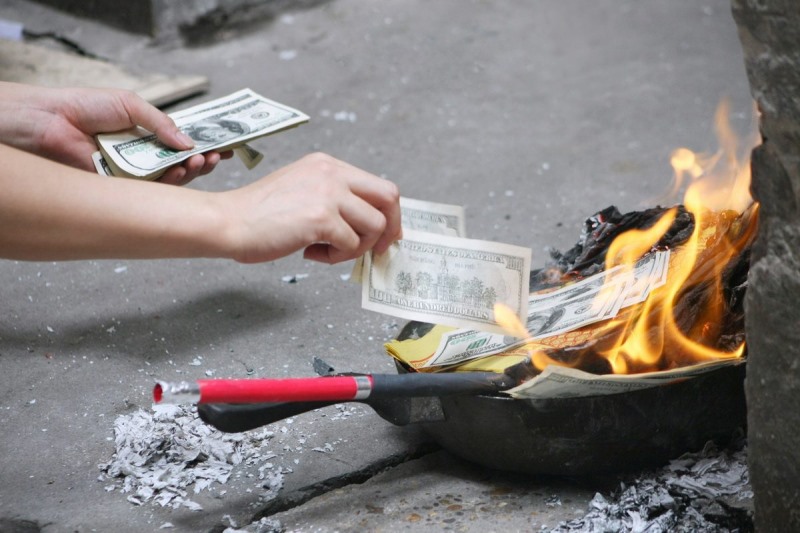
Vietnamese people burning votive paper money (Source: Lao Động Newspaper)
Today, the debate continues to evolve. Some temples and local authorities encourage moderation. They emphasized simplified offerings or alternative forms of commemoration that are both meaningful and environmentally conscious. Others call for stronger regulations. There are even some places that ban the act of burning votive paper. However, whether seen as tradition or superstition, votive paper remains a mirror reflecting how Vietnamese people negotiate between faith, culture, and modernity.
Hàng Mã Street – The Heart Of Votive Paper In Hanoi
Located in the Old Quarter of Hanoi, Hàng Mã Street is the heart of Vietnam’s votive paper culture. For centuries, this street has been the place of crafting and selling votives in all their forms. They range from simple paper money and daily necessities to lavish villas, cars, and modern gadgets made of paper. However, Hàng Mã Street is not just a marketplace but also a living museum of Vietnamese beliefs, craftsmanship, and seasonal rituals.
Throughout the year, the street transforms along with the cultural calendar. It shimmers red during Lunar New Year, paper horses and offerings during the Ghost Festival, and glows with lanterns during the Mid-Autumn celebration. These days, Hàng Mã Street offers many more diverse handicraft products besides votive paper. Walking through this street is to witness how tradition adapts to modernity. You can also see how artisans respond to social change by constantly reinventing the symbolic goods people burn for their ancestors.
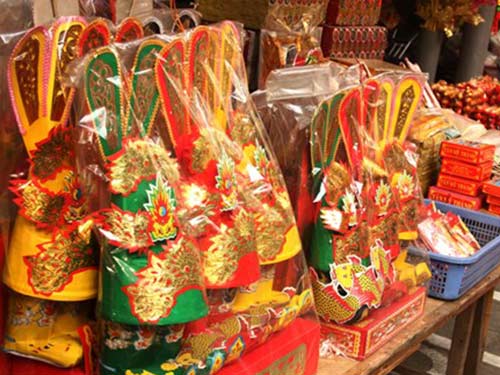
Hàng Mã Street selling votive paper items (Source: eva.vn)
For visitors, exploring Hàng Mã Street provides a glimpse into Vietnamese spiritual imagination, particularly its profound respect for the dead. The next time you pass by Hàng Mã, try to observe, learn, and support the artisans who keep this heritage alive.
Conclusion
Votive paper is a fascinating and ancient tradition, deeply woven into Vietnamese family life. To foreigners, it may seem unusual and even strange, but to locals, it is a familiar gesture of love, memory, and connection across the world.
For first-time visitors to Vietnam, you can see flickering stacks of votive paper in open fire in sacred places like Ngoc Son Temple or the Temple of Literature. Join a tour with Hanoi e.Buddies to gain cultural insights into other spiritual rituals and the hidden stories behind them.
For more information, pay a visit to our Tiktok, TripAdvisor, Facebook, Instagram.